

Legal Help Hub
Bank Fraud Investigation UK: What Happens and How to Protect Yourself








Introduction
Being investigated for bank fraud can be a serious and uncertain experience. These cases often involve close examination of banking activity, digital evidence, communications and financial records.
If you become aware that you are under investigation for suspected fraud involving bank accounts or financial transactions, it is important to understand how the process works and what steps may help protect your position.
What Is Considered Bank Fraud Under UK Law?
Bank fraud usually involves dishonestly obtaining money, financial services, or another benefit through deception or misuse of financial systems.
Most fraud offences in the UK are prosecuted under the Fraud Act 2006.
The legislation identifies three main types of fraud.
Fraud by False Representation
This occurs where someone deliberately provides false or misleading information to obtain money or a financial advantage.
Examples may include:
- Providing false information to obtain loans or credit
- Using stolen or fabricated financial details
- Making dishonest claims to access funds
Fraud by Failing to Disclose Information
Fraud may also occur where someone fails to disclose information they are legally required to reveal.
For example, concealing relevant financial information when applying for a financial product could fall into this category.
Fraud by Abuse of Position
This offence occurs where someone abuses a position of trust to gain a financial benefit or cause financial loss to another person or organisation.
Examples may include employees misusing access to company accounts or individuals exploiting positions of financial responsibility.
How Bank Fraud Investigations Usually Begin
Bank fraud investigations often begin before the person involved knows that enquiries are taking place.
Suspicious Activity Monitoring
Financial institutions use monitoring systems to detect unusual or suspicious transactions.
- Large or unusual transfers
- Repeated transactions between linked accounts
- Unusual international payments
- Account activity that differs from previous behaviour
If suspicious patterns are identified, the bank may begin an internal review.
Reports from Banks
Banks may be required to report suspicious financial activity in certain circumstances.
Suspicious Activity Reports, known as SARs, may be submitted to relevant authorities and can lead to further investigation.
Police or Regulatory Investigations
In more serious cases, a financial institution may refer the matter to law enforcement.
Specialist fraud units may then investigate the case in more detail.
How Police and Financial Institutions Investigate Fraud
Fraud investigations can be detailed and may involve several different types of evidence.
Transaction Analysis
Investigators will often begin by examining financial records.
This may include:
- Bank statements
- Transaction histories
- Account ownership details
- Transfers between accounts
These records can help investigators assess whether suspicious activity has taken place.
Digital Evidence
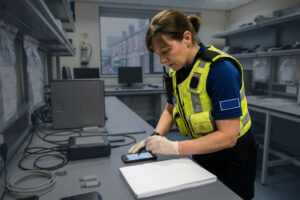
Modern fraud investigations frequently involve digital evidence.
Authorities may examine:
- Emails and messages
- Online banking activity
- Devices such as laptops or mobile phones
- IP address data linked to transactions
Digital forensic analysis may play an important role in the investigation.
Witness Statements
Investigators may also gather statements from people connected to the alleged activity.
- Bank employees
- Account holders
- Business partners
- Other individuals connected to the transactions
These statements may help investigators understand how the alleged fraud occurred.

Police Interviews and Formal Investigation Procedures
If investigators believe there is sufficient suspicion, you may be asked to attend a police interview under caution.
This is a formal part of the criminal investigation process.
Interview Under Caution
During an interview under caution, investigators will ask questions about the suspected fraudulent activity.
Anything said during the interview may later be used as evidence in court.
Searches and Evidence Gathering
In certain circumstances, investigators may obtain search warrants allowing them to seize items such as:
- Computers
- Mobile devices
- Financial documents
These items may then be analysed for potential evidence.
Account Restrictions or Freezing
In serious cases, bank accounts linked to suspected fraud may be restricted or frozen during the investigation.
This can happen while investigators assess whether criminal activity has taken place.
Possible Charges and Penalties for Bank Fraud
If prosecutors believe there is sufficient evidence, criminal charges may follow.
Fraud offences under the Fraud Act 2006 can carry serious penalties. The seriousness of the case will depend on factors such as:
The seriousness of the case will depend on factors such as:
- The amount of money involved
- The sophistication of the alleged fraud
- The impact on victims
- Whether the offence was planned or organised
Courts use sentencing guidelines when deciding penalties.
Serious fraud offences can result in substantial prison sentences, financial penalties or confiscation proceedings.
What You Should Do If You Are Being Investigated
If you discover that you are under investigation for bank fraud, it is important to respond carefully.
Steps that may help include:
- Seeking legal advice as early as possible
- Avoiding discussion of the investigation with third parties
- Preserving relevant documents and communications
- Taking legal advice before answering questions
Early legal advice can help you understand your position and avoid steps that may affect the investigation.
Facing Legal Issue?
Speak to our Fraud & Financial Crimes team for confidential advice on your position and next steps.
Strictly Confidential and No Obligation
How a Criminal Defence Solicitor Can Help
Speak to our Fraud & Financial Crimes team for confidential advice on your position and next steps.
A defence solicitor can assist by:
- Advising you before any police interview
- Reviewing financial evidence
- Identifying potential weaknesses in the prosecution case
- Protecting your legal rights during the investigation
- Preparing the defence approach if charges are brought
Legal representation can help ensure that the evidence is properly reviewed and that your response is prepared carefully.
Speak to a Fraud Defence Solicitor
If you are facing a bank fraud investigation in the UK, legal advice should be sought as early as possible.
Fraud investigations can involve complex financial evidence and serious allegations. A specialist criminal defence solicitor can assess the situation, explain your options and guide you through every stage of the investigation.
If you need advice about a fraud allegation, contact our criminal defence team to discuss your circumstances and obtain clear legal guidance.
5 Key Takeaways
- Bank fraud investigations often begin after unusual account activity is detected or reported by a financial institution.
- Investigators may examine bank records, online banking activity, communications, devices and witness evidence.
- A person may be invited to attend an interview under caution, where their answers can later be used as evidence.
- Bank accounts may be restricted or frozen in serious cases while investigators assess the source and movement of funds.
- Early legal advice can help you respond carefully, preserve relevant evidence and understand the risks before speaking to investigators.
Frequently Asked Questions
The length of a fraud investigation varies depending on the complexity of the case. Some investigations may take several months, while more complex financial investigations can take considerably longer.
Yes. Financial institutions may report suspected fraud to law enforcement authorities if they believe criminal activity may have occurred.
Not necessarily. In some cases individuals are invited to attend a voluntary interview under caution rather than being arrested.
Evidence may include financial records, bank transactions, digital communications, witness statements and forensic analysis of electronic devices.
If investigators decide there is insufficient evidence, the case may be closed without charges.
In some cases, authorities may restrict or freeze accounts while suspected fraud is being investigated.
Call us on 0333 009 6275. We are available to take your call 24 hours a day, 7 days a week.
You can also email us on enquiries@ashmanssolicitors.com or complete our Online Enquiry Form and we’ll be in touch soon.
Get in touch
We’ll respond within 15 minutes during office hours
Search our legal articles
Free expert guidance on criminal law, your rights, and what to expect at every stage.
Searching Legal Help Hub articles
Related insights and updates

What Is an Unexplained Wealth Order in the UK?
Tinder Fraud in the UK: Criminal Charges, Investigations and Convictions

Seized Cash Court Order UK: How Police Obtain Cash Forfeiture Orders

Counterfeit Goods Sentencing Guidelines in the UK

How to Delete Police Records in the UK

Fraud Sentencing in the UK: How Fraud Sentences Can Be Reduced

Third Party Assets in Confiscation Proceedings (POCA)

What Is a Production Order in the UK?

Proceeds of Crime Act Proceedings (POCA): Confiscation Orders and Asset Recovery

Can You Go to Jail for a Ponzi Scheme in the UK?

Police Seized Your Cash in the UK? Your Legal Rights and How to Challenge It

Police Search Warrants in the UK: When Police Can Search Your Property

Online Bank Fraud Penalties in the UK

MTIC VAT Fraud Solicitors – Defence Against Carousel Fraud Investigations

What Is the Punishment for Mortgage Fraud in the UK?

Is EncroChat Evidence Legal in the UK?

HMRC Criminal Investigation: What Happens and How to Respond

Freezing Orders in the UK: Legal Advice and Defence Guidance

Fraud Trial Process in the UK: What Happens in Court
