

Legal Help Hub
I Sold a Clocked Car Without Knowing. Can I Be Charged with Car Fraud?



Introduction
If you genuinely did not know the car’s mileage had been altered, selling it does not automatically amount to criminal fraud. The prosecution must establish that you acted dishonestly and knew the mileage information you provided was, or might have been, false or misleading.
Under the Fraud Act 2006, fraud by false representation involves dishonestly providing false or misleading information with the intention of making a gain or causing someone a loss.
For example, you may have bought a car advertised as having covered 45,000 miles and later sold it using the same figure. If you genuinely believed the mileage was correct, this could be important evidence in your defence.
However, the situation may be different if messages, previous MOT records or other information suggest you were aware of a possible discrepancy before selling the vehicle.
Being unaware of mileage tampering can therefore be central to your defence, but the evidence surrounding the sale matters. Even if criminal fraud cannot be proved, the buyer may still have grounds to pursue a civil claim.
This article explains the criminal offence of car fraud, the police process, the evidence that can support your position, the distinction between Trading Standards and police investigations, your status as a private seller, and the practical steps to take immediately.
What Happens If the Buyer Reports Me to the Police for Car Fraud?
A report to the police or Trading Standards does not mean you will automatically be charged or receive a criminal record. Investigators must first consider the allegation and decide whether further enquiries are justified.
If the buyer claims you deliberately misrepresented the car’s mileage, police may review the advertisement, messages, MOT history and other evidence. They may contact you for information or request an interview under caution.
For example, if the buyer discovers that the vehicle had a higher mileage reading on an earlier MOT, investigators may ask when the discrepancy arose and whether you knew about it.
The investigation may end without further action if there is insufficient evidence of criminal conduct. However, if the evidence raises concerns about dishonesty, the matter may progress to criminal charges.
Is Selling a Clocked Car Considered Car Fraud if the Seller Did Not Know?
Selling a car with false mileage only becomes car fraud under the Fraud Act 2006 if you knew the mileage was untrue or misleading and acted dishonestly. To secure a car fraud conviction, the prosecution must prove that you made a representation you knew to be untrue or misleading, that you did so dishonestly, and that you intended to make a gain or cause a loss.
All three elements must be established. The knowledge requirement is subjective. The prosecution must show that you personally knew or believed the mileage might be untrue. Negligence or carelessness is not sufficient to establish car fraud.
Dishonesty is assessed using the two-stage test. First, the court establishes what you actually knew or believed about the mileage at the time of the sale. Second, it asks whether ordinary, reasonable people would consider your conduct dishonest given those actual beliefs. An honest mistake, a reasonable reliance on paperwork you were given, or a genuine belief in the stated mileage is not dishonesty under this test.
If you were misled by the person who sold you the car and passed on that information without any reason to doubt it, the knowledge element of the car fraud offence is likely absent. There is currently no specific standalone offence of altering a vehicle’s mileage in England and Wales, so prosecution routes are fraud law and consumer protection law.
It is worth being clear about the potential consequences if knowledge were alleged. A conviction for car fraud by false representation on indictment carries a maximum sentence of ten years’ imprisonment and an unlimited fine. That context explains why early legal advice matters, even when your position appears straightforward.
How Can I Show That I Did Not Know the Mileage Was Altered?
The strongest evidence in a car fraud investigation is a paper trail showing you received the car with the mileage as recorded and had no reason to question it. Gathering this material before any interview is important.
Start with the MOT history. The DVSA records a mileage reading at every MOT test, and a consistent sequence of readings throughout your ownership supports the case that the mileage was not interfered with while the car was yours.
You can access this history free of charge through the government’s online MOT history checker.
The service history and logbook entries from the time you bought the car can show what mileage was recorded at the point of purchase. Any written advert, receipt or invoice from the person who sold the car to you is particularly useful, especially if it includes a mileage figure matching what you later stated to the buyer.
If you carried out an HPI check or a similar vehicle provenance check before or at the point of purchase, retain the certificate. It shows you took steps to verify the car’s history, which is consistent with acting in good faith and inconsistent with deliberate car fraud.
Communications such as texts and emails between you and the person who sold you the car can show that the mileage was represented to you in the same way you later represented it to the buyer. The same applies to communications with the buyer, which may confirm that you stated the mileage honestly and without embellishment.
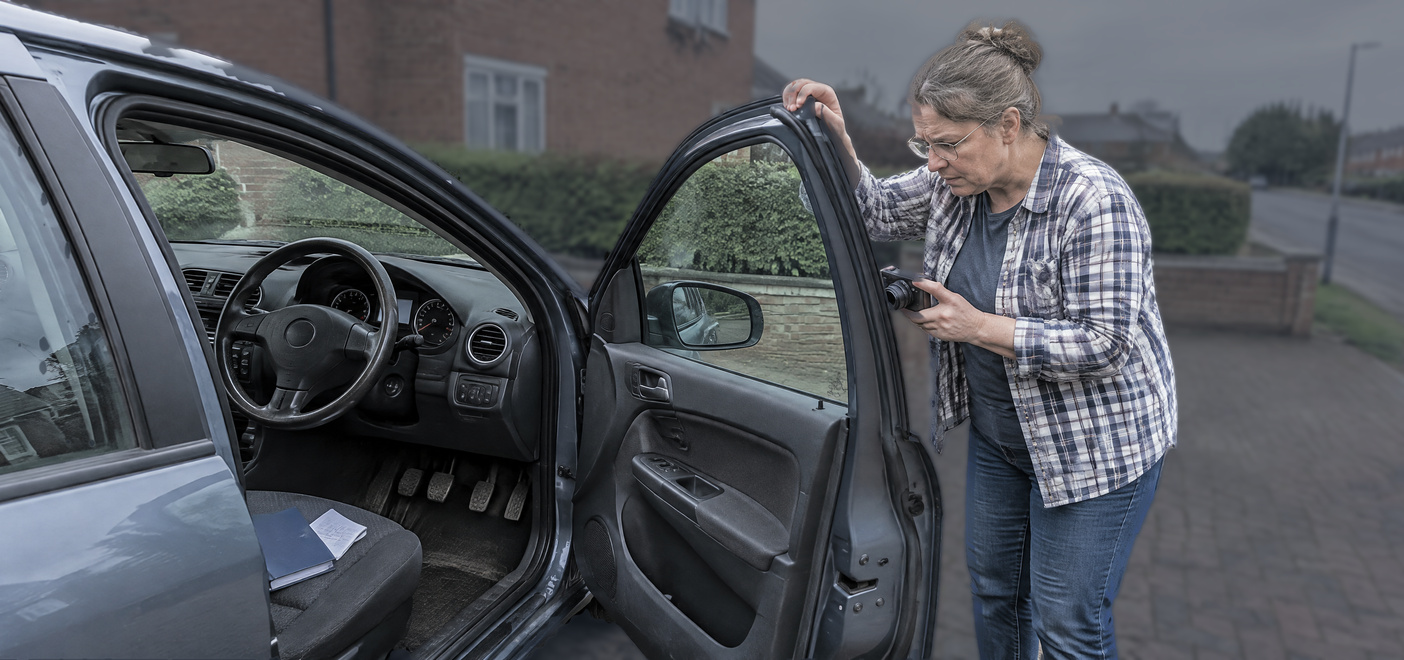
Physical condition can also play a role. Wear on the pedals, steering wheel, seats and interior consistent with the stated mileage can support your account, though this is secondary to documentary evidence. Witness evidence from anyone who accompanied you at purchase or sale may also be relevant.
If documentation is limited, that weakens your position but does not prove car fraud. The prosecution still carries the burden of proof throughout. A solicitor can advise on how to present what you do have effectively.
Will Trading Standards Investigate a Private Car Sale?
Trading Standards primarily investigates motor traders rather than private individuals accused of car fraud. If you sold the car as a private seller and are not in the business of buying and selling vehicles, a Trading Standards investigation is less likely, though not impossible.
Trading Standards enforces the Consumer Protection from Unfair Trading Regulations 2008, which is focused on commercial practices. Private sales generally fall outside its direct scope. The regulations are aimed at traders who engage in commercial activity with consumers, not at one-off private transactions between individuals.
However, Trading Standards may investigate if it suspects someone is operating as a trader while presenting sales as private. If that were the case, your claim to be a private seller would itself be scrutinised. A Trading Standards finding does not automatically trigger a criminal car fraud prosecution, but it can inform one and may be passed to the police.
Civil disputes between private buyers and sellers are handled separately, through the county court rather than Trading Standards. Trading Standards is a regulatory body, not a dispute resolution service for private individuals.
Does Selling Several Cars Make Me a Motor Trader?
There is no fixed number of car sales that automatically makes you a trader for car fraud or consumer protection law. Courts and regulators look at the pattern, regularity and profit motive behind the sales rather than counting transactions.
Trader status depends on the nature of the activity. Buying vehicles to resell at a profit, doing so regularly and holding yourself out commercially as a seller can all point towards trading. A single sale, or an occasional sale of a car you have genuinely used personally, is generally not trading. A pattern of frequent purchases followed by quick resales for profit is a different picture entirely.
Trader status matters because it changes both criminal and civil exposure. Consumer protection law applies more directly to traders, and a buyer’s rights are considerably stronger against a trader than against a private individual selling under caveat emptor principles. If you are a trader and failed to disclose a known defect or misrepresented the car, the legal consequences, including the risk of a car fraud charge, are more serious.
HMRC also has a separate interest where income from vehicle sales is not declared. That is distinct from criminal car fraud or consumer protection law, but worth being aware of.
Consider honestly whether your selling pattern over recent years could be characterised as trading. Selling two or three cars inherited from family members is plainly different from buying and reselling at a profit every few weeks. If there is any ambiguity, a solicitor can help you understand how your activity is likely to be characterised.
Facing Legal Issue?
Speak to one of our Fraud and Financial Crime Defence Specialists for confidential advice on your position and next steps.
Strictly Confidential and No Obligation
Can the Buyer Demand a Refund for a Clocked Car?
A buyer may have a civil claim for misrepresentation even if you are never charged with car fraud. The civil and criminal tracks are separate, and one does not depend on the other.
If you sold the car as a private individual to another private buyer, caveat emptor applies in the strict common law sense. The buyer takes the car as they find it for latent defects. However, if you made a positive statement about the mileage, that statement may amount to a misrepresentation regardless of whether it was honest.
Under the Misrepresentation Act 1967, even an innocent misrepresentation (one the seller genuinely believed to be true) can, in some circumstances, give the buyer a right to rescind the contract and seek damages. The key is whether a false statement of fact was made that induced the buyer to enter the contract. Mileage is plainly a statement of fact.
If you were acting as a trader, the Consumer Rights Act 2015 gives the buyer stronger statutory rights, including the right to reject the vehicle or claim a repair, replacement or price reduction depending on the timing of the claim.
A civil claim is decided on the balance of probabilities, a lower threshold than beyond reasonable doubt. Being cleared of car fraud by the police does not prevent the buyer from pursuing a County Court claim.
Do not admit liability, apologise in terms that suggest fault, or offer a refund without taking legal advice first. Anything said or written can affect both the civil and criminal positions, and a spontaneous offer of compensation can be misread as an admission of knowledge relevant to a car fraud charge.
What Should I Do If I Am Accused of Car Fraud?
If you have been accused of car fraud, seek legal advice before responding to the police, Trading Standards or the buyer. An allegation does not automatically mean you will be prosecuted, but it is important to understand the circumstances before making any statements or agreeing to a settlement.
Start by gathering documents relating to the vehicle, including the original purchase receipt, advertisements, MOT history, service records, vehicle history checks and communications with the previous seller and buyer. If you regularly trade cars, keep records of earlier transactions that may be relevant.
Write down what you remember about buying and selling the car, particularly any discussions about its mileage. Make a note of anyone who witnessed the purchase or sale, as their account may help establish what you knew at the time.
Keep all relevant messages, emails and advertisements, even if they appear unimportant. Do not delete or alter anything connected to the transaction, as this could raise further questions during an investigation.
If the police or Trading Standards contact you, ask what the allegation concerns and whether there are any deadlines for responding. Before attending an interview under caution or giving a statement, speak to a solicitor about your options, including whether to answer questions, provide a prepared statement or make no comment.
If the buyer demands a refund or threatens legal action, avoid making admissions, apologising for something you did not know about or offering compensation before obtaining advice. Keep any necessary communication factual and avoid discussing the allegations on social media. Once you have instructed a solicitor, they can advise on how further contact should be handled.
How a Car Fraud Defence Solicitor Can Help You
If a buyer has accused you of selling a clocked car and reported you to the police or Trading Standards, a solicitor can review the circumstances and explain whether the allegation could amount to criminal fraud.
Seeking legal advice before an interview under caution is particularly important. Your solicitor can help you understand the allegations, assess the available evidence and advise whether you should answer police questions, provide a prepared statement or make no comment.
They can also examine purchase records, messages and other documents to establish what you knew about the vehicle’s mileage when you sold it. If there is evidence that you acted in good faith, your solicitor can use it to challenge the allegations. Where the buyer has also made a civil claim, they can explain your options and how to respond without affecting your criminal defence. If criminal charges follow, they can represent you in court.
Ashmans Solicitors’ Fraud and Financial Crime team represents individuals accused of car fraud, including fraud by false representation. Our solicitors can examine the circumstances of the sale, the evidence against you and whether there are grounds to dispute the allegation.
If you have been accused of selling a clocked car, contact our solicitors to discuss your situation and the steps you can take. You can also ask about concerns relating to previous vehicle sales, your employment or the cost of legal representation.
5 Key Takeaways
- Unknowingly selling a clocked car does not automatically amount to criminal fraud. The prosecution must establish dishonesty and the required knowledge.
- Police and Trading Standards have different roles. Earlier vehicle sales may also be examined if trading activity is suspected.
- There is no fixed number of car sales that makes someone a trader. Buying vehicles for resale at a profit can be relevant.
- A complaint does not automatically create a criminal record. DBS and employment consequences depend on the circumstances.
- Purchase records and early legal advice matter. Preserve evidence and ask about costs before committing to representation.
Call us on 0333 009 6275. We are available to take your call 24 hours a day, 7 days a week.
You can also email us on enquiries@ashmanssolicitors.com or complete our Online Enquiry Form and we’ll be in touch soon.
Get in touch
We’ll respond within 15 minutes during office hours
Search our legal articles
Free expert guidance on criminal law, your rights, and what to expect at every stage.
Searching Legal Help Hub articles
Related insights and updates

Can I Be Accused of Insider Dealing Because a Family Friend Traded Shares?

Accused of Money Laundering but I Didn’t Know the Money was Criminal: What Is the Defence?

What Is an Unexplained Wealth Order in the UK?
Tinder Fraud in the UK: Criminal Charges, Investigations and Convictions
Seized Cash Court Order UK: How Police Obtain Cash Forfeiture Orders

Counterfeit Goods Sentencing Guidelines in the UK

How to Delete Police Records in the UK

Fraud Sentencing in the UK: How Fraud Sentences Can Be Reduced

Third Party Assets in Confiscation Proceedings (POCA)

What Is a Production Order in the UK?

Proceeds of Crime Act Proceedings (POCA): Confiscation Orders and Asset Recovery

Can You Go to Jail for a Ponzi Scheme in the UK?

Police Seized Your Cash in the UK? Your Legal Rights and How to Challenge It
Police Search Warrants in the UK: When Police Can Search Your Property

Online Bank Fraud Penalties in the UK

MTIC VAT Fraud Solicitors – Defence Against Carousel Fraud Investigations

What Is the Punishment for Mortgage Fraud in the UK?

Is EncroChat Evidence Legal in the UK?

HMRC Criminal Investigation: What Happens and How to Respond
