

Legal Help Hub
Mobile Phone Driving Laws in the UK: Rules, Penalties and Legal Defences







Introduction
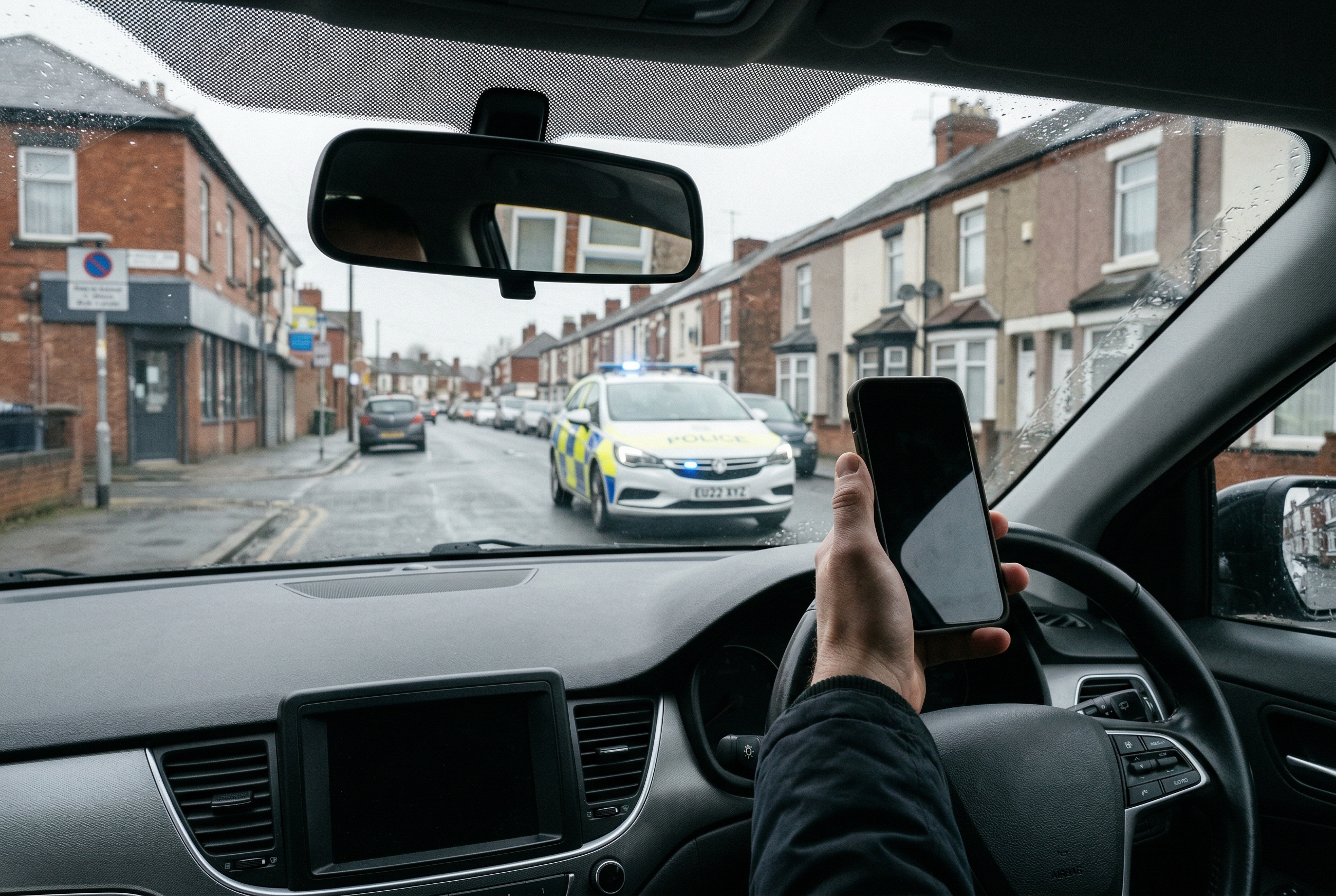
Using a mobile phone while driving is treated as a serious road traffic offence. The law has been strengthened in recent years to address distracted driving and the wider use of smartphones behind the wheel.
Drivers can face penalty points, a fine and possible court proceedings if they are accused of using a hand-held device while driving. Understanding what the law prohibits, what penalties may apply and when legal advice may be needed is important for any motorist.
What Are the Mobile Phone Driving Laws in the UK?
The primary legislation governing the use of mobile phones while driving is contained within Regulation 110 of the Road Vehicles (Construction and Use) Regulations 1986.
This regulation makes it an offence to drive on a road while using a hand-held mobile phone or other hand-held device of the type covered by the law.
The law applies to drivers using hand-held devices while driving, including phones, tablets, sat navs and devices that can send or receive data.
This includes activities such as:
- Making or receiving calls
- Sending text messages
- Accessing social media
- Using messaging apps
- Browsing the internet
The key issue is whether the device was hand-held and being used while driving.
What Counts as Using a Mobile Phone While Driving?
Many drivers assume the law only applies to calls or text messages. In reality, the offence is broader and may include several forms of interaction with a hand-held device.
Hand-Held Devices
A device is considered hand-held if it must be held or supported while being used.
Examples include:
- Smartphones
- Tablets
- Handheld communication devices
If the device is being held while used, the offence may be committed.
Touching the Phone
Touching or holding a hand-held phone for many purposes while driving can lead to prosecution.
For example:
- Selecting music
- Checking notifications
- Unlocking the device
- Scrolling through apps
Even brief interaction with a hand-held device can create legal risk.
Sending Messages or Using Apps
Using apps while driving may fall within the offence if the device is hand-held.
Activities such as:
- Replying to WhatsApp messages
- Recording videos
- Browsing social media
can all lead to prosecution where the phone or device is being held.

Are There Any Exceptions to the Mobile Phone Driving Law?
There are limited circumstances where the law allows drivers to use a hand-held mobile device.
Examples include:
Emergency calls
Drivers may use a phone to call 999 or 112 if it is unsafe or impractical to stop.
Contactless payments
A driver may use a phone for contactless payment in limited circumstances, such as at a drive-through or toll point, where the vehicle is not moving.
These exceptions are narrow. Drivers should avoid handling a phone while driving unless the situation clearly falls within an exception.
Penalties for Using a Mobile Phone While Driving
The penalties for using a hand-held phone while driving can be significant.
Penalty Points
The standard penalty is:
6 penalty points on the driving licence
For many motorists, this is a serious consequence, particularly if they already have existing points.
Financial Penalties
Drivers may also receive a financial penalty, typically issued through a fixed penalty notice.
If the matter is referred to court, the fine may be higher depending on the circumstances.
New Driver Rules
Drivers who passed their test within the previous two years face stricter consequences.
Under the New Drivers Act, receiving six penalty points within the first two years of driving can result in licence revocation.
This means the driver would need to:
- Reapply for a provisional licence
- Retake the driving test
How Police Detect Mobile Phone Driving Offences
Police officers enforce mobile phone driving laws through a variety of methods.
These include:
- Roadside observation by officers
- Traffic patrols
- Roadside enforcement operations
- Camera evidence
In some cases, officers may stop a vehicle if they believe the driver has been using a phone while driving.
The evidence may include officer observations, statements, photographs, video, or other supporting material.
Facing Legal Issue?
Speak to our Motoring Offences team for confidential advice on your position and next steps.
Strictly Confidential and No Obligation
Legal Defences for Mobile Phone Driving Allegations
Being accused of using a mobile phone while driving does not automatically mean a driver will be convicted.
Each case depends on the specific facts and the evidence presented.
Potential defence issues may include:
- Whether the device was actually being used
- Whether the phone was hand-held
- Whether the vehicle was being driven at the time
- Whether the prosecution evidence is reliable
In some cases, allegations arise from misunderstanding, poor visibility, or limited observation by police officers.
Careful analysis of the evidence is often needed.
Why You Should Seek Legal Advice for a Driving Offence
Road traffic offences can have serious consequences for motorists.
Penalty points may affect:
- Employment opportunities
- Insurance costs
- The ability to drive legally
In more serious situations, drivers may face court proceedings and larger penalties.
Advice from a solicitor experienced in Motoring Offences can help drivers understand their position and the options available.
Early legal guidance can also help identify potential defence issues and ensure the case is handled appropriately.
If you are facing an allegation of using a mobile phone while driving, speaking with a solicitor can provide clarity about the process and possible outcomes.
5 Key Takeaways
- It is illegal to hold and use a mobile phone or similar hand-held device while driving.
- The offence can apply even if the vehicle is stationary in traffic.
- Drivers can receive 6 penalty points and a fine for using a hand-held device while driving.
- New drivers may have their licence revoked if they receive 6 points within the first two years of passing their test.
- Legal advice can help where the evidence is disputed or the allegation may lead to court proceedings.
Frequently Asked Questions
Yes. UK law prohibits drivers from using a hand-held mobile phone while driving, and this includes touching the device for most purposes.
Drivers typically receive six penalty points on their licence and may also receive a financial penalty.
A phone can be used as a sat nav if it is securely mounted and not hand-held.
Police may investigate phone usage if it is relevant to an offence, particularly following serious collisions or where phone use is disputed.
Yes. The offence can still apply if the vehicle is stopped in traffic, at traffic lights, or in a queue.
A driver who receives 6 points within two years of passing their test may have their licence revoked.
Call us on 0333 009 6275. We are available to take your call 24 hours a day, 7 days a week.
You can also email us on enquiries@ashmanssolicitors.com or complete our Online Enquiry Form and we’ll be in touch soon.
Get in touch
We’ll respond within 15 minutes during office hours
Search our legal articles
Free expert guidance on criminal law, your rights, and what to expect at every stage.
Searching Legal Help Hub articles
Related insights and updates

Drunk in Charge vs Drink Driving UK: What’s the Legal Difference?

Failing to Provide a Specimen for Analysis – Legal Advice

Drink Driving and Drug Driving Penalties in the UK

Caught Drink Driving in the UK: What Happens Next?
Using a Mobile Phone While Driving in the UK: Law, Penalties and Legal Defence

Mobile Phone Driving Law in the UK: Rules, Penalties and Legal Defences

Totting Up Ban Explained: What Happens If You Reach 12 Penalty Points?

Taking Penalty Points for Someone Else: Is It Perverting the Course of Justice?

What Happens If Your Licence Is Revoked as a New Driver in the UK?
Motoring Offence Convictions in the UK: What You Need to Know

Common Motoring Law Myths in the UK Explained

How to Report a Road Traffic Accident in the UK

Hip Flask Defence in Drink Driving Cases

Failure to Stop After an Accident in the UK: Law, Penalties and Legal Defence
Fail to Produce Driving Documents: Offence, Penalties and Legal Defence
Drug Driving UK: Legal Limits, Penalties and Defences

Driving Without Insurance UK Penalties: Fines, Points and Court Consequences

Driving Whilst Disqualified in the UK: Penalties, Court Process and Legal Defences

Causing Death by Dangerous Driving in the UK: Law, Sentencing and Legal Defence