

Legal Help Hub
How to Report a Road Traffic Accident in the UK






Introduction
If you are involved in a road traffic accident, there are clear legal obligations that drivers must follow. Failing to stop at the scene or failing to report an accident when required can lead to criminal charges under the Road Traffic Act 1988.
Understanding when and how to report a road traffic accident is important. Even relatively minor collisions may require drivers to stop, exchange details, or notify the police.
When Must You Report a Road Traffic Accident in the UK?
Drivers involved in a road traffic accident have legal responsibilities under Section 170 of the Road Traffic Act 1988.
This legislation requires drivers to stop and provide certain details where an accident results in:
- Injury to another person
- Damage to another vehicle
- Damage to property such as buildings, fences, or street furniture
- Injury to certain animals including dogs, horses, cattle, pigs, sheep, goats, or donkeys
If one of these circumstances applies, the driver must stop and provide their details to anyone with reasonable grounds for requesting them.
These duties help injured parties, property owners and insurers identify the drivers involved in the collision.
What Information Must Drivers Exchange After an Accident?
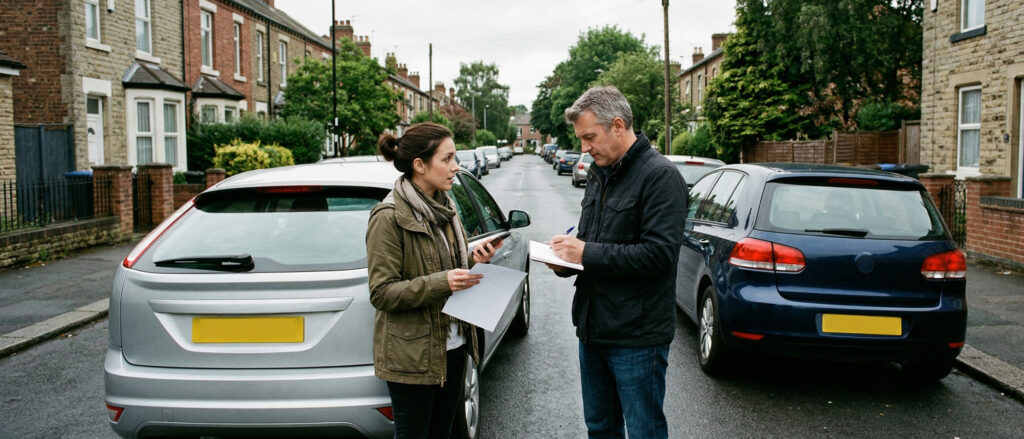
If you are involved in a road traffic accident, you may need to provide:
- Your name and address
- The name and address of the vehicle owner (if different)
- The vehicle registration number
- Insurance information if requested
Providing accurate information is important. Refusing to provide required details may lead to further legal issues.
Drivers should also consider recording additional information where possible, such as photographs of the scene, the time and location of the accident and contact details for witnesses.
How to Report an Accident to the Police
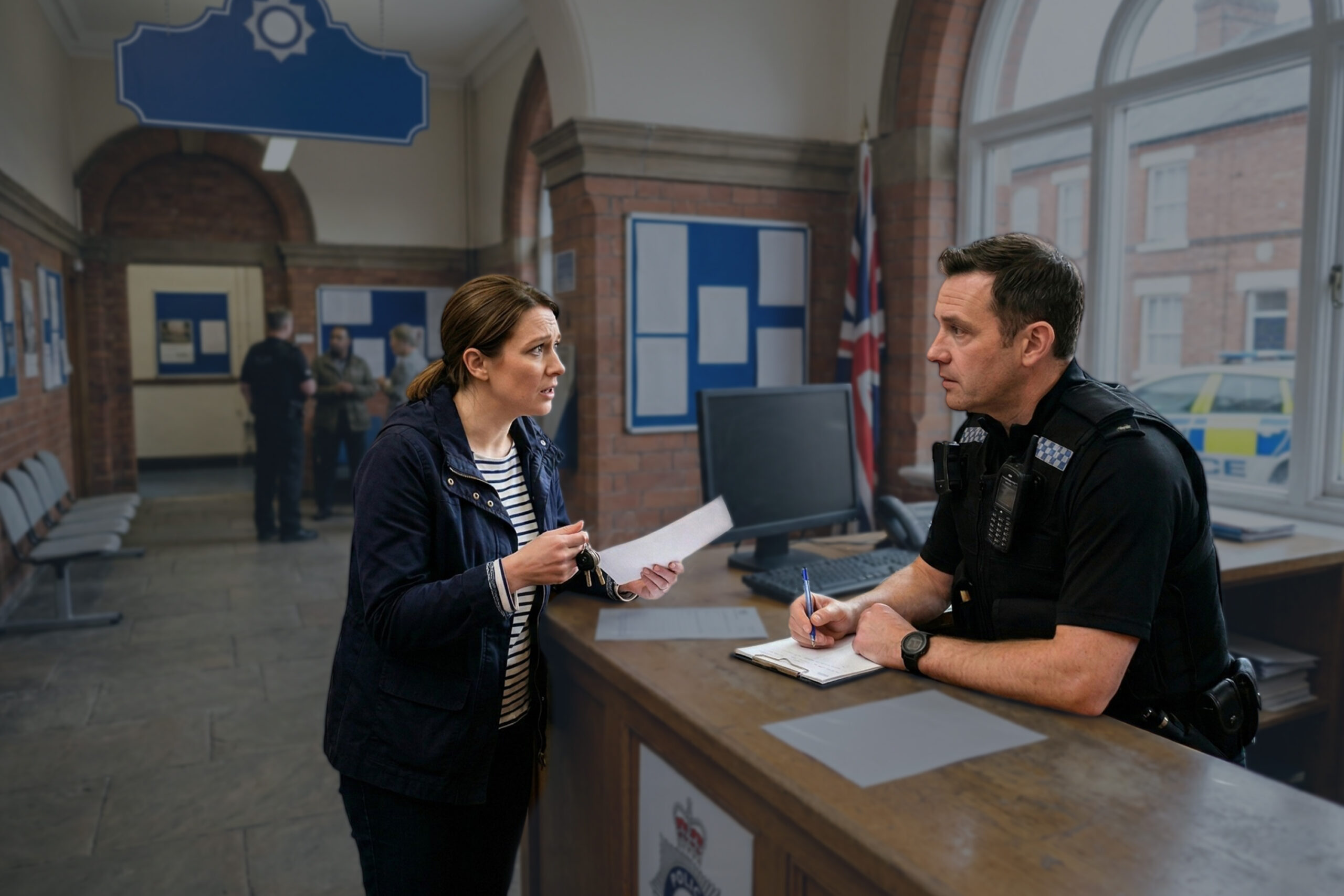
If it is not possible to exchange the required details at the scene, the accident must normally be reported to the police.
In most cases, the accident must be reported within 24 hours.
Drivers can report an accident by:
- Attending a local police station
- Contacting the police through appropriate reporting channels
When reporting an accident, police may ask for details such as:
- The location and time of the collision
- Vehicles involved
- Injuries or damage
- Witness information
Police may investigate further if there are allegations of careless driving, dangerous driving, failing to stop, or other motoring offences.
When Do You Need to Inform Your Insurance Company?
In addition to legal reporting requirements, most motor insurance policies require drivers to notify their insurer after an accident.
Even if the collision appears minor or no claim is made immediately, failing to inform your insurer could affect your policy.
Insurers will typically request details such as:
- Circumstances of the accident
- Other parties involved
- Damage to vehicles
- Police reference numbers if available
It is important to check your policy terms so you understand your reporting obligations.
What Happens If You Fail to Report a Road Traffic Accident?
Failing to comply with accident reporting requirements can lead to criminal offences.
Two common offences arising after collisions are failing to stop and failing to report an accident.
These offences are frequently investigated together.
Failing to Stop
Drivers must stop after an accident where injury or qualifying damage has occurred.
Leaving the scene without stopping may result in prosecution.
Courts treat failing to stop seriously because it can prevent injured people from receiving assistance and may obstruct proper investigation of the incident.
Failing to Report an Accident
If drivers do not provide the required details at the scene, the accident must normally be reported to police as soon as reasonably practicable and within 24 hours.
Failing to do so may result in prosecution.
Penalties can include:
- Penalty points on a driving licence
- Fines
- Disqualification from driving
- In some cases, imprisonment
The exact penalty will depend on the circumstances of the case and the seriousness of the incident.
Sentencing guidance for motoring offences is available through the Sentencing Council.
Facing Legal Issue?
Speak to our Motoring Offences team for confidential advice on your position and next steps.
Strictly Confidential and No Obligation
How a Criminal Defence Solicitor Can Help
Road traffic accident cases can sometimes lead to criminal allegations, particularly where there are disputes about what happened at the scene.
Legal advice may be important where a driver is accused of offences such as:
- Failing to stop after an accident
- Failing to report a collision
- Careless or dangerous driving
- Driving without insurance
A Motoring Offences solicitor can examine the evidence, advise on the applicable law and represent clients if the matter proceeds to court.
Early legal advice can help you understand the allegation, the evidence and the possible consequences.
Contact Our Motoring Defence Solicitors
If you are under investigation or facing allegations following a road traffic accident, obtaining legal advice as early as possible is important.
Our Motoring Offences solicitors regularly represent drivers accused of road traffic offences and can provide clear advice about your legal position and the options available.
To speak with a solicitor about your case, contact our team for confidential legal advice.
5 Key Takeaways
- Drivers involved in certain road traffic accidents must stop and provide their details.
- If details are not exchanged at the scene, the accident must usually be reported to police within 24 hours.
- Accidents involving injury, vehicle damage, certain property damage, or injury to specified animals may trigger legal duties.
- Failing to stop or report an accident can result in criminal charges, penalty points, a fine, disqualification, or imprisonment in serious cases.
- Legal advice can help if you are investigated or charged following a collision.
Frequently Asked Questions
Not every accident must be reported to police. However, if injury or damage occurs and details cannot be exchanged at the scene, the accident should usually be reported within 24 hours.
If details cannot be exchanged at the scene, the accident should normally be reported to police within 24 hours.
Minor accidents may not need to be reported to police if drivers stop and exchange the required information. However, insurance policies may still require notification.
Leaving the scene without stopping can result in prosecution for failing to stop, which may lead to penalty points, a fine, disqualification, or imprisonment in serious cases.
Drivers should provide their name and address, the vehicle registration number and the owner’s details if different. Insurance details may also be required.
You should stop safely, check for injuries, exchange the required details and consider recording evidence such as photographs and witness information.
Call us on 0333 009 6275. We are available to take your call 24 hours a day, 7 days a week.
You can also email us on enquiries@ashmanssolicitors.com or complete our Online Enquiry Form and we’ll be in touch soon.
Get in touch
We’ll respond within 15 minutes during office hours
Search our legal articles
Free expert guidance on criminal law, your rights, and what to expect at every stage.
Searching Legal Help Hub articles
Related insights and updates

Drunk in Charge vs Drink Driving UK: What’s the Legal Difference?

Failing to Provide a Specimen for Analysis – Legal Advice

Drink Driving and Drug Driving Penalties in the UK
Caught Drink Driving in the UK: What Happens Next?
Using a Mobile Phone While Driving in the UK: Law, Penalties and Legal Defence

Mobile Phone Driving Law in the UK: Rules, Penalties and Legal Defences

Totting Up Ban Explained: What Happens If You Reach 12 Penalty Points?

Taking Penalty Points for Someone Else: Is It Perverting the Course of Justice?

What Happens If Your Licence Is Revoked as a New Driver in the UK?
Motoring Offence Convictions in the UK: What You Need to Know

Common Motoring Law Myths in the UK Explained
Mobile Phone Driving Laws in the UK: Rules, Penalties and Legal Defences

Hip Flask Defence in Drink Driving Cases

Failure to Stop After an Accident in the UK: Law, Penalties and Legal Defence
Fail to Produce Driving Documents: Offence, Penalties and Legal Defence
Drug Driving UK: Legal Limits, Penalties and Defences

Driving Without Insurance UK Penalties: Fines, Points and Court Consequences

Driving Whilst Disqualified in the UK: Penalties, Court Process and Legal Defences
Causing Death by Dangerous Driving in the UK: Law, Sentencing and Legal Defence