

Legal Help Hub
12 Common Christmas Crimes in the UK





Introduction
Christmas is often a time for social events, shopping, travel and family gatherings. It can also be a period when people make decisions they later regret.
Alcohol, crowded town centres, workplace parties, financial pressure and busy roads can all lead to criminal allegations during the festive season.
Some incidents may seem minor at the time, but they can still result in arrest, police interview, criminal charge, court proceedings and a criminal record.
Why Crime Increases During the Christmas Period
Several factors contribute to higher levels of crime during the festive period.
Large numbers of people attend social events and Christmas parties, where alcohol consumption is often higher than usual. This can lead to incidents involving assault, public disorder, or drink driving.
Retail activity also peaks during December. Busy shopping environments can lead to increased shoplifting and theft offences.
None of this excuses criminal behaviour. However, it helps explain why certain offences are more commonly investigated at this time of year.
12 Common Christmas Crimes in the UK
Below are some of the most common offences that tend to increase during the festive season.
Drink Driving
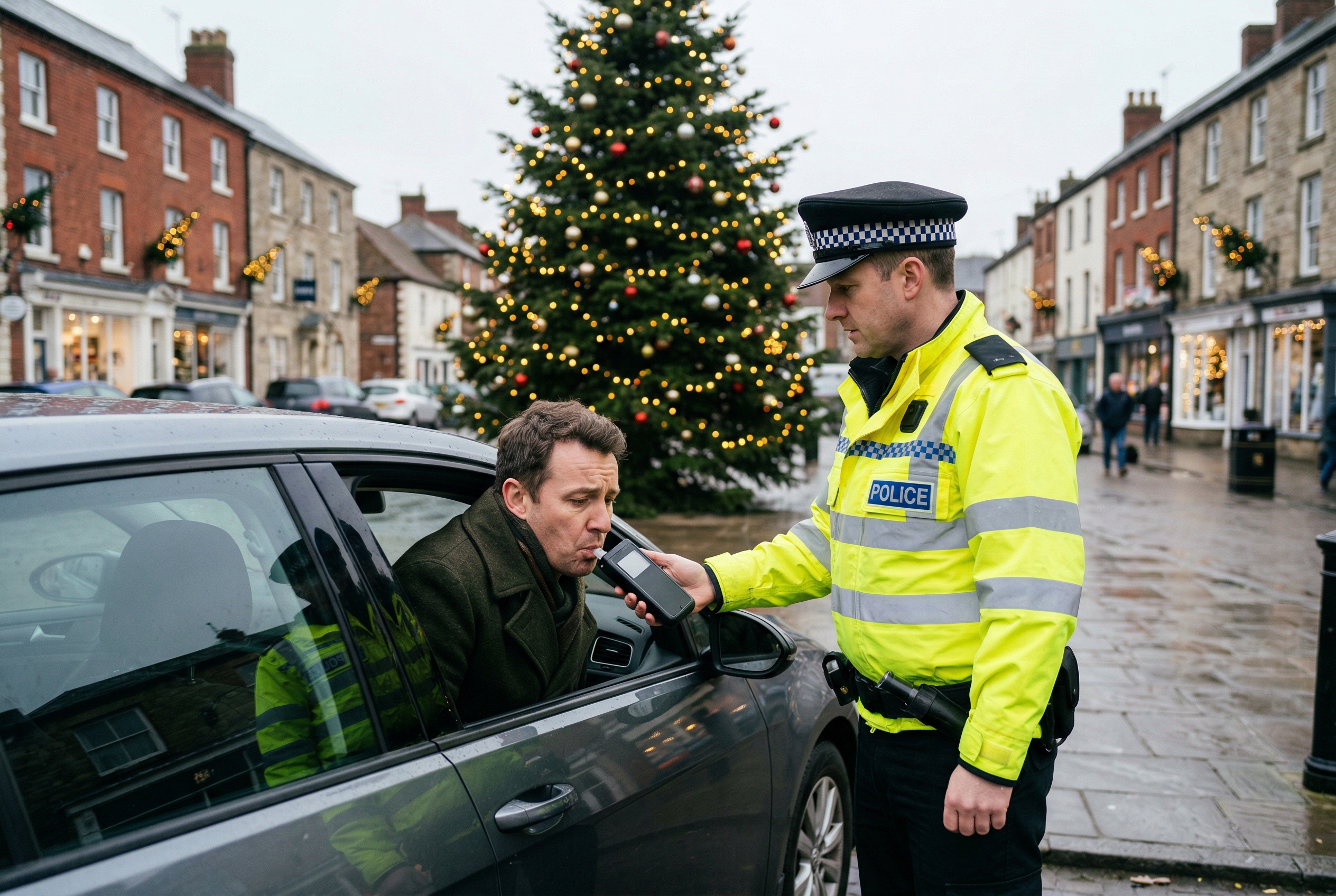
Drink driving is one of the most serious festive-season offences.
Under the Road Traffic Act 1988, it is illegal to drive or attempt to drive a vehicle while over the legal alcohol limit.
Police frequently run targeted drink-driving campaigns during the festive season. Convictions can result in:
- Driving disqualification
- Fines
- Community orders
- Imprisonment in serious cases
Shoplifting
Busy shops, seasonal pressure and crowded retail spaces can lead to theft allegations.
Shoplifting is typically prosecuted as theft under the Theft Act 1968.
Penalties can include:
- Fines
- Community orders
- Imprisonment for more serious cases
Retailers may rely on CCTV, store staff evidence and security records.
Assault at Christmas Parties
Workplace parties and festive nights out can sometimes lead to allegations of assault.
Even relatively minor altercations can result in criminal charges such as:
- Common assault
- Assault occasioning actual bodily harm
Domestic Violence
Christmas can be a difficult period for some households, and police may be called to incidents involving partners, ex-partners, or family members.
Domestic abuse offences can involve:
- Physical assault
- Coercive or controlling behaviour
- Harassment
These cases are treated seriously and may lead to arrest, bail conditions, protective measures and court proceedings.
Public Disorder
Town centres, bars and public transport can become busy during festive nights out.
Police may investigate behaviour such as:
- Drunk and disorderly behaviour
- Threatening behaviour
- Public order offences
These are typically prosecuted under the Public Order Act 1986.
Criminal Damage
Damage to property during nights out, parties, disputes, or domestic incidents may lead to criminal damage allegations.
This offence is governed by the Criminal Damage Act 1971.
Even relatively low-value damage can become a criminal matter if reported to police.
Fraud and Online Scams
Christmas shopping often involves online purchases, deliveries and payment activity.
Common offences include:
- Fraudulent online sales
- Payment scams
- Card fraud
Fraud offences are governed by the Fraud Act 2006.
Theft from Workplaces
Busy workplaces, seasonal stock, cash handling and temporary staffing can lead to theft allegations.
Employers often investigate missing stock or cash shortages during busy periods.
Drug Possession
Drug possession allegations may arise at parties, festivals, private gatherings, nightclubs or traffic stops.
Controlled drug offences fall under the Misuse of Drugs Act 1971.
Penalties depend on:
- The type of drug
- Quantity
- Surrounding circumstances
Burglary
Burglary allegations may arise where homes, shops, storage units, or commercial premises are targeted during the festive period.
Burglary is governed by the Theft Act 1968 and carries significant penalties.
Drunk and Disorderly Behaviour
Drunk and disorderly behaviour may be treated as a lower-level offence, but it can still have consequences.
The outcome may depend on the behaviour, location, level of disruption and whether there are linked allegations.
Driving Without Insurance
The festive period often involves extra travel, borrowing vehicles, driving to parties, or using family cars.
Driving without valid insurance can lead to:
- Penalty points
- Fines
- Vehicle seizure

How Police Approach Crime During the Festive Season
Police forces may increase activity during the festive period, particularly around town centres, retail areas, roads and nightlife venues.
These may include:
- Drink driving patrols
- Town centre policing
- Retail crime operations
- Fraud awareness campaigns
This means incidents may be identified quickly, especially where CCTV, body-worn video, dashcam footage, witness accounts, or digital evidence is available.
Legal Consequences of Christmas Crimes
An offence committed during a festive event is still treated as a criminal matter.
Possible consequences include:
- Police investigation
- Arrest
- Criminal charges
- Court proceedings
- Criminal record
The outcome depends on the allegation, the evidence, previous history, harm caused and whether the matter is admitted or denied.
Facing Legal Issue?
Speak to our Serious & Complex Crimes Defence team for confidential advice on your position and next steps.
Strictly Confidential and No Obligation
What To Do If You Are Accused of a Crime Over Christmas
If you are arrested, invited to a police interview, or charged during the festive period, take the matter seriously.
If you are investigated or charged, it is important to obtain advice from an experienced criminal defence solicitor as early as possible.
A solicitor can:
- Review the evidence
- Advise on your legal position
- Represent you during police investigations
- Prepare your defence if court proceedings follow
Speak With a Criminal Defence Solicitor
If you are facing an allegation linked to Christmas, a night out, workplace party, road incident, or family dispute, legal advice should be taken early.
Our criminal defence solicitors represent clients across England and Wales in a wide range of criminal matters. We provide clear advice and strong legal representation throughout the investigation and court process.
Contact our team to discuss your situation confidentially.
5 Key Takeaways
- Christmas can lead to more police involvement around drink driving, public disorder, shoplifting and domestic incidents.
- A festive setting does not make an offence less serious.
- Alcohol, stress, or a social event will not automatically excuse criminal behaviour.
- Many Christmas allegations rely on CCTV, witnesses, phone evidence, police body-worn video, or store records.
- Early legal advice can help you respond carefully and protect your position.
Frequently Asked Questions
Higher alcohol consumption, large social gatherings, and increased shopping activity can lead to a rise in certain offences during the festive season.
Drink driving, shoplifting, and public disorder offences are among the most frequently reported crimes during December.
Yes. If police suspect an offence such as assault, public disorder, criminal damage, or drug possession, an arrest may be made.
Police may increase patrols and targeted enforcement during December, particularly around drink driving, town-centre disorder and retail crime.
The criminal process is the same. You may be released on bail or kept in custody, and you may be required to attend court.
Yes. If you are convicted, or accept certain outcomes, a Christmas-related offence may result in a criminal record.
Call us on 0333 009 6275. We are available to take your call 24 hours a day, 7 days a week.
You can also email us on enquiries@ashmanssolicitors.com or complete our Online Enquiry Form and we’ll be in touch soon.
Get in touch
We’ll respond within 15 minutes during office hours
Search our legal articles
Free expert guidance on criminal law, your rights, and what to expect at every stage.
Searching Legal Help Hub articles
Related insights and updates

How Autism Can Affect Criminal Sentencing in the UK

Can Bite Mark Evidence Be Used in Criminal Trials in the UK?
Can a Getaway Driver Be Charged With Burglary in the UK?

Can Prisoners Attend Their Sentencing Hearing in the UK?
Can Psychological Harm to a Victim Increase a Criminal Sentence?

CPS Complex Casework Unit: How Serious Criminal Cases Are Prosecuted

Encouraging or Assisting Crime in the UK

GPS Tagging Offenders in the UK After Prison Release

Harbouring an Offender or Escapee in UK Law

Modern Slavery Defence in Criminal Cases

Modern Slavery Defence in Criminal Cases (Section 45 of the Modern Slavery Act 2015)

Prison Visit Rules UK: How to Visit Someone in Prison
The Unduly Lenient Sentence Scheme: When a Sentence Can Be Increased by the Court of Appeal

Unduly Lenient Sentences in the UK: What the Law Says
What Are Your Rights If Arrested in the UK?

Aggravated Trespass During Protest in the UK

Flawed Identification Evidence in Criminal Cases

Judge Interference in Criminal Trials: When Can You Appeal an Unfair Trial?

Identical Witness Statements in Court: What They Mean in a Criminal Case