Legal Help Hub
Causing Death by Careless Driving: How It Differs from Dangerous Driving & What Sentence to Expect






Introduction
Causing death by careless driving is a criminal offence under the Road Traffic Act 1988 in England and Wales. It carries a maximum sentence of five years’ imprisonment and a mandatory driving disqualification.
It differs from causing death by dangerous driving in the standard of driving required for a conviction and the penalties that follow. The distinction affects the prosecution’s decision on which charge to bring and the sentence a court may impose.
This guide explains what the prosecution must prove, how the two offences differ, what evidence may be relevant and what sentence to expect. It applies to England and Wales.
What Is Causing Death by Careless Driving?
Causing death by careless driving is an offence under the Road Traffic Act 1988. It occurs when someone drives a mechanically propelled vehicle on a road or other public place without due care and attention, or without reasonable consideration for other road users, and that driving causes another person’s death.
The prosecution does not need to prove that the driver intended to cause harm. What matters is how the vehicle was driven and whether that driving contributed to the death.
A fatal collision alone does not establish the offence. The prosecution must show that the driving fell below the required standard or was inconsiderate, and that it caused the fatality.
The standard used to assess careless driving
Courts apply an objective test. Driving is considered careless if it falls below the standard expected of a competent and careful driver.
The driver’s personal belief that they were driving safely does not determine the outcome.
Examples may include momentary inattention, misjudging a gap in traffic or failing to observe a junction.
These actions do not automatically amount to careless driving. The court considers the circumstances and whether the required standard was breached.
When the driving is careless rather than inconsiderate
The death by careless driving offence covers two distinct types of conduct. Careless driving involves a failure of driving competence: the driver falls short of the standard expected.
Inconsiderate driving involves a lack of regard for other road users, such as forcing another vehicle to take evasive action.
Both limbs can found a charge of causing death by careless driving. The distinction between them matters less than whether either standard is met on the evidence.
How It Differs From Causing Death by Dangerous Driving
Causing death by dangerous driving is a separate offence under the Road Traffic Act 1988.
Both offences involve fatal outcomes and are assessed against the same benchmark of a competent and careful driver. The main difference is the degree of departure from that benchmark and the sentencing consequences that follow.
The driving standard threshold
For causing death by dangerous driving, the prosecution must show that the standard of driving fell far below what would be expected of a competent and careful driver, and that it would have been obvious to such a driver that driving in that way would be dangerous.
For death by careless driving, the prosecution must show only that the standard fell below. The word “far” carries legal significance. It reflects a materially higher level of culpability and is what separates the two offences in law.
Neither offence requires proof that the driver intended to drive badly or intended to cause harm.
How the prosecution decides which charge applies
The Crown Prosecution Service applies the objective test to the available evidence of driving behaviour. The severity and nature of the departure from the expected standard determines which charge is brought.
A death resulting from a collision does not, by itself, elevate careless driving to dangerous driving. The CPS has stated this explicitly in its published guidance on road traffic fatal offences.
Where the evidence of driving sits close to the boundary between the two standards, the CPS considers the totality of what is known about the manner of driving before deciding which charge the evidence can properly support.
Sentencing differences between the two offences
Causing death by dangerous driving carries a maximum sentence of life imprisonment for offences committed on or after 28 June 2022. For earlier offences, the maximum was 14 years.
Causing death by careless driving carries a maximum of five years’ imprisonment. The current Sentencing Council guideline sets an offence range from a community order to four years’ custody.
The two offences also carry different mandatory driving disqualification periods.
Separate offences apply where a death involves careless driving while under the influence of alcohol or drugs, or driving while disqualified. These may carry different penalties.

What the Prosecution Must Prove
To secure a conviction for death by careless driving, the prosecution must establish five elements:
Each element must be proved to the criminal standard: beyond reasonable doubt. If any element is absent or cannot be proved, that absence can form the basis of a defence.
Proving the driving was careless
The objective test is applied to the manner of driving, not to the driver’s intention or subjective awareness of risk. Evidence of driving behaviour is assessed against the standard of a competent and careful driver.
A momentary error or brief lapse can meet the threshold. The failure does not need to be prolonged, repeated or deliberate. What matters is whether the driving, however briefly, fell below the expected standard.
Proving causation
The prosecution must establish a legal connection between the driving and the death.
This involves showing that the death would not have occurred but for the driving and that the driving was a legally significant cause.
The driver’s conduct must have contributed more than minimally to the death. Simply being involved in the collision is not enough.
For example, another road user’s actions may have contributed to the incident. That does not automatically remove the defendant’s responsibility.
However, if the evidence shows that the death would have occurred regardless of the alleged careless driving, this may be important to the defence.
What Evidence Can Affect the Case?
The evidence in death by careless driving cases is often technical and contested.
Understanding what types of evidence may be gathered, and how they are used, helps explain why early legal advice matters.
Evidence of how the vehicle was being driven
CCTV footage, dashcam recordings and witness accounts can capture what happened in the moments before and during the collision.
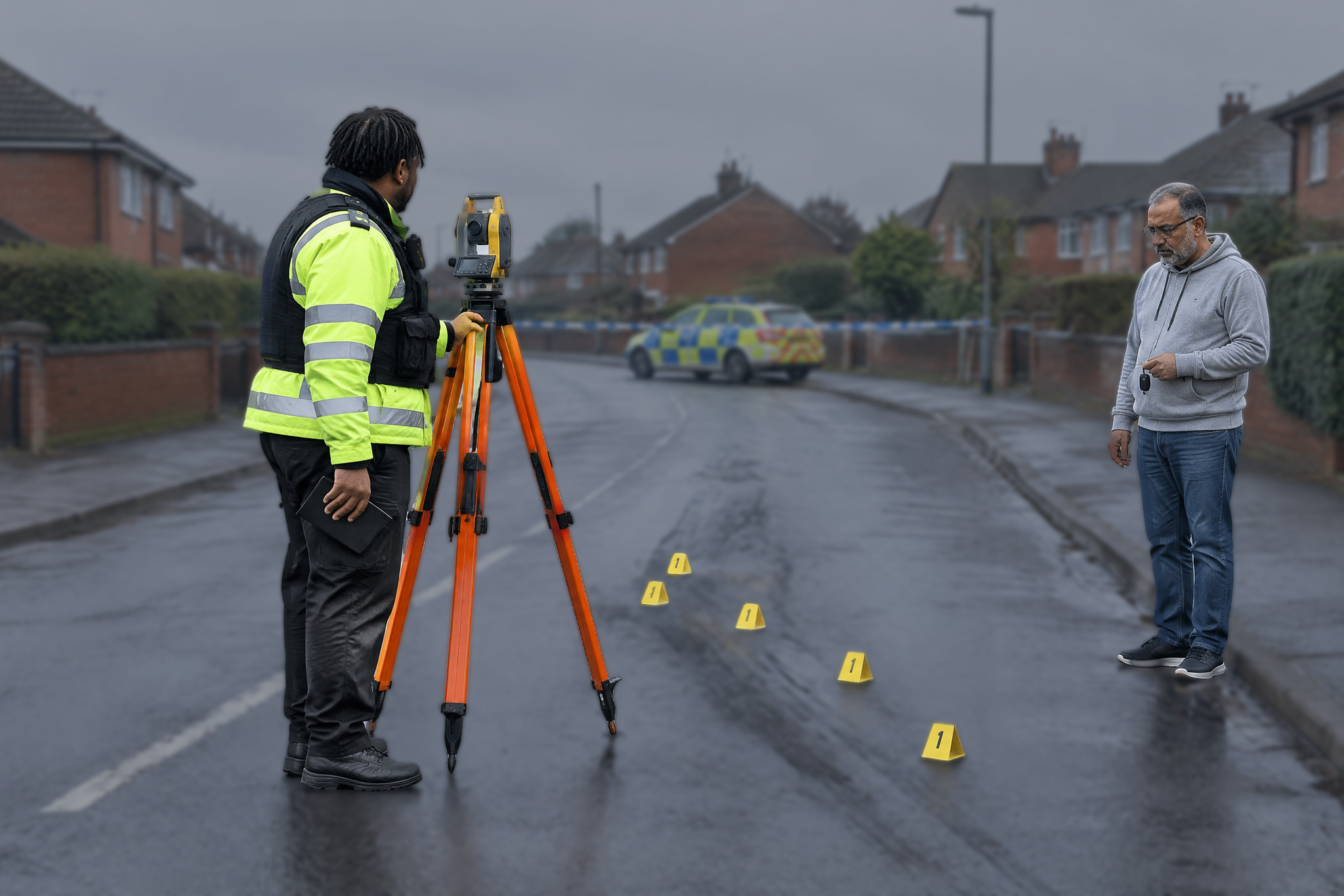
Accident reconstruction experts may be instructed to analyse the physical evidence, including vehicle positions, road markings and damage patterns.
Speed data from telematics systems or event data recorders fitted to the vehicle may be available. Road conditions, weather, visibility and the mechanical condition of the vehicle may all be relevant to how the driving is assessed.
Evidence relevant to the driver’s condition
Where alcohol, drug use or mobile phone use is alleged, this may give rise to separate or more serious charges and will be examined as part of the investigation.
Driver fatigue, medical conditions known to the driver at the time and distractions inside or outside the vehicle may also be considered.
These factors do not automatically determine the outcome. Still, they form part of the picture the prosecution and the court will consider when assessing the driving in a death by careless driving case.
Evidence that may support the defence
Witness accounts may place responsibility elsewhere or describe the driving in terms that do not meet the careless standard.
Independent expert evidence may challenge the prosecution’s accident reconstruction or the conclusions drawn from it.
Evidence that the death would have occurred regardless of the manner of driving is capable of being relevant to causation. Pre-existing road or environmental defects may form part of the defence case where they bear on the cause of the collision.
Penalties and Sentencing for Causing Death by Careless Driving
Causing death by careless driving can be tried in the Magistrates’ Court or Crown Court.
The maximum sentence is five years’ imprisonment.
The Sentencing Council guideline, effective from 1 July 2023 and updated in October 2026, provides an offence range from a community order to four years’ custody.
The court considers the seriousness of the driving and any aggravating or mitigating factors before deciding on the sentence.
How culpability is assessed
The Sentencing Council guideline identifies culpability levels that determine where in the range a death by careless driving sentence begins.
The starting points set out in the guideline are then adjusted upward or downward based on the specific circumstances of the offence and the offender.
Aggravating factors
Driving at excessive speed increases the seriousness of the offence in sentencing. Using a handheld mobile phone or other device while driving is a significant aggravating factor in death by careless driving cases.
Driving a vehicle known to have a defect and failing to stop or report after the collision are also treated seriously by the courts.
Previous relevant convictions, the vulnerability of the victim (for example, a child or a cyclist) and the death of more than one person in the same collision are further factors that can increase the sentence.
Alcohol and drugs give rise to separate offences with higher maximum penalties and are kept distinct from this analysis.
Mitigating factors
Guilty plea reduction
A guilty plea entered at the earliest opportunity attracts a one-third reduction in the sentence that would otherwise have been imposed.
Pleas entered at a later stage attract smaller reductions in accordance with the Sentencing Council’s reduction in sentence for a guilty plea guideline.
In the most serious death by careless driving cases, a reduction does not eliminate the prospect of an immediate custodial sentence. It can, however, make a meaningful difference to the length of custody or to whether a suspended sentence may be available instead.
Does a Conviction Always Mean Prison?
The Sentencing Council guideline allows for community orders and custodial sentences, depending on culpability and the circumstances.
A community order may involve unpaid work, rehabilitation activities or other court-imposed requirements.
A suspended sentence may also be available where the legal requirements are met. This means the court imposes a custodial sentence but suspends its immediate operation, subject to conditions.
More serious driving or significant aggravating factors may make immediate imprisonment more likely.
The court considers all relevant evidence and mitigation. No particular sentence can be guaranteed without assessing the individual case.
Facing Legal Issue?
Speak to one of our Motoring Offences Defence Specialists for confidential advice on your position and next steps.
Strictly Confidential and No Obligation
Driving Disqualification and Retesting
Disqualification from driving is obligatory on conviction for death by careless driving. The minimum disqualification period is 12 months.
Courts frequently impose significantly longer periods depending on the seriousness of the offence.
The court has discretion to order that disqualification continues until the defendant passes an extended driving test. The extended test is more demanding than the standard driving test and requires a separate booking once the disqualification period has expired.
During the period of disqualification, the defendant must not drive and may not apply to the DVLA for a licence.
The conviction will be endorsed on the driver’s licence record. Any existing penalty points count toward future offending once the disqualification ends and the licence is restored.
The Role of a Motoring Offences Solicitor
A solicitor experienced in motoring offences can advise throughout a death by careless driving investigation and any court proceedings.
Early involvement is important because what you say during a police interview may affect the case. A solicitor can review dashcam footage, witness statements, accident reconstruction reports and other prosecution evidence.
Where the findings are disputed, independent experts may be instructed to examine how the collision occurred.
If the prosecution alleges dangerous rather than careless driving, a solicitor can assess whether the evidence supports the higher legal threshold. They can also advise on plea decisions, sentencing guidelines and the presentation of mitigating circumstances.
Where a case proceeds to trial, legal representation can help ensure the evidence and relevant legal arguments are properly examined.
A solicitor can also explain the practical consequences of conviction, including imprisonment, driving disqualification and retesting.
Speak to a Motoring Offences Solicitor
If you are under investigation or have been charged with causing death by careless driving, early legal advice can help you understand your position and the available options.
Ashmans Solicitors can review the evidence, advise on police interviews and court proceedings, and explain the potential sentencing and driving disqualification consequences.
Speak to our Motoring Offences solicitors for advice about your circumstances and next steps.
5 Key Takeaways
- Causing death by careless driving requires proof that the driving fell below the expected standard and caused another person’s death.
- Dangerous driving involves a higher legal threshold. The driving must fall far below the standard of a competent and careful driver and be obviously dangerous.
- The maximum sentence for causing death by careless driving is five years’ imprisonment, but community orders and suspended sentences may be available.
- A driving ban is mandatory, with a minimum period of 12 months. The court may also require an extended driving test.
- Early legal advice can help assess the evidence, challenge the charge where appropriate and address mitigation at sentencing.
Frequently Asked Questions
Causing death by careless driving is a criminal offence under the Road Traffic Act 1988. It occurs when careless or inconsiderate driving causes another person’s death.
Careless driving falls below the standard of a competent and careful driver. Dangerous driving falls far below that standard and involves obvious danger.
No. A death does not automatically mean dangerous driving. The prosecution must assess how the vehicle was driven and whether the evidence supports careless or dangerous driving.
Yes. A brief lapse may satisfy the careless driving requirement if the driving fell below the expected standard and caused the death. The conduct does not need to be deliberate or prolonged.
The guideline range is from a community order to four years’ imprisonment, within a statutory maximum of five years. The outcome depends on culpability, aggravating and mitigating factors, and any guilty plea. Prison is not automatic.
Yes, subject to the law on special reasons. The normal minimum disqualification period is 12 months, although courts may impose longer bans.
As early as possible. A solicitor can advise before a police interview, review the evidence and explain the potential charges and sentencing consequences.
Yes, if the evidence supports the higher dangerous driving threshold. The CPS assesses the circumstances and the standard of driving before deciding which charge is appropriate.
Call us on 0333 009 6275. We are available to take your call 24 hours a day, 7 days a week.
You can also email us on enquiries@ashmanssolicitors.com or complete our Online Enquiry Form and we’ll be in touch soon.
Get in touch
We’ll respond within 15 minutes during office hours
Search our legal articles
Free expert guidance on criminal law, your rights, and what to expect at every stage.
Searching Legal Help Hub articles
Related insights and updates

Drink Driving the Morning After: How Long Alcohol Stays in Your System & the Law

Drug Driving Blood Tests: How Accurate are They and Can the Result Be Challenged?

Careless Driving vs Dangerous Driving: What Is the Difference and Why Does It Matter?

Can I Reopen old Conviction from Two Years Ago If I Knew Nothing About It?

Drunk in Charge vs Drink Driving UK: What’s the Legal Difference?

Failing to Provide a Specimen for Analysis – Legal Advice

Drink Driving and Drug Driving Penalties in the UK
Caught Drink Driving in the UK: What Happens Next?

Using a Mobile Phone While Driving in the UK: Law, Penalties and Legal Defence

Mobile Phone Driving Law in the UK: Rules, Penalties and Legal Defences

Totting Up Ban Explained: What Happens If You Reach 12 Penalty Points?

Taking Penalty Points for Someone Else: Is It Perverting the Course of Justice?

What Happens If Your Licence Is Revoked as a New Driver in the UK?
Motoring Offence Convictions in the UK: What You Need to Know

Common Motoring Law Myths in the UK Explained
Mobile Phone Driving Laws in the UK: Rules, Penalties and Legal Defences

How to Report a Road Traffic Accident in the UK

Hip Flask Defence in Drink Driving Cases

Failure to Stop After an Accident in the UK: Law, Penalties and Legal Defence