Legal Help Hub
Can I Be Named in the Press for a Sexual Offence Before Being Charged?






Introduction
UK Supreme Court confirmed that a person under criminal investigation has a reasonable expectation of privacy before being charged. This protection is not absolute, and publication may still be justified in certain circumstances.
The position changes sharply once a charge is brought. This article explains your privacy rights, when the press may identify you and what to do if a journalist contacts you or publication is threatened.
Complainants in sexual offence cases have separate statutory anonymity protections, generally lasting for life. Those protections do not automatically extend to suspects.
Can the Press Name a Sexual Offence Suspect Before Charge?
A journalist or broadcaster is not automatically prohibited from naming a sexual offence suspect before charge. In England and Wales, suspects do not have blanket statutory anonymity in sexual offence cases at any stage of the process.
However, privacy law, media regulation and editorial standards place limits on what can be published.
The absence of automatic anonymity does not mean the press can identify someone without considering their legal rights.
Whether publication is lawful depends on the circumstances, including the person’s privacy interests and any genuine public interest in reporting their identity.
What the statutory position covers and what it does not
Complainants in sexual offence cases generally receive lifelong anonymity under the Sexual Offences (Amendment) Act 1992.
This protection applies regardless of whether a charge is ever brought and regardless of the outcome of any proceedings. It covers a wide range of offences, including rape, sexual assault, exposure and taking an indecent photograph of a child.
Suspects and defendants do not have the same automatic statutory protection. Their names may be published where the law permits, particularly after criminal charges are brought and court proceedings begin.
However, reporting restrictions may apply in individual cases. Naming a defendant must also not unlawfully identify a complainant.
Privacy Before Charge and Automatic Anonymity: The Difference
Privacy before charge is different from automatic statutory anonymity.
In February 2022, the UK Supreme Court confirmed that a person under criminal investigation generally has a reasonable expectation of privacy before being charged.
This protection arises from the right to respect for private and family life under Article 8 of the European Convention on Human Rights.
However, it is a starting point rather than an absolute right. A court may decide that publication is justified where freedom of expression and the public interest outweigh the person’s privacy.
A sexual offence suspect may therefore have grounds to challenge being named, but publication is not automatically unlawful.
Why anonymity before charge matters in practice
Being named before charge in connection with a sexual offence can cause serious damage to reputation, employment and personal relationships even if no prosecution ever follows.
An investigation may be discontinued, or it may result in no charge at all. If a person is identified publicly at that earlier stage, the harm caused cannot easily be undone, and there may be no public interest outcome that justified it.
This is the practical problem the law of privacy attempts to address. It does not eliminate the risk of publication, but it does give a person under investigation for a sexual offence legal tools they would not otherwise have.
When Might Naming a Sexual Offence Suspect Be Justified?
Publication before charge may be justified where there is a genuine public interest that outweighs the suspect’s privacy.
The fact that an allegation attracts public attention does not automatically mean naming the person serves the public interest.
Courts consider the reason for publication, the nature of the allegations and the likely effect on the person being identified.
Relevant factors may include whether the suspect holds public office, whether the alleged conduct relates to a position of trust or whether publication addresses a genuine public safety concern.
Factors against publication may include an early-stage investigation, limited supporting information and the absence of any wider public interest.
Media regulators such as IPSO and IMPRESS also have editorial standards addressing privacy and public interest.
A breach of an applicable code may support a regulatory complaint, although the remedies differ from those available through court proceedings.
What “public interest” means in this context
Public interest does not mean that readers find a story compelling or that there is widespread curiosity about a sexual offence allegation. Regulators and courts require a genuine public benefit to justify overriding privacy.
Examples accepted in case law and regulatory guidance include preventing ongoing harm to others, exposing abuse of public office, and holding those in positions of responsibility to account for conduct related to that responsibility.
The assessment is fact-specific. What amounts to public interest in one case may not do so in another, even where the allegations are similar in nature.
Social media and identification by non-press sources
Being identified on social media raises different issues from publication by a regulated newspaper.
IPSO and IMPRESS rules apply to publishers covered by their respective regulatory schemes. They do not automatically apply to private individuals posting on social media.
However, privacy and other civil laws may still be relevant.
For example, publishing private information about an ongoing investigation could potentially lead to a misuse of private information claim, depending on the circumstances.
Harassment law may also apply where someone repeatedly targets or threatens an individual online.
Identifying a sexual offence complainant can raise separate criminal issues because statutory anonymity applies to social media publications as well.
If someone threatens to identify you online, seek advice promptly about the available options.
What Changes After a Sexual Offence Charge?
The legal position shifts significantly at the point of charge. The open justice principle holds that court proceedings are conducted in public and that the identity of a charged defendant is generally a matter of public record.
The expectation of privacy that generally applies before charge will not ordinarily prevent reporting of the charge or identification of the defendant.
However, the press must still comply with reporting restrictions and the laws governing active criminal proceedings.
The Contempt of Court Act 1981 becomes directly relevant once proceedings are active. Proceedings become active from the point of charge.
From that point, the strict liability rule applies: a publication that creates a substantial risk of serious prejudice to active proceedings can be a criminal offence, regardless of the publisher’s intent.
This rule is directed at the media and is designed to protect the integrity of the trial process. It limits what can be published about the case, but it does not restore the suspect’s privacy interest.
Court-ordered reporting restrictions and anonymity orders
Courts have the power to impose reporting restrictions that limit what the press may publish about a sexual offence case, including the identity of those involved.
An application for such an order must be made to the court and supported by legal argument. The grounds are case-specific and the threshold is not easily met. Whether an application is viable in a particular case is a question for a solicitor with knowledge of the proceedings.
What to Do if a Journalist Contacts You About a Sexual Offence
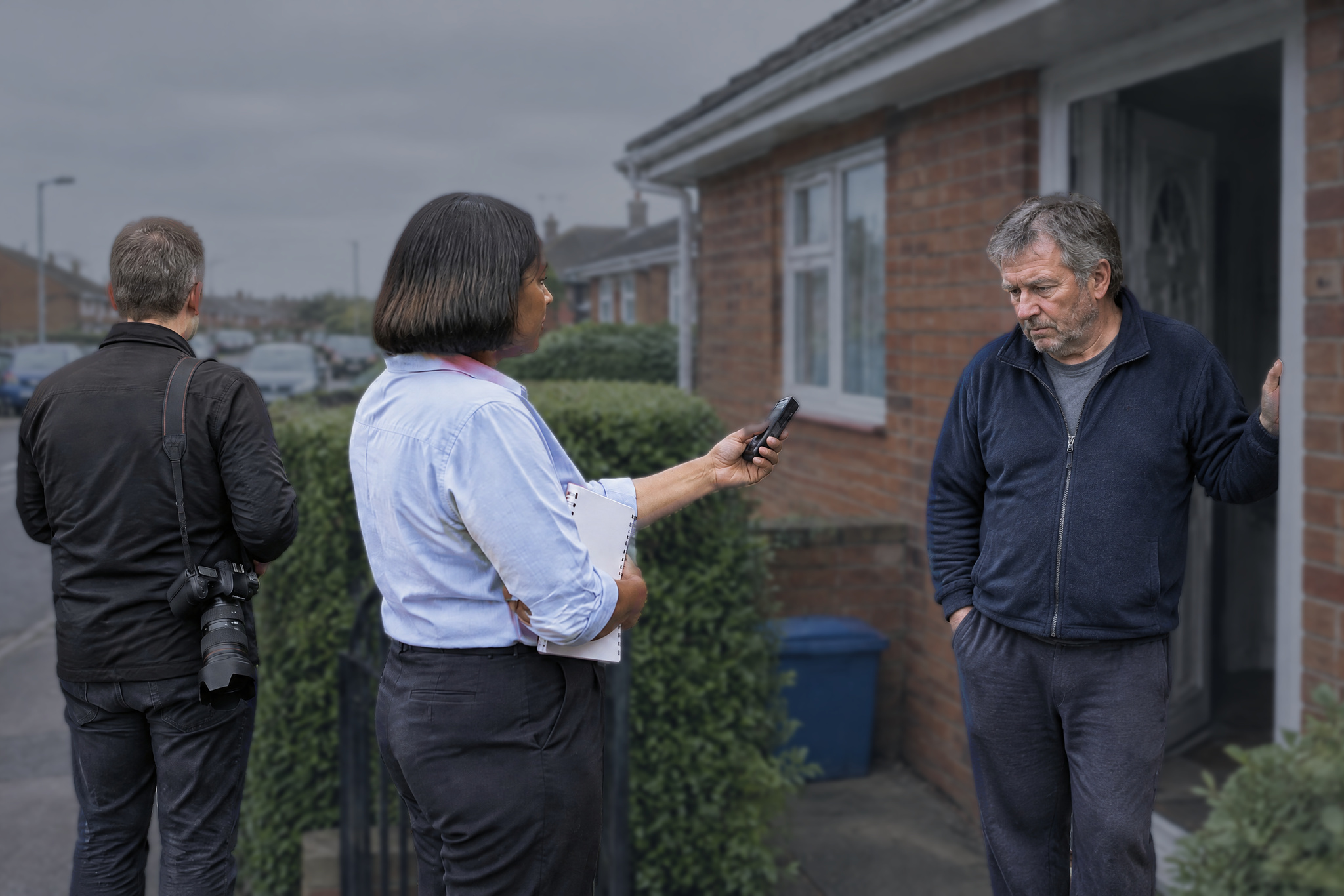
If a journalist contacts you to say they are investigating a sexual offence allegation or intend to publish a story naming you, the most important immediate step is to contact a solicitor.
Do not respond to the journalist, make any public statement or comment on the allegation in any form. Even a denial can give a publication material to use and can complicate your legal position.
Note the journalist’s name, the outlet they work for, the questions they asked, and the time and method of contact. This information will be relevant if legal steps are taken. Keep a record of any message, voicemail or email you receive.
A solicitor can assess whether the planned publication about the sexual offence allegation would be lawful, contact the publication directly on your behalf, and advise on whether urgent steps are available to prevent or delay publication.
What not to say or do
- Do not comment on the sexual offence allegation publicly, whether by speaking to the journalist, posting on social media or discussing the matter in any forum that could become public.
- Do not contact the complainant or anyone connected to the allegation. Doing so could create further legal exposure, including potential interference with a witness or breach of any conditions attached to your release.
- Do not attempt to manage press contact without legal support.
Facing Legal Issue?
Speak to one of our Sexual Offences Defence Specialists for confidential advice on your position and next steps.
Strictly Confidential and No Obligation
Options if Publication Is Threatened or Has Already Happened
Your options depend on whether publication is being threatened or has already taken place. Where publication has not yet occurred, a solicitor may write to the publisher explaining your privacy rights and asking it to reconsider.
In some cases, this may lead to the story being delayed or the identifying details being removed. If publication remains imminent, an application for an interim injunction may be possible.
The court will consider the strength of the privacy claim, the competing right to freedom of expression and the legal requirements for restricting publication. An injunction is not guaranteed, and urgent applications require careful preparation.
Where a story has already been published, potential remedies may include a misuse of private information claim, a defamation claim or a complaint to the relevant press regulator.
The appropriate approach depends on what was published and whether it was unlawful, inaccurate or unjustified.
Misuse of private information: the key points
A misuse of private information claim may be available where a publisher discloses private information without sufficient justification. The information does not need to be false.
For example, accurately reporting that someone is under investigation could still interfere with their privacy rights where publication is not justified by the circumstances. A successful claim may result in damages or restrictions on further publication.
However, the court must balance the person’s privacy against the publisher’s freedom of expression.
Defamation: when it may be relevant
Defamation may be relevant where a published statement is defamatory, has caused or is likely to cause serious harm to reputation, and no applicable defence succeeds.
For example, a report presenting an unproven allegation as a fact may raise concerns. However, defamation law includes defences such as truth and publication on a matter of public interest.
It is a separate legal route from misuse of private information, and not every inaccurate report will support a successful claim. A solicitor can assess whether the publication meets the legal requirements.
Regulatory complaints to IPSO or IMPRESS
You may be able to complain to IPSO or IMPRESS if the publisher is covered by the relevant regulator and has breached its editorial code.
For example, a complaint may concern unjustified intrusion into privacy or inaccurate reporting. A successful complaint may lead to a correction, adjudication or other regulatory action.
However, these complaints do not normally provide financial compensation. The most suitable route depends on whether you want to challenge accuracy, prevent further publication or pursue compensation for harm.
How a Solicitor Can Help with a Sexual Offence Press Identification
A solicitor can assess your privacy rights and advise on whether the press may lawfully identify you during a sexual offence investigation.
The advice will depend on the stage of the case, whether a journalist has contacted you and what information is being published or threatened. Before publication, a solicitor may contact the publisher to explain your legal position and request that identifying details are withheld.
They can also advise on urgent applications to prevent publication where the legal requirements are met. If a story has already appeared, they can assess whether a privacy claim, defamation action or regulatory complaint is appropriate.
Because criminal defence and media law involve different areas of practice, specialist advice may be needed to address both the investigation and any threatened publication.
Speak to our Sexual Offences solicitor for advice about your circumstances and the next steps.
5 Key Takeaways
- Sexual offence suspects do not have automatic statutory anonymity in England and Wales, unlike complainants, who generally receive lifelong protection.
- People under criminal investigation generally have a reasonable expectation of privacy before charge, although it can be outweighed by competing rights.
- Naming a suspect before charge may be justified by a genuine public interest, but the decision depends on the circumstances.
- After charge, open justice generally allows adult defendants to be named, subject to applicable reporting restrictions.
- If a journalist contacts you or threatens publication, seek legal advice promptly and avoid commenting publicly before understanding your options.
Frequently Asked Questions
There is no automatic statutory anonymity for suspects. However, people under investigation generally have a reasonable expectation of privacy before charge. Whether publication can be challenged depends on the circumstances and public interest.
No. Complainants generally have lifelong statutory anonymity under the Sexual Offences (Amendment) Act 1992. Suspects and defendants do not have equivalent automatic protection.
Possibly. An urgent injunction may be available where publication would unjustifiably interfere with your privacy. The court must consider the competing legal rights and requirements for restricting publication. Seek legal advice promptly.
Once charged, adult defendants are generally identified in public court proceedings under the principle of open justice. Reporting restrictions may apply in particular circumstances, but they are not automatic.
Misuse of private information concerns unjustified publication of private information, even where it is true. Defamation concerns reputational harm from defamatory statements and is subject to separate legal requirements and defences.
Press regulation applies to publishers covered by the relevant schemes, not automatically to private social media users. However, privacy and harassment laws may still provide remedies depending on the circumstances.
Seek legal advice before responding. Even a denial may be quoted or affect your position. Keep a record of the journalist’s questions and contact details so your solicitor can assess the situation.
Call us on 0333 009 6275. We are available to take your call 24 hours a day, 7 days a week.
You can also email us on enquiries@ashmanssolicitors.com or complete our Online Enquiry Form and we’ll be in touch soon.
Get in touch
We’ll respond within 15 minutes during office hours
Search our legal articles
Free expert guidance on criminal law, your rights, and what to expect at every stage.
Searching Legal Help Hub articles
Related insights and updates

Sexsomnia Defence in Sexual Offence Allegations (UK Law)

Falsely Accused of Sexual Assault in the UK: What Should You Do?

Sex Offenders Register UK: What It Is and How Notification Requirements Work

Sexual Activity Without Consent Under UK Law

Revenge Porn Law in the UK: Offences, Penalties and Legal Defences

What Is the Age of Consent in the UK?

Falsely Accused of Rape in the UK: Legal Defence and What You Should Do

Can I Be Disqualified as a Company Director After a Criminal Conviction?

Can I Be Named in the Press for a Sexual Offence Before Being Charged?

Unauthorised Access to a Computer System: Could You Face Prosecution?

Can I Be Prosecuted for a Public Order Offence on Social Media?

A Restraint Order Has Frozen My Assets Before Trial: What Can Be Done?

Unexplained Wealth Order Served on a Spouse: What to Do When the Assets are in Your Name

A WhatsApp Group is Being Investigated for Insider Dealing: I Posted but Never Traded. Am I in Trouble?

Can a Violent Crime Charge Be Reduced to a Lesser Offence?

What Could I Be Liable for if an Investment Service I Promoted on Instagram Collapses?

Can HMRC Freeze My Bank Account?

Can Domestic Abuse Charges Be Dropped If the Complainant Withdraws?

Can a First-Time Drug Possession Charge Be Avoided? Cautions, Resolutions and Diversion