

Legal Help Hub
Do You Need a Solicitor During a Police Interview in the UK?






Introduction
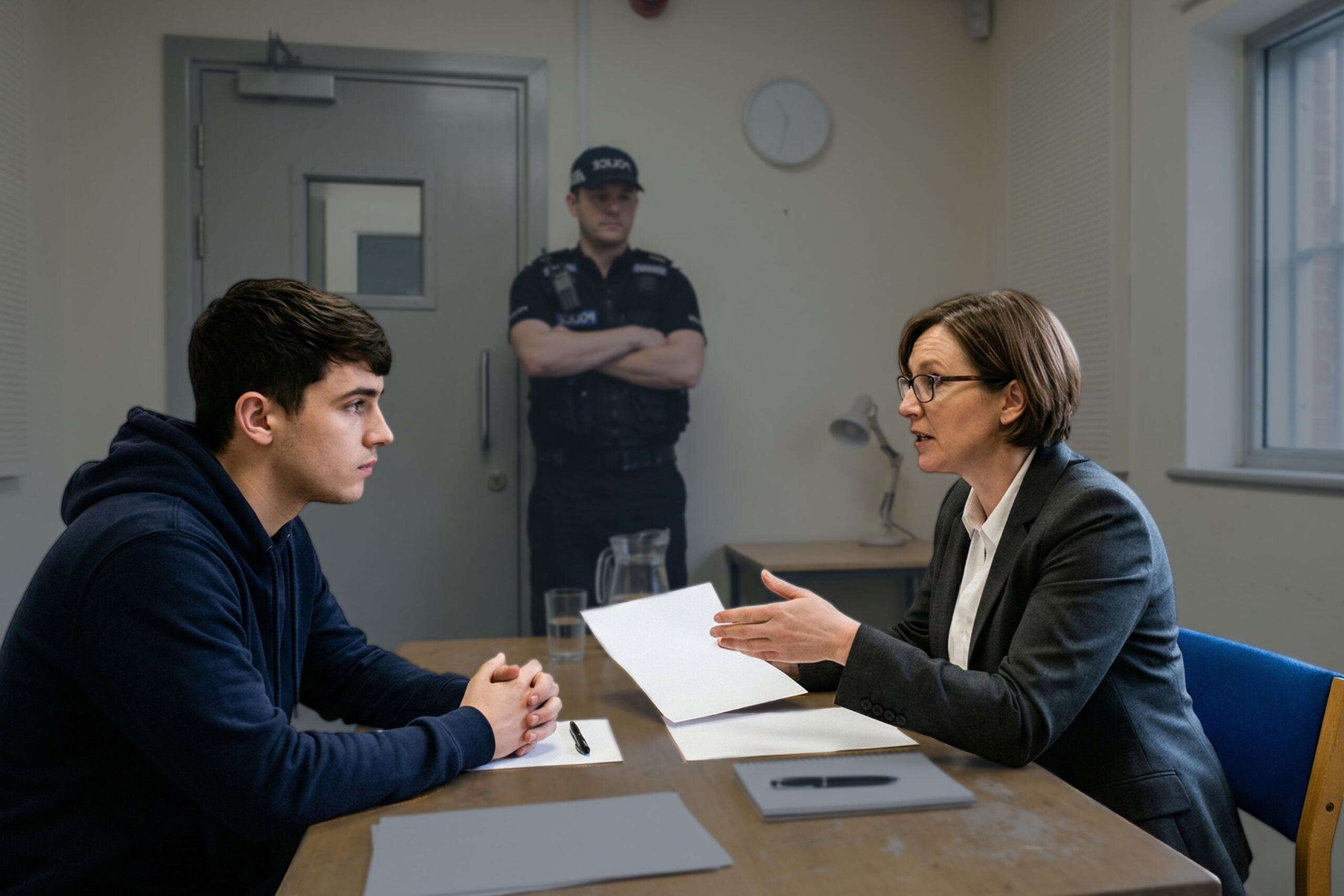
Being asked to attend a police interview can feel unsettling, especially if you have never been involved in a criminal investigation before.
You may be unsure whether you need a solicitor, whether you should answer questions, or whether attending voluntarily means the matter is less serious.
A police interview is a formal part of an investigation. It usually takes place under caution, and what you say may later be used as evidence.
Having a Criminal Defence solicitor present can help you understand the allegation, protect your rights and decide how best to respond.
What Is a Police Interview in the UK?
A police interview is a formal questioning process about a suspected criminal offence.
Once a charge is made, the case will usually move into the court process.
Interviews usually take place under caution. This means the individual being questioned is warned that:
“You do not have to say anything, but it may harm your defence if you do not mention when questioned something which you later rely on in court.”
This caution reflects the legal framework established under the Police and Criminal Evidence Act 1984 (PACE).
Police interviews may occur in different circumstances, including:
- After an arrest
- During an investigation where you are a suspect
- As part of a voluntary police interview
Regardless of the situation, anything said during the interview may later be relied upon by the prosecution.
For this reason, legal advice is strongly recommended before answering police questions.
Your Legal Rights During a Police Interview
If you are being interviewed by police, you have important rights.
These rights include:
- The right to remain silent
- The right to legal advice
- The right to be informed of the allegation
- The right to proper treatment during detention or questioning
These protections are set out in the Police and Criminal Evidence Act 1984.
Police must follow interview rules under PACE Code C. If proper procedures are not followed, this may become relevant later in the case.
A defence solicitor can ensure these rights are respected throughout the interview process.

Why Having a Solicitor During a Police Interview Is Important
Many people think they only need a solicitor if they have done something wrong. That is not the case.
Investigators may already possess evidence before the interview takes place. The purpose of the questioning may be to:
- Clarify details
- Test explanations
- Gather admissions
- Identify inconsistencies
The interview may be used to test your account, seek admissions, identify inconsistencies, or fill gaps in the investigation.
A solicitor provides objective guidance, helping you understand:
- The nature of the allegation
- The available evidence
- The best approach to the interview
A solicitor can help you understand what is being alleged and advise on the safest and most appropriate interview approach.
What Does a Solicitor Do During a Police Interview?
A Criminal Defence solicitor can assist before, during and after the interview.
Their role is to protect your legal interests and ensure the interview process is conducted fairly.
Pre-Interview Advice
Before the interview begins, the solicitor will speak with you privately. This discussion allows them to understand your circumstances and provide advice on how the interview should be approached.
This advice may include whether to:
- Answer questions
- Provide a prepared statement
- Exercise your right to silence
The right approach may involve answering questions, giving a prepared statement, or exercising your right to silence.
Reviewing Police Disclosure
Before interview, a solicitor can ask the police what the allegation is and what evidence they are relying on at that stage.
This is often called pre-interview disclosure.
A solicitor can assess whether the disclosure is enough to advise you properly and can ask further questions where needed.
This step is critical in determining how the interview should be handled.
Protecting Your Legal Position
During the interview itself, the solicitor ensures that:
- Questioning is conducted fairly
- Procedures are followed correctly
- Inappropriate questions are challenged
The solicitor does not answer questions for you. Their role is to advise and safeguard your position throughout the process.
Their presence ensures that your legal rights are protected throughout the process.
Voluntary Police Interviews and Legal Advice
You are not under arrest, and you do not have to consent to being interviewed. You are free to leave unless you are arrested.
A voluntary interview may be used where police suspect you of an offence but have arranged questioning without arrest.
Despite the name, these interviews should still be treated seriously. The police may still be investigating a suspected offence, and any information provided may later be used in court proceedings.
Attending a voluntary interview without legal advice can carry significant risks.
Even though attendance is voluntary, the legal consequences of what is said during the interview can be substantial.
Facing Legal Issue?
Speak to our Serious and Complex Crime team for confidential advice on your position and next steps.
Strictly Confidential and No Obligation
What Happens If You Attend Without a Solicitor?
You are entitled to choose whether to have a solicitor. However, attending without advice can put you at a disadvantage.
Police officers are trained investigators who conduct interviews as part of a structured evidence-gathering process.
Without proper guidance, individuals may:
- Misunderstand the allegation
- Provide unclear answers
- Inadvertently contradict themselves
- Reveal information that may later be interpreted negatively
Police interviews are not informal conversations. They are evidence-gathering exercises.
Taking legal advice helps ensure that any decision to answer questions, provide a prepared statement, or remain silent is made with proper understanding.
Speak to a Criminal Defence Solicitor
If the police have asked you to attend an interview, legal advice should be taken before you answer questions.
Our Criminal Defence solicitors can speak to police, advise you before interview and attend the interview with you.
An experienced criminal defence solicitor can:
- Explain your legal rights
- Assess the available evidence
- Advise you on how to approach police questioning
- Ensure your interests are properly protected
If you have been contacted by the police regarding an interview, you may wish to seek advice from a criminal defence solicitor who can guide you through the process.
5 Key Takeaways
- A police interview is a formal part of a criminal investigation.
- You have the right to legal advice before and during questioning.
- Voluntary interviews are still interviews under caution.
- What you say in interview may later be used as evidence.
- A solicitor can advise on whether to answer questions, give a prepared statement, or remain silent.
Frequently Asked Questions
You are entitled to legal advice during a police interview. A solicitor can explain your rights and provide guidance on how to respond to police questions.
If you are under arrest, refusing to answer questions may lead to inferences being drawn in court. Legal advice should always be obtained before deciding how to proceed.
A voluntary interview involves attending a police station by arrangement to answer questions regarding an investigation. Despite being voluntary, the interview still takes place under caution.
If you ask for legal advice, police should not normally interview you until you have received it, unless limited exceptions apply. If you choose not to have a solicitor, police may interview you without one.
It depends on the case. Some interviews are short, while others take longer because of the evidence, number of questions, or need for breaks.
Yes. What you say in a police interview may be used as evidence if the case later goes to court.
Call us on 0333 009 6275. We are available to take your call 24 hours a day, 7 days a week.
You can also email us on enquiries@ashmanssolicitors.com or complete our Online Enquiry Form and we’ll be in touch soon.
Get in touch
We’ll respond within 15 minutes during office hours
Search our legal articles
Free expert guidance on criminal law, your rights, and what to expect at every stage.
Searching Legal Help Hub articles
Related insights and updates

How Autism Can Affect Criminal Sentencing in the UK

Can Bite Mark Evidence Be Used in Criminal Trials in the UK?

Can a Getaway Driver Be Charged With Burglary in the UK?

Can Prisoners Attend Their Sentencing Hearing in the UK?

Can Psychological Harm to a Victim Increase a Criminal Sentence?

CPS Complex Casework Unit: How Serious Criminal Cases Are Prosecuted

Encouraging or Assisting Crime in the UK

GPS Tagging Offenders in the UK After Prison Release

Harbouring an Offender or Escapee in UK Law

Modern Slavery Defence in Criminal Cases

Modern Slavery Defence in Criminal Cases (Section 45 of the Modern Slavery Act 2015)

Prison Visit Rules UK: How to Visit Someone in Prison

The Unduly Lenient Sentence Scheme: When a Sentence Can Be Increased by the Court of Appeal

Unduly Lenient Sentences in the UK: What the Law Says

What Are Your Rights If Arrested in the UK?

Aggravated Trespass During Protest in the UK

Flawed Identification Evidence in Criminal Cases

Judge Interference in Criminal Trials: When Can You Appeal an Unfair Trial?

Identical Witness Statements in Court: What They Mean in a Criminal Case