

Legal Help Hub
Border Force Seized My Cash at the Airport & I Have a Court Date: How Do I Get My Money Back?






Introduction
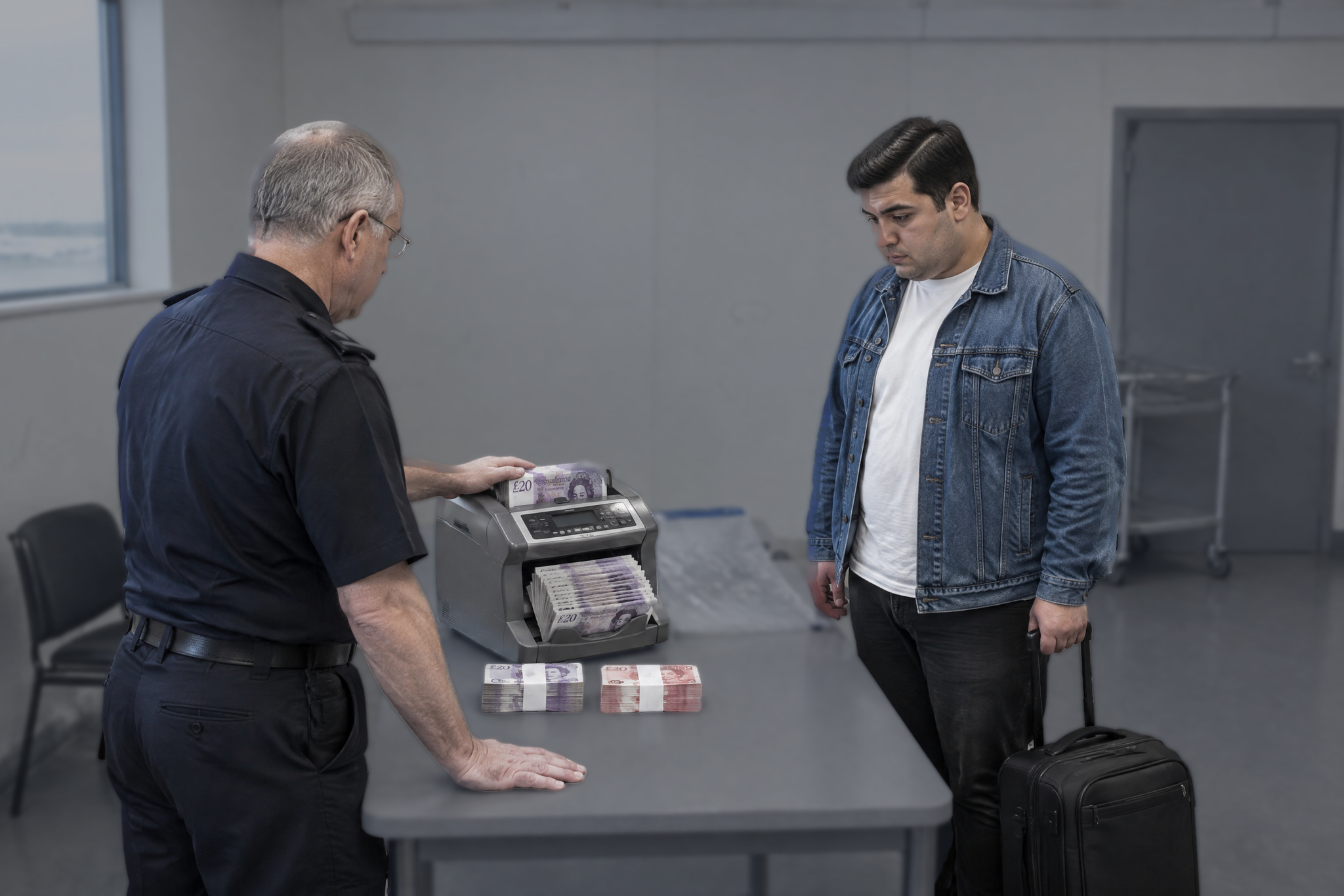
Cash can be seized under the Proceeds of Crime Act 2002 (POCA) without a criminal charge. The court may initially be deciding whether Border Force can continue holding your money, rather than whether it should be permanently forfeited.
Your immediate priorities are to check the court paperwork, establish what type of hearing is listed and gather evidence showing where the money came from and why you were carrying it.
What Should I Do Immediately After Border Force Seizes My Cash?
The first hours after cash is seized matter. Knowing what your paperwork says, understanding the 48-hour window the seizing agency operates within, and beginning to collect evidence as soon as possible will all strengthen your position when you appear before the court.
Check your seizure paperwork and court date
You may have received a receipt for the seized cash and a document known as Form A, which relates to an application for continued detention.
Form A should identify the proposed hearing and provide details of the seizure. Keep copies of everything you were given.
Check whether your hearing concerns detention or forfeiture. These are different stages of the process.
At a detention hearing, the authorities ask the court for permission to keep your money while they investigate. A forfeiture hearing concerns whether the money should be permanently taken.
If you are unsure which hearing you have been listed for, a solicitor can review the paperwork and explain what needs to be prepared.
What happens during the first 48 hours?
Once cash is seized, the seizing agency has 48 hours to take one of four steps: return the cash, apply to a Magistrates’ Court for an order allowing further detention, serve a civil forfeiture notice or issue forfeiture proceedings. If none of those steps is taken within 48 hours, the cash must be returned.
Where the authority applies for and obtains a detention order, the Magistrates’ Court may authorise continued detention for an initial period not exceeding three months.
Further extensions can be granted on subsequent applications, up to a maximum of two years from the date of the original seizure.
These extensions are not automatic. The authority must justify continued detention.
You should seek legal advice before the hearing wherever possible.
Preserving your records immediately
Begin gathering documentary evidence as soon as you can after your cash is seized. The records most likely to assist include bank statements showing funds leaving an account in your name or your business name, business accounts, sales records, invoices, tax returns, purchase contracts and supplier correspondence.
Is It Illegal to Travel With Large Amounts of Cash?
Carrying a large amount of cash is not in itself a criminal offence. There is no legal maximum on how much cash you can physically carry into or out of the United Kingdom.
The amount alone does not prove wrongdoing, and Border Force cannot seize cash under POCA simply because the sum is large.
However, Border Force can seize cash worth at least £1,000 under POCA where officers have reasonable grounds to suspect that it represents proceeds of unlawful conduct or is intended for unlawful use.
The amount of cash may be one factor in an investigation, but it does not establish criminal activity by itself.
For example, suspicion may arise where an explanation for the money conflicts with other information, or where the circumstances of travel raise concerns about its intended use.
A lawful source of funds and a legitimate reason for carrying them can be important when challenging the seizure.
You do not need to be charged or convicted of a criminal offence for civil cash forfeiture proceedings to continue.

How Does Cash Declaration Differ From POCA Seizure?
The cash declaration requirement and the POCA seizure power are two distinct legal obligations arising from different legislation.
They operate independently of one another, and understanding the difference is essential if you want to recover cash seized at the border.
The declaration requirement
You must declare cash of £10,000 or more to UK customs if you are carrying it between Great Britain (England, Scotland and Wales) and a country outside the UK.
The earliest you can make a declaration is 72 hours before you plan to travel. The obligation applies in both directions: arriving and departing.
You must generally declare cash of £10,000 or more when travelling between Great Britain and a country outside the UK.
Different rules apply to Northern Ireland, including a €10,000 declaration threshold for certain journeys.
Failing to make a required declaration can lead to seizure and a penalty of up to £5,000.
What declaration does not do
Completing a declaration does not prevent cash being seized under POCA. If officers have reasonable grounds for suspicion that exist independently of whether a declaration was made, the cash can still be seized for up to 48 hours while that suspicion is investigated.
Declaration satisfies the customs obligation; it does not provide immunity from the POCA seizure power.
If you have received both a cash declaration penalty and POCA seizure paperwork, you may need to challenge them through different procedures.
A solicitor can identify which process applies and the relevant deadlines.
What Evidence Can Help Establish the Source and Intended Use of My Money?
You should gather documents that explain both the source of the money and what you intended to use it for.
The authorities must establish the legal grounds for forfeiture, but having evidence that supports your explanation can make a substantial difference.
How can I show that the money came from a legitimate source?
Useful evidence may include:
- Bank statements and cash withdrawal records.
- Payslips, employment records or dividend payments.
- Business accounts, invoices and sales receipts.
- Documents relating to a property or asset sale.
- Records of a gift or inheritance.
For example, if you withdrew money from your business account to purchase goods abroad, the withdrawal record, business accounts and supplier correspondence may help explain the transaction.
Where money came from several sources, gather evidence for each one rather than relying on a single explanation for the total.
How can I explain why I was carrying the cash?
Documents showing the intended use of the money may also be relevant.
These could include purchase agreements, supplier messages, travel bookings or correspondence confirming an intended business transaction.
If you were taking money abroad for a particular purchase, evidence showing that the purchase had been arranged before your journey may support your account.
Not everyone has formal paperwork for every transaction. Where documents are limited, an accurate written explanation may still help, particularly if it can be supported by other evidence.
Do not create or alter documents to fill gaps in your records. Your solicitor can help you explain missing information and address any differences between your account and what you initially told Border Force.
What Happens at My Cash Detention or a Cash Forfeiture Hearing?
Knowing which type of hearing you are attending is essential for preparing appropriately when cash has been seized. The procedure and purpose differ significantly between a detention hearing and a final forfeiture hearing.
What happens at a detention hearing?
At a detention hearing, the authority must establish grounds for keeping the cash while the investigation continues.
You or your solicitor can challenge those grounds and argue that further detention is not justified.
For example, evidence showing a legitimate source of funds may be relevant to whether the authority should be permitted to continue holding the money.
The court may allow further detention, refuse the application or make another order permitted by law.
A detention order does not mean the cash has been permanently forfeited.
What happens at a forfeiture hearing?
At a forfeiture hearing, the magistrates’ court decides whether the cash should be permanently forfeited.
The authority must prove, on the balance of probabilities, that the money is recoverable property obtained through unlawful conduct or is intended for use in unlawful conduct.
This is the civil standard of proof, not the criminal standard of beyond reasonable doubt.
You can challenge the authority’s evidence and provide documents, witness evidence or other material supporting your explanation.
The court considers the evidence before deciding whether some or all of the cash should be forfeited.
Because this is a civil process, forfeiture may be ordered even where no criminal prosecution has taken place.
How Long Can Cash Be Detained Without a Criminal Charge?
Cash seized under POCA can be detained for an extended period without any criminal charge being brought. The civil detention and forfeiture process operates independently of any decision to prosecute.
The initial 48-hour period
Once cash is seized, it can be held for up to 48 hours without a court order.
During that period, the seizing agency must decide whether to return the cash, apply to a Magistrates’ Court for further detention, serve a civil forfeiture notice or issue forfeiture proceedings.
If no action is taken within 48 hours, the cash must be returned.
Extensions by court order
Where the authority applies for and obtains a further detention order, the Magistrates’ Court may authorise detention for an initial period not exceeding three months. Further extensions can be granted on subsequent applications, subject to a maximum cumulative detention period of two years from the date of the original seizure.
Facing Legal Issue?
Speak to one of our Fraud and Financial Crime Defence Specialists for confidential advice on your position and next steps.
Strictly Confidential and No Obligation
Can I Apply for Release Before the Hearing?
You are not required to wait passively for the final forfeiture hearing when cash has been seized.
There are procedural stages at which continued detention can be challenged and, in some circumstances, release of the cash sought before the final hearing takes place.
Challenging continued detention
At each application for a further detention order, you or your legal representative can appear before the Magistrates’ Court and oppose the extension.
Grounds for opposition may include that the authority has not established reasonable suspicion to the required standard, that the basis for continued detention of the cash seized is insufficient, or that there has been undue delay in progressing the case.
Legal representation at detention hearings makes it more likely that those grounds are articulated effectively.
Applying for release before the final hearing
POCA contains provisions that may allow an application for release of cash seized and detained in certain circumstances before the final hearing, though the availability and procedure for such applications should be confirmed with a solicitor familiar with current POCA practice.
Where early release is sought, the court will consider the strength of the authority’s grounds and the circumstances of the application.
Release before the final hearing is not guaranteed and will depend on the specific facts, the evidence available and the procedural stage reached.
A solicitor can advise whether such an application is viable in your circumstances.
What Are the Consequences of Forfeiture or Missing a Deadline?
A forfeiture order means the court has decided that the money can be permanently taken under POCA.
However, you may still be able to challenge the decision.
Can I appeal a cash forfeiture order?
Yes. In England and Wales, an appeal against a magistrates’ court cash forfeiture decision can be made to the Crown Court.
The appeal must generally be lodged within 30 days of the court’s decision.
The Crown Court considers the case through a rehearing rather than simply reviewing whether the magistrates made a procedural mistake.
It can consider the evidence and make an appropriate order, including ordering the release of cash where an appeal succeeds.
If a forfeiture order has already been made, seek legal advice immediately so that the appeal deadline is not missed.
What if I miss my court date?
Missing a hearing can seriously affect your ability to challenge the seizure.
The court may proceed in your absence, and you could lose the opportunity to present evidence or respond to the authority’s arguments.
There may also be financial consequences, including a possible costs order.
If you cannot attend the listed hearing, contact your solicitor promptly about the appropriate steps.
How a Solicitor Can Support You Through Cash Forfeiture Proceedings
A solicitor experienced in POCA cash seizure and forfeiture proceedings can review the reasons for seizure and assess whether the authorities have sufficient grounds to continue holding your money.
They can help you identify what documents are needed, prepare your explanation of the cash’s source and intended use, and challenge weaknesses in the authority’s evidence.
Depending on the stage of proceedings, a solicitor may also:
- Represent you at a detention or forfeiture hearing.
- Apply for the release of cash where the law permits.
- Oppose an application for continued detention.
- Advise on a forfeiture appeal and the relevant deadlines.
The earlier you obtain advice, the more opportunity there is to prepare evidence and respond before important decisions are made.
If Border Force has seized your cash at an airport and you have received a court date, Ashmans Solicitors can advise you on the proceedings and the options available for seeking its return.
5 Key Takeaways
- Border Force can seize suspected criminal cash without bringing criminal charges, but the authorities must establish the legal grounds for detention or forfeiture.
- Your first court date may be a detention hearing, not the final hearing that decides whether the cash will be permanently forfeited.
- Bank statements, business records and purchase documents can help explain the money’s source and intended use.
- Cash detention can be extended by court order, and applications for release may be available before final forfeiture proceedings.
- A court forfeiture decision can generally be appealed within 30 days.
Call us on 0333 009 6275. We are available to take your call 24 hours a day, 7 days a week.
You can also email us on enquiries@ashmanssolicitors.com or complete our Online Enquiry Form and we’ll be in touch soon.
Get in touch
We’ll respond within 15 minutes during office hours
Search our legal articles
Free expert guidance on criminal law, your rights, and what to expect at every stage.
Searching Legal Help Hub articles
Related insights and updates

Fighting a Prosecution Confiscation Calculation Under POCA

Could I Be Prosecuted for False Accounting Over Accounts Supplied to a Bank?

Reported for Pension Fraud as a Trustee: How Serious is This?

A Restraint Order Has Frozen My Assets Before Trial: What Can Be Done?

Unexplained Wealth Order Served on a Spouse: What to Do When the Assets are in Your Name

A WhatsApp Group is Being Investigated for Insider Dealing: I Posted but Never Traded. Am I in Trouble?

What Could I Be Liable for if an Investment Service I Promoted on Instagram Collapses?

Can HMRC Freeze My Bank Account?

How to Challenge a CIFAS Marker? Step by Step Guide

CIFAS Marker Types Explained: What Your Subject Access Response Means

What Is a CIFAS Marker and How Do You Get One Removed?

Client Has Reported Me for Moving their Money Through My Account. What should I do?

A Client Reported Me to the Police for Fraud Over Building Invoices. What do I do?

Can I Be Accused of Insider Dealing Because a Family Friend Traded Shares?

I Sold a Clocked Car Without Knowing. Can I be Charged with Car Fraud?

Accused of Money Laundering but I Didn’t Know the Money was Criminal: What Is the Defence?

What Is an Unexplained Wealth Order in the UK?

Tinder Fraud in the UK: Criminal Charges, Investigations and Convictions

Seized Cash Court Order UK: How Police Obtain Cash Forfeiture Orders
