Legal Help Hub
Drink Driving the Morning After: How Long Alcohol Stays in Your System & the Law



Introduction
You can still be over the legal drink driving limit the morning after drinking, even after a full night’s sleep and when you feel completely sober.
Alcohol takes time to leave the body, and there is no reliable way to calculate exactly when you will be safe to drive. The same drink driving laws and penalties apply regardless of whether you drank the previous evening or immediately before driving.
This article explains how long alcohol can remain in your system, the legal limits in England and Wales, and what happens if you are stopped by police the following morning.
Can You Be Over the Drink Driving Limit the Morning After?
Alcohol can remain in the body for several hours after drinking stops. Depending on how much you consumed and when you finished drinking, you may still be over the legal limit the following morning.
The prescribed drink driving limits in England and Wales are:
- Blood: 80 milligrams of alcohol per 100 millilitres.
- Breath: 35 micrograms of alcohol per 100 millilitres.
- Urine: 107 milligrams of alcohol per 100 millilitres.
These limits apply throughout the day and night.
For example, someone who drinks heavily until late in the evening may still have alcohol in their system when travelling to work the next morning.
The fact that they have slept or no longer feel intoxicated does not mean their alcohol concentration is below the legal limit.
How Long Does Alcohol Stay in Your System?
The NHS uses an approximate guideline that an average adult processes one unit of alcohol in around an hour.
One unit contains 10 millilitres or eight grams of pure alcohol.
However, this is only a general estimate. It cannot reliably tell you when your alcohol level will fall below the drink driving limit.
Several factors affect how quickly alcohol is processed, including:
- The amount and strength of alcohol consumed.
- Your weight, age and metabolism.
- Liver health and individual biological differences.
- Food intake and the timing of your drinks.
Alcohol can remain detectable in blood, breath or urine for different periods. However, detection times do not establish whether someone is over the legal driving limit.
There is no fixed number of hours after drinking that guarantees you are safe or legally permitted to drive.
How long alcohol can be detected
Alcohol can be detected in the body for varying periods depending on the type of specimen tested:
- Blood: Up to 12 hours
- Breath: 12 to 24 hours
- Urine: 12 to 24 hours after moderate consumption, extending to 72 hours or more after heavier use
- Saliva: Up to 12 hours
Alcohol detection periods, alcohol-related impairment and the legal drink driving threshold are three separate concepts. A driver can be detectably over the prescribed limit without feeling impaired.
Equally, a driver can feel impaired without necessarily being above the legal limit. The law is concerned with the prescribed limit, not with how a driver feels or performs on a subjective assessment.
Why Feeling Sober Does Not Establish Fitness to Drive
Feeling sober does not necessarily mean your alcohol level is below the legal limit. You may feel alert, clear-headed and entirely normal while still carrying alcohol in your system at a level that exceeds the drink driving limit.
Being unaware of the alcohol level in your system is not a legal defence.
Claiming to have felt fine, to have slept well or to have been unaware of still being over the drink driving limit does not constitute a defence in court. The evidential reading is what matters, not the driver’s subjective experience at the time of driving.
Three concepts are relevant here and should be kept distinct:
- Feeling sober is a subjective experience that reflects how a person perceives their own condition.
- Being below the legal limit means the measured alcohol concentration falls below the prescribed statutory threshold.
- Being fit to drive is a broader safety assessment that goes beyond the legal limit.
Being under the drink driving limit means you would not be prosecuted on that reading; it does not mean you are safe to drive.
Do Sleep, Coffee or Food Help Alcohol Leave Your Body?
Sleep
Sleep does not speed up alcohol metabolism. The body continues to process alcohol at the same underlying rate during sleep as it does when a person is awake.
A driver who goes to bed above the drink driving limit may still be above it when they wake up, regardless of how many hours they slept.
Coffee, food and water
Consuming coffee, food or water does not increase the rate at which the liver clears alcohol from the bloodstream. These may affect how a person feels.
For example, by reducing tiredness or settling the stomach. A driver who feels more alert after a strong coffee is not necessarily any closer to being below the prescribed drink driving limit.
Showers and fresh air
Showering or spending time in fresh air does not affect blood alcohol concentration. Both activities may temporarily increase a sense of alertness, but neither reduces the amount of alcohol remaining in the system.
A driver who showers and feels refreshed is not in a different legal position as a result.
Can Calculators or Personal Breathalysers Tell You When to Drive?
Online alcohol calculators
Online alcohol calculators work from estimated population averages. They cannot account for the individual factors that affect metabolism, including liver health, medication use, body composition, the presence or absence of food in the stomach and the precise timing of drinks.
A result from an online calculator is not a legal clearance. It does not establish that the driver is below the drink driving limit and it does not provide a defence to a drink driving charge.
Consumer breathalysers
Consumer breathalysers available from shops or online are not calibrated to the same standard as the type-approved evidential devices used by police at a station.
A reading below the prescribed limit on a consumer device does not guarantee that the same driver would produce an equivalent reading on an approved evidential device.
Obtaining a reading that appears to show a level below the drink driving limit does not constitute a defence to a charge.
The safest approach
No tool currently available to the public provides a legally reliable answer about whether a driver is below the prescribed drink driving limit. If a driver is uncertain whether they are still over the limit, the only safe course is not to drive.
Facing Legal Issue?
Speak to one of our Motoring Offences Defence Specialists for confidential advice on your position and next steps.
Strictly Confidential and No Obligation
What Happens if You Are Stopped the Next Morning?
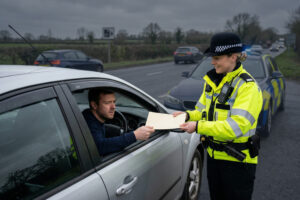
Police can stop a vehicle at any time. However, requiring a preliminary breath test must meet the relevant legal conditions.
An officer may require a test where there are reasonable grounds to suspect alcohol consumption, where a moving traffic offence has occurred or following a road traffic accident.
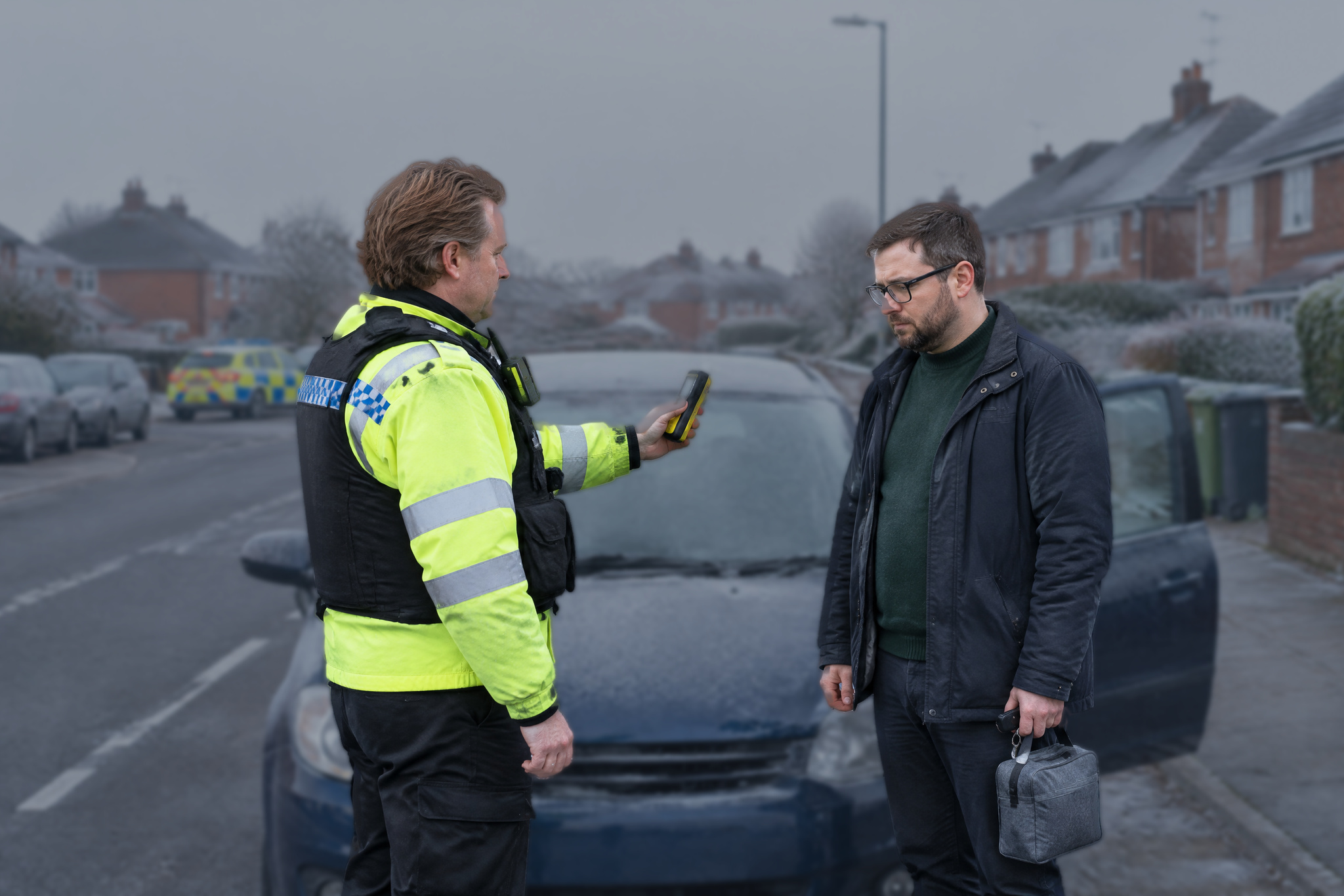
For example, an officer who stops a driver and detects the smell of alcohol may have grounds to require a roadside breath test.
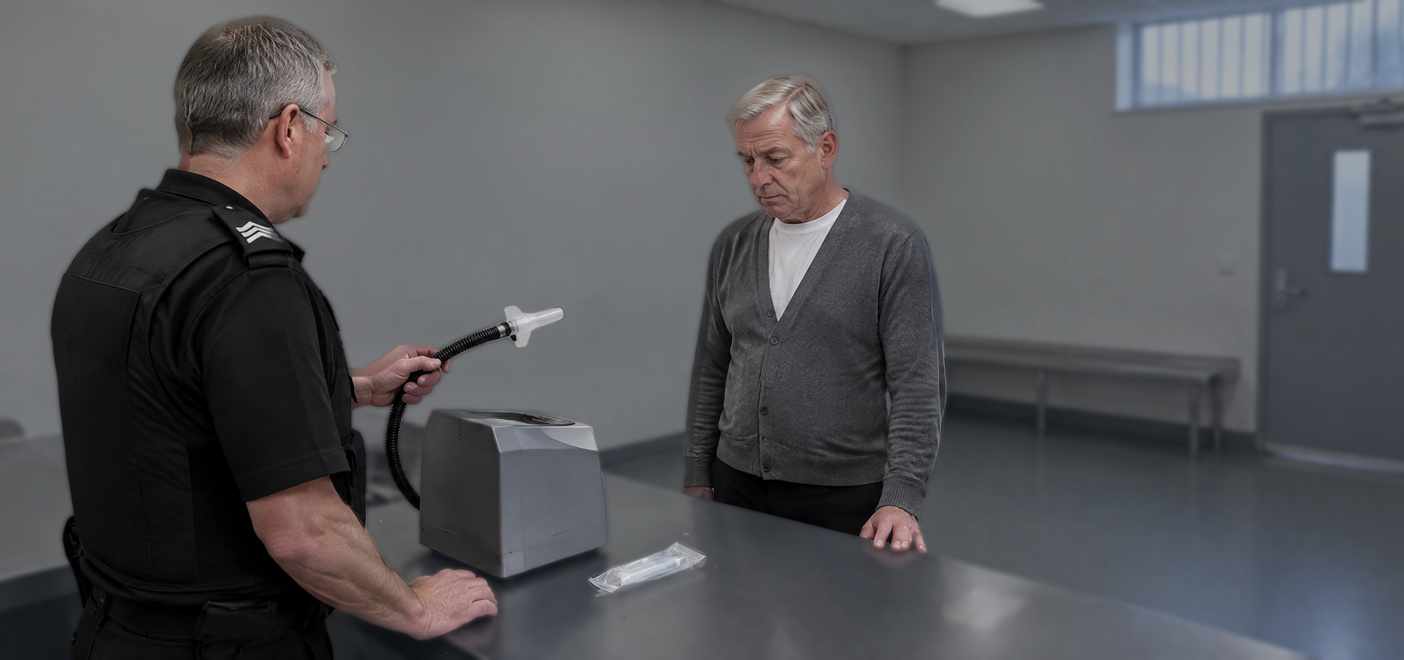
If the preliminary result indicates that the driver is over the limit, they may be arrested and taken to a police station for an evidential test.
The prosecution generally relies on an approved evidential breath, blood or urine result rather than the roadside screening reading alone.
Drinking the previous evening does not provide a defence if the legal requirements of the offence are established.
Penalties and Sentencing for Morning-After Drink Driving
The penalties for a drink driving offence apply equally regardless of the time of day the offence occurs or the circumstances in which alcohol was consumed. Drinking the previous evening does not provide a defence, nor does it reduce the seriousness of the drink driving offence.
On conviction for driving or attempting to drive with excess alcohol, the available penalties include:
- A mandatory minimum disqualification of 12 months, which increases for repeat drink driving offences or where the reading is significantly above the prescribed limit
- An unlimited fine
- Up to six months’ imprisonment for a standard excess alcohol offence
- Higher maximum sentences where the offence results in death or serious injury, under separate offences
- A criminal record following conviction
- In some circumstances, a requirement to pass an extended driving test before the licence is restored
Sentencing in individual drink driving cases is influenced by a range of factors:
- The level of the alcohol reading is a primary consideration.
- Aggravating features that can increase the seriousness of an offence include causing an accident, carrying passengers, driving for hire or reward and any relevant previous convictions.
Being stopped the morning after drinking does not place a driver in a different legal category. The court applies the same sentencing framework for drink driving regardless of when the alcohol was consumed.
The Role of a Motoring Offences Solicitor
A motoring offences solicitor can review the evidence and advise on the potential consequences of a drink driving charge.
This may include examining the circumstances of the police stop, the evidential alcohol reading and whether the correct testing procedures were followed.
A solicitor can also assess whether any legal defence or special reasons argument may be available, depending on the circumstances.
Where a conviction is likely, they can advise on sentencing, mitigation and the potential length of disqualification.
Ashmans Solicitors advises clients facing drink driving allegations in England and Wales, including offences committed the morning after drinking.
If you have been arrested or charged, speak to our Motoring Offences solicitors for advice about your position and next steps.
5 Key Takeaways
- You can still be over the drink driving limit the morning after drinking, even if you feel sober.
- Alcohol clearance varies between individuals, so there is no guaranteed waiting period before driving.
- Sleep, coffee, food and showers do not speed up alcohol metabolism.
- Online calculators and personal breathalysers cannot guarantee you are below the legal limit.
- Morning-after drink driving carries the same penalties as other drink driving offences, including a mandatory driving ban.
Frequently Asked Questions
Yes. The offence depends on your alcohol level when driving, not when you last drank. You can still be over the legal limit several hours later.
No. Coffee, food, water, sleep and showers do not make alcohol leave the body faster. Your body needs time to process it.
The limits are 35 micrograms of alcohol per 100 millilitres of breath, 80 milligrams per 100 millilitres of blood and 107 milligrams per 100 millilitres of urine.
Not necessarily. Consumer devices may differ in accuracy and calibration. A low reading does not guarantee you are legally below the limit or fit to drive.
The same legal rules and sentencing framework apply. Drinking the previous evening does not automatically reduce the seriousness of the offence.
Seek legal advice promptly. A solicitor can review the testing evidence, check the procedure followed and explain the possible penalties and defences.
Police can stop your vehicle without a specific traffic offence. However, they must have lawful grounds to require a breath test, such as suspected alcohol consumption, a moving traffic offence or an accident.
Call us on 0333 009 6275. We are available to take your call 24 hours a day, 7 days a week.
You can also email us on enquiries@ashmanssolicitors.com or complete our Online Enquiry Form and we’ll be in touch soon.
Get in touch
We’ll respond within 15 minutes during office hours
Search our legal articles
Free expert guidance on criminal law, your rights, and what to expect at every stage.
Searching Legal Help Hub articles
Related insights and updates

Drug Driving Blood Tests: How Accurate are They and Can the Result Be Challenged?
Causing Death by Careless Driving: How It Differs from Dangerous Driving & What Sentence to Expect
Careless Driving vs Dangerous Driving: What Is the Difference and Why Does It Matter?

Can I Reopen old Conviction from Two Years Ago If I Knew Nothing About It?
Drunk in Charge vs Drink Driving UK: What’s the Legal Difference?

Failing to Provide a Specimen for Analysis – Legal Advice
Drink Driving and Drug Driving Penalties in the UK
Caught Drink Driving in the UK: What Happens Next?
Using a Mobile Phone While Driving in the UK: Law, Penalties and Legal Defence

Mobile Phone Driving Law in the UK: Rules, Penalties and Legal Defences

Totting Up Ban Explained: What Happens If You Reach 12 Penalty Points?
Taking Penalty Points for Someone Else: Is It Perverting the Course of Justice?

What Happens If Your Licence Is Revoked as a New Driver in the UK?
Motoring Offence Convictions in the UK: What You Need to Know

Common Motoring Law Myths in the UK Explained
Mobile Phone Driving Laws in the UK: Rules, Penalties and Legal Defences

How to Report a Road Traffic Accident in the UK

Hip Flask Defence in Drink Driving Cases
Failure to Stop After an Accident in the UK: Law, Penalties and Legal Defence