Legal Help Hub
Failing to Identify the Driver (Section 172): The Offence That Catches Company Car Drivers






Introduction
Failing to identify the driver of a vehicle when legally required is a criminal offence under the Road Traffic Act 1988. If you receive a Section 172 notice, you normally have 28 days to respond. A conviction can result in six penalty points and a fine of up to £1,000.
For company car drivers, a common mistake is assuming that the employer has already dealt with the matter.
However, if the police send a separate notice directly to you, you must respond even if your employer has already nominated you.
This guide explains how Section 172 notices work in England and Wales, who is responsible for replying, what to do if you cannot remember who was driving and the consequences of missing the deadline.
What Is Failing to Identify the Driver?
Section 172 of the Road Traffic Act 1988 allows the police to require information about who was driving a vehicle when an alleged road traffic offence occurred.
The person keeping the vehicle must provide the driver’s identity when lawfully required. Other people who receive a request must supply any information within their power that could help identify the driver.
For example, if a speeding camera records a company car exceeding the limit, the police may contact the registered keeper to establish who was driving.
The keeper has a wider responsibility to identify the driver. Someone who does not keep the vehicle may only be required to provide information they have or can supply.
Failing to comply with a lawful request is a criminal offence, separate from the original speeding or other motoring allegation.
A Section 172 notice should not be confused with a Notice of Intended Prosecution (NIP).
The NIP warns that prosecution may follow for an alleged driving offence. A Section 172 notice requires information identifying the driver.
The two notices often arrive together, but they serve different purposes and have different deadlines.
Company Cars: Who Must Respond to Which Notice?
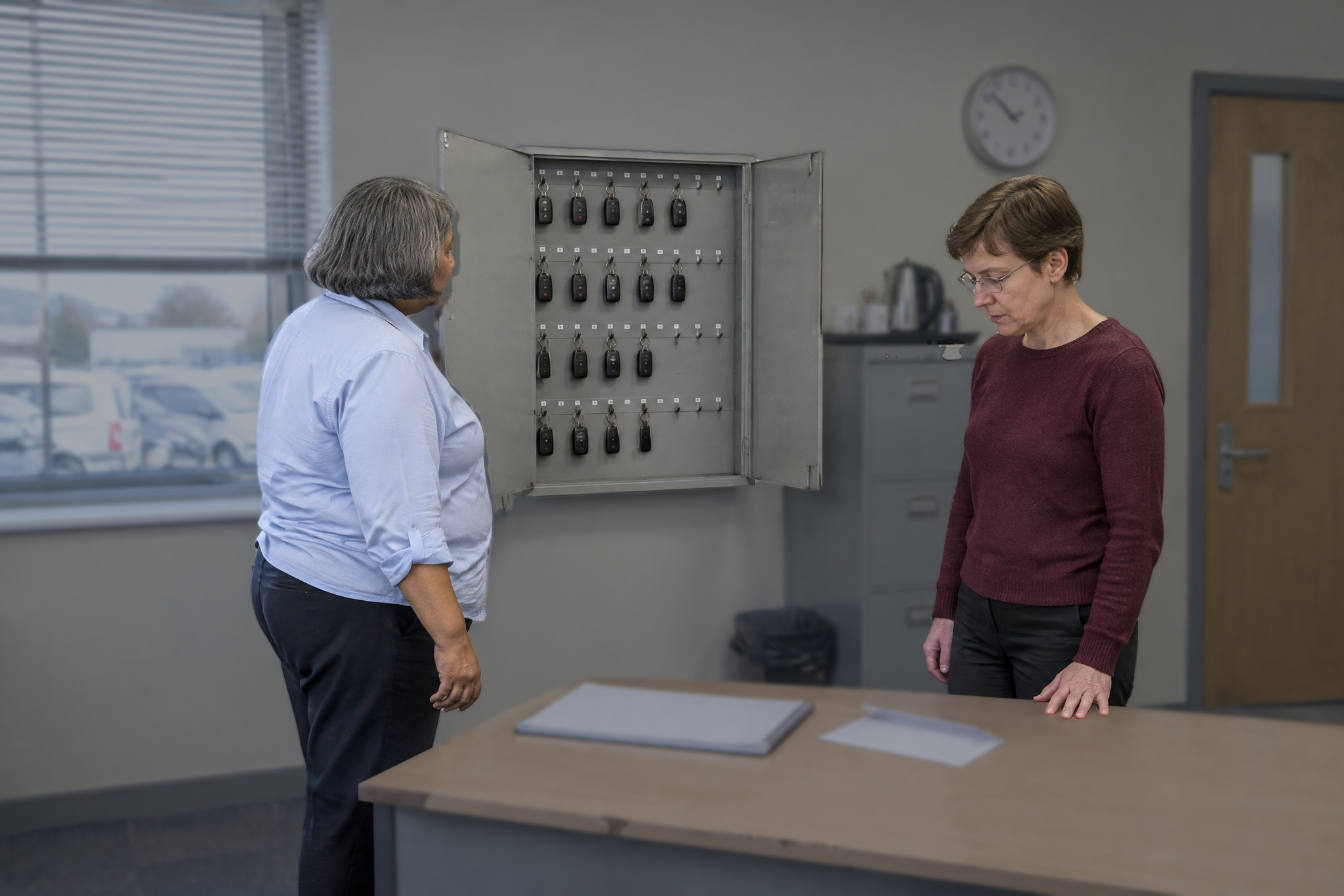
Company vehicles generate a chain of notices that may land on more than one desk.
Each notice in that chain creates its own independent obligation, and the response to an earlier notice does not remove the duty created by a later one.
When the company is the registered keeper
Where a company owns or keeps the vehicle, the police will direct the Section 172 notice to the company. The company must respond within 28 days, naming the driver at the time of the alleged offence.
A form addressed to a company cannot be completed in the section reserved for a driver confirming their own identity. The company must use the nomination section to name the person who was driving.
A company secretary or other authorised representative typically handles the response on behalf of the company.
The obligation rests on the company to maintain records sufficient to identify who drove a particular vehicle on a given date and time.
Without such records, the company will struggle to respond accurately and may face its own prosecution for failing to identify the driver.
When the nominated driver receives their own notice
Once the company nominates an individual, the police may send a further section 172 notice directly to that person.
This notice creates an independent legal obligation on the individual, separate from and additional to anything the company has already done.
If the individual was the driver, they must nominate themselves.
The employer’s earlier nomination does not substitute for the individual’s own response.
This is the point at which many company car users are caught: they assume the matter ended with the company’s response and do nothing when their own notice arrives, resulting in a separate charge of failing to identify the driver.
Leasing companies and hire fleets
Where the vehicle is owned by a leasing or hire company, that organisation may receive the first notice and will identify the business or individual who had possession of the vehicle at the relevant time.
That business or person may then receive their own section 172 notice and face the same 28-day obligation.
The chain can extend across two or more recipients, and the obligation at each link is real and enforceable.

What if You Cannot Remember Who Was Driving?
It is not unusual to forget who was driving a company vehicle, particularly where several employees use the same car.
However, being unable to remember does not automatically provide a defence.
The duty to provide what you can
If you are responsible for keeping the vehicle, you must make reasonable efforts to establish who was driving.
This could involve checking booking records, reviewing work diaries or speaking to employees who had access to the car.
Where you are not the keeper, you must provide any information within your power that could assist the police.
For example, if you know that two colleagues used the vehicle that day but cannot establish which one was driving at the relevant time, that information may still be important.
Simply stating that anyone could have been driving a pool car is unlikely to be sufficient without evidence of genuine enquiries.
The appropriate response depends on your role, the information available and the steps you have taken to identify the driver.
Why guessing is dangerous
Do not name someone merely to complete the form before the deadline.
Providing false driver details deliberately can have consequences far more serious than the original motoring allegation.
In particular, knowingly making a false nomination to mislead an investigation may lead to allegations of attempting to pervert the course of justice.
That offence can result in imprisonment.
If you genuinely cannot establish who was driving, preserve the records you have checked and seek advice before responding.
An accurate explanation of your uncertainty is preferable to inventing an answer.
What Records Should You Check?
If you receive a Section 172 notice, review any records that may help establish who was driving at the time of the alleged offence.
This is particularly important where a company vehicle is shared or several employees have access to it.
Business and fleet records
Fleet management systems, vehicle booking logs and pool-car records may show who had the vehicle on the date concerned.
GPS or telematics records may also help establish where the vehicle was and when it was used.
Other potentially useful records include mileage logs, fuel receipts, toll payments, parking records and vehicle allocation documents.
For example, a fuel receipt linked to an employee’s expenses may help establish who was using the car during a particular journey.
However, a record showing that someone was allocated the vehicle does not always prove they were driving at the precise time of the alleged offence.
The available information should be considered together.
Personal records
Your work diary, calendar appointments and meeting records may help you reconstruct where you were. Mobile phone location information, personal bank transactions and parking payments may also be relevant.
For example, a meeting entry combined with a parking receipt may help confirm that you were at a particular location when the vehicle was recorded.
If several people shared the vehicle, ask the relevant individuals to check their own records.
Keep a note of the enquiries made and the information obtained.
Why contemporaneous records matter
Records created at the time of the journey are generally more reliable than trying to remember events several weeks later.
For example, a vehicle booking log completed on the day may help establish who was responsible for the car.
Where records are incomplete, document the gaps rather than trying to fill them with guesswork.
Do not alter or delete existing records after receiving a notice.
If the police question whether you made reasonable efforts to identify the driver, evidence of the enquiries you carried out may become important.
Deadlines, Delivery Problems and Changes of Address
Failing to respond within the required period can result in prosecution, even where the original driving offence was relatively minor.
The deadline and the circumstances in which a notice was served therefore matter.
The 28-day response period
A Section 172 notice normally requires a response within 28 days beginning with the date it is served.
For a notice sent by first-class post, the Criminal Procedure Rules generally treat service as taking place on the second business day after posting, unless evidence establishes otherwise.
The deadline does not begin when you eventually open the envelope. For example, if a notice arrives at your office and remains unopened while you are away, the response period may continue running.
There are limited statutory protections where it was not reasonably practicable to provide the information within the required period, but these should not be assumed to apply automatically.
If you receive a notice close to its deadline, act promptly and seek advice.
Notices sent to old or incorrect addresses
Problems can arise where a notice is sent to an address that is no longer current. For example, you may have moved home without updating the relevant vehicle registration details, or your employer may have provided an outdated address.
Whether the notice was lawfully served depends on the circumstances and the applicable service rules. A notice sent to an old address is not automatically invalid merely because you did not see it.
However, genuine non-receipt may be relevant where the evidence shows that the notice was not properly served.
Keep any documents that help establish your address, when you moved and when you became aware of the notice.
The difference from the NIP deadline
A Notice of Intended Prosecution is generally subject to a 14-day service requirement for certain road traffic offences, although exceptions apply.
A Section 172 notice creates a separate obligation to provide driver information, normally within 28 days of service.
For example, even if you believe the original speeding notice was served late, that does not automatically allow you to ignore a Section 172 request.
The legality of the NIP and the duty to identify the driver are separate issues. If you believe either notice was defective, obtain advice while continuing to deal with the Section 172 deadline.
Facing Legal Issue?
Speak to one of our Motoring Offences Defence Specialists for confidential advice on your position and next steps.
Strictly Confidential and No Obligation
When Might a Defence Be Available?
There are circumstances where a person accused of failing to identify the driver may have a defence.
However, the requirements are specific, and simply stating that you cannot remember is unlikely to be enough.
The reasonable diligence defence
The Road Traffic Act provides a defence for a person keeping a vehicle who can show that they did not know and could not, with reasonable diligence, have established who was driving. This requires genuine efforts to identify the driver.
For example, you may have checked vehicle logs, contacted everyone who could have used the car and reviewed relevant journey records without establishing who was driving.
Evidence of those enquiries may support the defence.
However, the court will consider whether further reasonable steps could have been taken.
A lack of memory alone is not sufficient.
Failure to receive the notice
A defence may also arise where a notice was not lawfully served.
The service rules generally presume that a properly posted notice was delivered within the relevant period, but that presumption can be challenged with evidence.
For example, documents showing that the notice was sent to the wrong address or did not arrive may be relevant. The court will assess the circumstances rather than accepting non-receipt automatically.
If you only became aware of the notice after the deadline, seek advice about the evidence needed and whether the statutory provisions concerning late compliance apply.
Corporate defendants and due diligence
Companies face a stricter position when relying on the reasonable diligence defence.
In addition to showing that the driver could not be identified despite reasonable efforts, a corporate defendant must establish that no record of the drivers was kept and that the failure to keep such a record was reasonable.
This means a business cannot ordinarily rely on poor fleet records as its defence.
For example, a company operating several pool cars without recording who uses them may struggle to establish that its failure to keep records was reasonable.
Maintaining accurate allocation and booking records is therefore particularly important for businesses operating company vehicles.
What is not a defence
Not knowing about the Section 172 rules is not a defence. Neither is assuming your employer’s nomination was sufficient when you received a separate notice.
Disputing the original speeding or other motoring allegation also does not remove the obligation to identify the driver.
For example, if you believe the speed camera recorded the wrong vehicle or the alleged offence did not occur, you must still deal with a lawful Section 172 request.
The original allegation and the duty to provide driver information are separate matters.
Penalties and Sentencing for Failing to Identify the Driver
A conviction for failing to identify the driver can have serious consequences, particularly if you already have penalty points on your licence.
The penalties differ for individuals and companies.
Penalties for individual drivers and keepers
Failing to identify the driver is dealt with in the Magistrates’ Court. The maximum fine is £1,000, and the court must impose six penalty points where endorsement applies.
The amount of the fine depends on the circumstances and the defendant’s financial means. Six penalty points can have a significant effect on a driver who already has points on their licence.
For example, if you have six existing points and receive another six for failing to identify the driver, you may reach the twelve-point threshold for a totting-up disqualification.
Drivers who accumulate twelve or more relevant points within three years normally face a minimum six-month ban, unless a recognised exception applies. The court may consider an exceptional hardship argument where the legal requirements are met.
Penalties for corporate defendants
A company convicted of failing to identify the driver can be fined. Companies do not receive driving licence penalty points or driving disqualifications.
However, a conviction may raise practical concerns for businesses operating several vehicles, particularly where poor records contributed to the offence.
In certain circumstances, a director, manager, secretary or similar officer may also face personal liability.
This can arise where the company’s offence was committed with that person’s consent or involvement, or was attributable to their neglect. Personal liability is not automatic simply because someone holds a senior position in the business.
The prosecution must establish the relevant statutory requirements.
The impact of a Section 172 conviction on a driving ban appeal
If you are already close to twelve penalty points, a Section 172 conviction may place you at risk of disqualification. The court will consider the relevant points and any properly raised exceptional hardship argument.
For example, losing your licence may affect your employment or ability to care for others, but the consequences must meet the legal test.
Hardship to other people may be relevant, although losing a job or experiencing inconvenience does not automatically establish exceptional hardship.
If you believe your conviction or sentence was wrong, a solicitor can advise whether there are grounds for an appeal and the applicable deadline.
How a Motoring Offences Solicitor Can Help
A solicitor experienced in motoring offences can review the Section 172 notice and advise whether it was properly served.
They can also help establish who had responsibility for the vehicle and what information the recipient was required to provide.
Where the driver cannot be identified, a solicitor can assess the records available and advise whether a reasonable diligence defence may apply.
If proceedings have already started, they can review the prosecution evidence, identify possible issues with the notice and represent you in court.
For company car users, this may involve examining the employer’s nomination, any later notice addressed to the driver and the steps taken to respond.
A solicitor can also advise on the consequences of six penalty points, particularly where a totting-up disqualification is possible.
Ashmans Solicitors advises individuals facing motoring allegations, including failing to identify the driver.
Speak to our motoring offences team for advice about your position and next steps.
Send an Online Enquiry
5 Key Takeaways
- Failing to identify the driver is a criminal offence that can result in six penalty points and a fine of up to £1,000.
- A company car driver must respond to a Section 172 notice addressed to them, even if their employer has already nominated them.
- The response period is normally 28 days from service of the notice, not from when the recipient opens it.
- If you cannot remember who was driving, check available records and do not nominate someone without a reliable basis.
- A reasonable diligence defence requires evidence of genuine enquiries, with additional statutory conditions applying to companies.
Frequently Asked Questions
It is a criminal offence committed when someone fails to provide driver identification information lawfully required by the police. A conviction can result in six penalty points and a fine of up to £1,000.
A Section 172 notice is a formal request requiring information about who was driving a vehicle at the time of an alleged road traffic offence. It is separate from a Notice of Intended Prosecution.
Normally, 28 days beginning with the date the notice is served. First-class post is generally treated as served on the second business day after posting, unless evidence shows otherwise.
No. If the police send you a separate Section 172 notice, you must respond to it. Your employer’s earlier nomination does not remove your legal obligation.
Check booking records, diaries and other available information. A reasonable diligence defence may apply to a vehicle keeper who made genuine efforts but still could not identify the driver.
Yes, indirectly. The offence carries six penalty points, which may take your total to twelve or more and trigger a totting-up disqualification, unless the court accepts a recognised exception.
Not by itself. You must make reasonable efforts to identify the driver and provide relevant information. Companies face additional requirements when relying on the statutory reasonable diligence defence.
Yes. A company can be prosecuted and fined for failing to comply with a lawful notice. Certain directors or officers may also be personally liable where the statutory conditions are met.
A Notice of Intended Prosecution warns that prosecution may follow for an alleged driving offence, usually subject to a fourteen-day service requirement. A Section 172 notice requires driver identification information, normally within 28 days of service.
Call us on 0333 009 6275. We are available to take your call 24 hours a day, 7 days a week.
You can also email us on enquiries@ashmanssolicitors.com or complete our Online Enquiry Form and we’ll be in touch soon.
 Imran Ali
Get in touch
We’ll respond within 15 minutes during office hours
Search our legal articles
Free expert guidance on criminal law, your rights, and what to expect at every stage.
Searching Legal Help Hub articles
Related insights and updates

New Year Driving Bans: What Happens If You Are Disqualified in January & How to Keep Working

Drink Driving the Morning After: How Long Alcohol Stays in Your System & the Law

Drug Driving Blood Tests: How Accurate are They and Can the Result Be Challenged?

Causing Death by Careless Driving: How It Differs from Dangerous Driving & What Sentence to Expect

Careless Driving vs Dangerous Driving: What Is the Difference and Why Does It Matter?

Can I Reopen old Conviction from Two Years Ago If I Knew Nothing About It?

Early Return of Driving Licence Disqualification in the UK

Drink Driving and Drug Driving Penalties in the UK

Can Police Take a Blood Sample in Hospital for Drink Driving?

Notice of Intended Prosecution (NIP) UK: What It Means and What To Do

How to Report a Road Traffic Accident in the UK
Can Hand Sanitiser Affect a Drink Driving Breathalyser Test?

Motoring Offence Solicitors in Dewsbury
Drug Driving UK: Legal Limits, Penalties and Defences

Failing to Provide a Specimen for Analysis – Legal Advice
Fail to Produce Driving Documents: Offence, Penalties and Legal Defence

Charged With Drink Driving – What Should You Do Next?

Common Motoring Law Myths in the UK Explained

Motoring Offence Solicitors in Sheffield