Legal Help Hub
Halloween, Mischief Night and Your Child: Fireworks, Eggs and Criminal Damage Explained
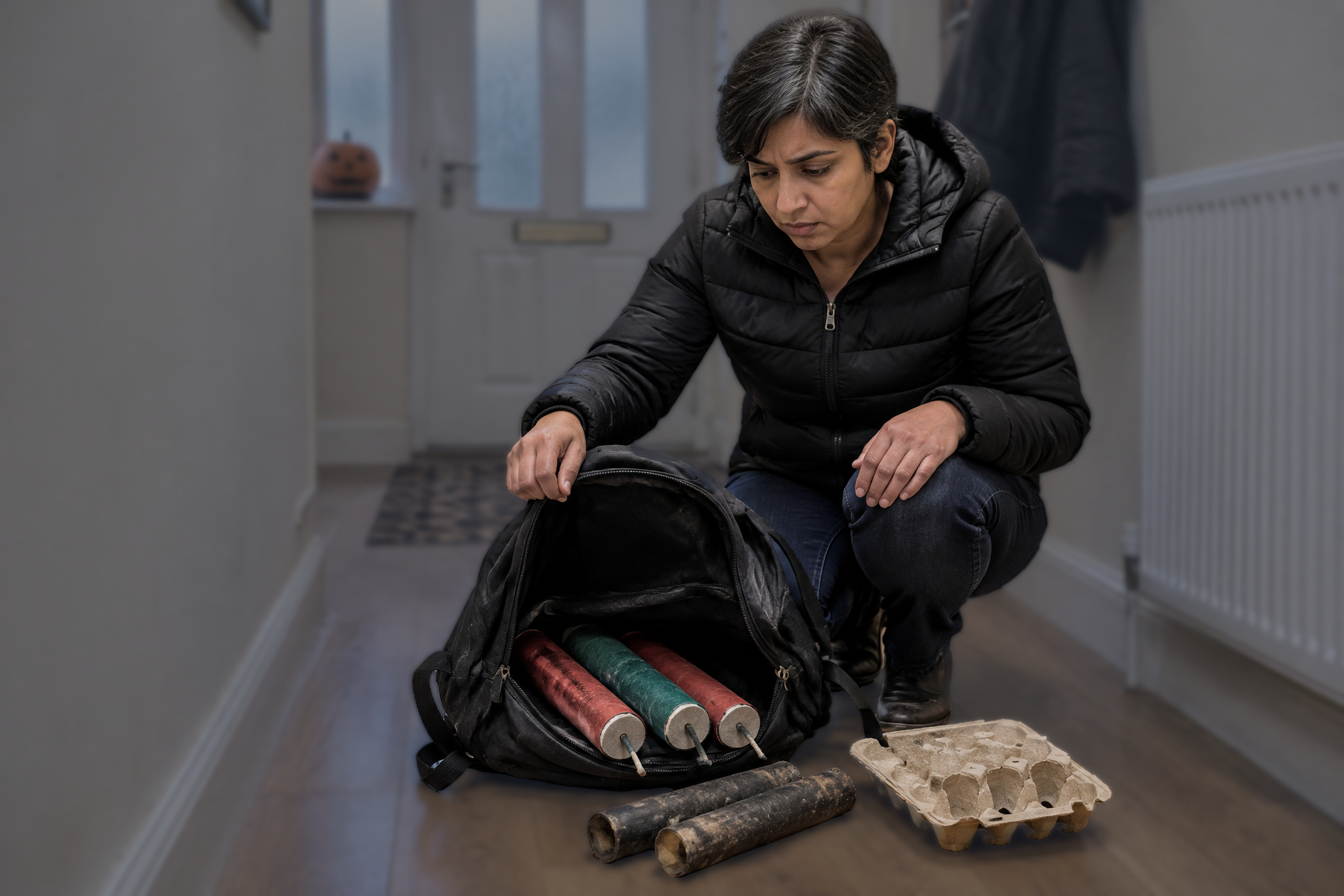






Introduction
Halloween and Mischief Night can lead to criminal allegations involving fireworks, egg throwing or damage to property. Although many incidents involve children and teenagers, certain behaviour may amount to a criminal offence under the law in England and Wales.
Children aged 10 and over can be arrested or charged with offences such as criminal damage or unlawful possession of fireworks. However, the youth justice system deals with young people differently from adults and places greater emphasis on rehabilitation.
This guide explains when Halloween activities may become a legal matter, what happens if police contact your child and what parents should do if an allegation is made.
When Does Halloween Mischief Become a Crime?
Many children take part in Halloween or Mischief Night activities without intending to break the law. However, some behaviour, including damaging property or using fireworks unlawfully, can result in police involvement.
In England and Wales, the age of criminal responsibility is 10. Children below this age cannot be arrested or charged with a criminal offence.
Children aged 10 to 17 can face criminal proceedings, although their cases are generally handled through the youth justice system. This system considers the child’s welfare and rehabilitation alongside the seriousness of the alleged offence.
The situations that may lead to police involvement around Halloween include:
- Possessing or using fireworks unlawfully.
- Throwing eggs or other objects at people or property.
- Damaging vehicles, windows, fences or decorations.
- Participating in a group where criminal damage or other offences occur.
Whether an offence has been committed depends on the child’s actions and the circumstances.
Can Children Legally Carry or Use Fireworks?
Fireworks are commonly sold around Halloween and Bonfire Night. However, there are restrictions on who can buy, possess and use different categories of fireworks.
Breaching these rules can result in criminal consequences. Parents should understand the distinction between adult fireworks and lower-hazard products such as sparklers.
Age rules for buying and carrying fireworks
Fireworks available in England and Wales are divided into categories according to their intended use and level of risk.
Category F1 includes low-hazard products such as sparklers and party poppers. These generally cannot be supplied to anyone under 16, subject to specific exceptions.
Category F2 and F3 fireworks are intended for outdoor use and cannot be supplied to anyone under 18.
Under the Fireworks Regulations 2004, a person under 18 is generally prohibited from possessing adult fireworks in a public place, subject to statutory exceptions.
Public places can include streets, parks, car parks and other areas accessible to the public.
For example, a teenager carrying category F2 or F3 fireworks in the street on Halloween may be committing an offence, regardless of who purchased them.
Category F4 fireworks are intended for people with specialist knowledge and are subject to additional restrictions on possession and supply.
When fireworks can be used: the curfew rules
Regulation 7 of the Fireworks Regulations 2004 generally prohibits the use of adult fireworks between 11 pm and 7 am.
The regulations allow extended hours on four occasions:
- Bonfire Night: Until midnight on 5 November.
- New Year’s Eve: Until 1 am on 1 January.
- Diwali: Until 1 am the following morning.
- Chinese New Year: Until 1 am the following morning.
Halloween is not included in these exceptions.
Using fireworks covered by the restriction after 11 pm on Halloween can therefore constitute a criminal offence, even if no injury or damage occurs.
Using fireworks in a public place on Halloween
Throwing or setting off fireworks in a street or other public place is a separate offence under section 80 of the Explosives Act 1875.
This restriction also applies to sparklers, even though they fall within a lower-hazard category.
However, carrying an ordinary category F1 sparkler is not automatically the same offence as possessing adult fireworks in public.
The circumstances therefore matter when deciding whether a child has breached the law.
Police may issue a fixed-penalty notice for certain firework offences or consider prosecution, depending on the conduct and applicable legislation.
More serious allegations may arise if fireworks are used to threaten others or cause damage or injury.

Is Throwing Eggs on Halloween Criminal Damage?
Egg throwing is sometimes treated as a Halloween prank. However, it may constitute criminal damage where property is damaged and the legal requirements of the offence are met.
Whether a child faces criminal proceedings depends on the circumstances, including the nature of any damage and what the child intended or understood at the time.
What the law says about criminal damage
Under the Criminal Damage Act 1971, criminal damage occurs when someone intentionally or recklessly destroys or damages property belonging to another person without lawful excuse.
A child does not necessarily have to intend to cause damage.
Recklessness may be sufficient where the child recognised a risk of damage and, in the circumstances known to them, unreasonably went ahead.
The court must consider what the child actually understood, rather than simply assuming they should have recognised the risk.
Does a Halloween egg count as damage?
Criminal damage does not always require permanent harm to property.
Courts have recognised that damage may include temporary impairment or the need for cleaning or restoration.
For example, an egg thrown at a vehicle may cause staining or damage to paintwork. Similar concerns may arise where eggs are thrown at doors, walls or other surfaces.
However, throwing an egg does not automatically establish criminal damage.
The prosecution must show that damage occurred and that the necessary intention or recklessness was present.
Cleaning or repair costs may help establish the extent of damage, although every case depends on its particular facts.
Where damage is minimal, police and prosecutors may consider whether formal proceedings are appropriate, particularly for a young person with no previous history.
When intent and recklessness matter
A child who deliberately targets a property or continues throwing objects after recognising a risk of damage may face a different allegation from a child whose actions were accidental.
Investigators may consider messages, witness accounts, CCTV footage and the child’s explanation.
The child’s age and understanding can also be relevant to assessing recklessness.
Can My Child Be Charged for a Group’s Actions?
Parents may be concerned when their child was present with friends during a Halloween incident but did not personally damage property or set off fireworks.
Being part of a group does not automatically establish criminal responsibility.
However, a child may still face allegations if they encouraged or assisted others in committing an offence.
What presence alone does not establish
Police must consider each child’s individual involvement.
A child who was standing nearby but did not participate, encourage or assist others is not automatically responsible for damage caused by the group.
The distinction between being present and actively taking part is important.
Evidence such as CCTV footage, witness accounts or messages may help establish what the child did during the incident.
When group involvement can create individual liability
A child may face criminal liability where they intentionally assist or encourage another person to commit an offence.
Examples might include helping to plan damage, providing objects intended for use in an offence or actively encouraging another person to act.
The child’s role and state of mind must therefore be considered against the evidence.
What parents should do
If your child was present during a group incident, make a note of who was there and what you understand happened.
Preserve any relevant messages, photographs or social media content.
Do not encourage your child to change or agree an account with others involved.
A youth crime solicitor can advise on the child’s individual position before a formal police interview.
What If Police Contact Your Child After Halloween?
Police contact following a Halloween incident does not automatically mean that your child will be charged.
The response depends on the alleged offence, the evidence, the child’s age and other relevant circumstances.
What happens when police make contact
Police may contact parents by telephone, visit the family home or ask a child to attend a police station.
Depending on the circumstances, the matter may be dealt with through an informal warning, community resolution, youth caution or youth conditional caution.
A formal interview or arrest may be considered where appropriate.
These outcomes have different legal requirements and consequences. Not every child who is questioned will face prosecution.
Parents should establish whether their child is suspected of an offence and whether a formal interview under caution is being arranged.
The appropriate adult role
Under the Police and Criminal Evidence Act 1984 and its Codes of Practice, children under 18 are entitled to the support of an appropriate adult during police questioning.
This is usually a parent or guardian, although another suitable adult may carry out the role.
The appropriate adult helps the child understand the process, supports communication and observes whether questioning is conducted fairly.
Police should not ordinarily interview a child about suspected criminal involvement without an appropriate adult. Limited exceptions exist for urgent circumstances under the applicable PACE rules.
An appropriate adult is not a substitute for a solicitor and does not provide independent legal advice.
The right to an expert legal advice
A child attending a police station for an interview under caution has the right to an, independent legal advice.
This applies whether the child has been arrested or is attending voluntarily.
A solicitor can discuss the allegation privately with the child, review available police disclosure and advise on how to approach questioning.
Parents should ask for a solicitor before the interview begins.
The duty solicitor service and the appropriate adult can request legal advice on the child’s behalf where this is in their best interests.
Should your child answer questions?
A child has the right to remain silent during a police interview.
However, in certain circumstances, a court may draw an adverse inference if a person fails to mention something during questioning that they later rely on in their defence.
Whether to answer questions, provide a prepared statement or make no comment depends on the allegation and evidence.
A solicitor can explain the available options and advise the child before questioning.
Parents should avoid instructing their child on what answers to give.
Preserving evidence and keeping records
If your child is involved in a Halloween investigation, preserve any information that may be relevant.
This could include:
- Clothing worn during the incident.
- Messages and group conversations.
- Photographs or videos from the evening.
- Witness contact details.
- Records showing where your child was at a particular time.
It may also help to record what your child remembers while the details are still clear.
Avoid guessing about missing information or altering any records.
Facing Legal Issue?
Speak to one of our Youth Crime Defence Specialists for confidential advice on your position and next steps.
Strictly Confidential and No Obligation
How Can a Youth Crime Solicitor Help Your Child?
A youth crime solicitor can assist children and their families throughout a police investigation, even where the matter does not proceed to court.
Their role includes explaining the allegation, protecting the child’s legal rights and advising on the evidence and possible outcomes.
At the police station
A solicitor can attend a police interview, whether the child has been arrested or asked to attend voluntarily.
Before questioning begins, they can speak privately with the child and review the information disclosed by police.
They will advise on whether the child should answer questions, provide a prepared statement or make no comment.
During the interview, the solicitor can intervene where necessary and help ensure that the relevant safeguards are followed.
During the investigation
A police investigation may continue after the initial interview.
The solicitor can contact the investigating officer, request updates and consider relevant evidence as it becomes available.
They may also advise whether a community resolution, youth caution or another outcome could be appropriate, where the statutory conditions are met.
The purpose is to help the child and their family understand the investigation and make informed decisions.
If the case progresses to court
Cases involving children under 18 are generally heard in the Youth Court, although certain serious cases and other specified circumstances may require proceedings elsewhere.
The Youth Court considers the child’s welfare and places emphasis on rehabilitation.
Depending on the offence and circumstances, sentencing options may include a conditional discharge, referral order or youth rehabilitation order.
A referral order is required for many first-time convictions where the relevant statutory conditions apply. It typically involves working with a youth offender panel.
A youth rehabilitation order may include supervision, programme requirements or other restrictions.
Custodial sentences are available in serious cases, subject to specific youth sentencing rules.
A solicitor can represent the child in court and explain the available outcomes.
Speak to a Youth Crime Solicitor About a Halloween Incident
If you are concerned about your child’s involvement in a Halloween or Mischief Night incident, the Youth Crime team at Ashmans Solicitors can explain the legal position and advise on the next steps.
Seeking advice before a police interview or charging decision can help you understand the allegation, your child’s rights and the evidence that may be relevant.
Visit our Youth Crime page for further information, or contact us to discuss your child’s circumstances.
5 Key Takeaways
- Children aged 10 and over can face criminal allegations in England and Wales. Those under 18 are generally dealt with through the youth justice system, which places greater emphasis on rehabilitation.
- Firework restrictions depend on age and category. Under-18s are generally prohibited from possessing adult fireworks in public places, and Halloween has no exemption from the 11 pm curfew.
- Throwing eggs can amount to criminal damage where property is damaged intentionally or recklessly without lawful excuse. Permanent damage is not always required.
- Being present in a group does not automatically establish guilt. However, intentionally encouraging or assisting others may create criminal liability.
- Children have important rights during police questioning, including access to legal advice and the support of an appropriate adult, subject to limited exceptions under PACE.
Frequently Asked Questions
Yes, if your child is aged 10 or over and the legal grounds for arrest are met. Throwing eggs at a person’s property on Halloween can be investigated as criminal damage. Whether an arrest is made will depend on factors including the extent of any damage, whether a formal complaint has been made and the child’s previous history.
Yes. The prohibition on possessing adult fireworks in a public place and the offence of using fireworks in a public place both apply to sparklers. There is no general Halloween exception for sparklers in public streets or parks.
Presence alone is not enough to establish criminal liability. However, if your child encouraged others, assisted by handing over objects, or was present and actively supporting those causing Halloween damage, individual liability may arise even if they did not personally act.
An appropriate adult is a parent, guardian or other suitable adult whose role is to support a child during a police interview and to help them understand the process. Their role is to help the child understand the process and ensure fair treatment. Interviews normally require an appropriate adult, subject to limited exceptions. If you cannot attend, another suitable adult may be arranged.
No. Your child has the right to remain silent. However, courts can in certain circumstances draw an adverse inference from a failure to mention something that is later relied on as a defence.
Cases involving children under 18 are generally heard in the Youth Court, subject to certain exceptions. A referral order may follow a first conviction where statutory requirements apply. More serious or repeated offending can result in a youth rehabilitation order. Custody is reserved for cases meeting the relevant legal conditions.
Parents are not automatically criminally responsible for their child’s actions. Civil liability may arise in particular circumstances, but it is not automatic either. Parents may also be required to attend youth offender panel meetings or be subject to a parenting order in some cases. The outcome depends on the circumstances.
Call us on 0333 009 6275. We are available to take your call 24 hours a day, 7 days a week.
You can also email us on enquiries@ashmanssolicitors.com or complete our Online Enquiry Form and we’ll be in touch soon.
Get in touch
We’ll respond within 15 minutes during office hours
Search our legal articles
Free expert guidance on criminal law, your rights, and what to expect at every stage.
Searching Legal Help Hub articles
Related insights and updates

Accused of Distributing Malware or Ransomware: What Are the Charges and Penalties?

Accused of Money Laundering but I Didn’t Know the Money was Criminal: What Is the Defence?

How Darker Nights Affect Crime Patterns in West Yorkshire and London

Attempted Murder Charges: Intent, Defence and Penalties

Bonfire Night Firework Offences: What Carries a Criminal Charge?

Halloween, Mischief Night and Your Child: Fireworks, Eggs and Criminal Damage Explained

Halloween Disorder Offences: Criminal Damage, Fireworks and Public Order

How Autism Can Affect Criminal Sentencing in the UK

Can Bite Mark Evidence Be Used in Criminal Trials in the UK?

Can a Getaway Driver Be Charged With Burglary in the UK?

Can Prisoners Attend Their Sentencing Hearing in the UK?

Can Psychological Harm to a Victim Increase a Criminal Sentence?

CPS Complex Casework Unit: How Serious Criminal Cases Are Prosecuted

Encouraging or Assisting Crime in the UK

GPS Tagging Offenders in the UK After Prison Release

Harbouring an Offender or Escapee in UK Law

Modern Slavery Defence in Criminal Cases

Modern Slavery Defence in Criminal Cases (Section 45 of the Modern Slavery Act 2015)

Prison Visit Rules UK: How to Visit Someone in Prison