Legal Help Hub
Bonfire Night Firework Offences: What Carries a Criminal Charge?






Introduction
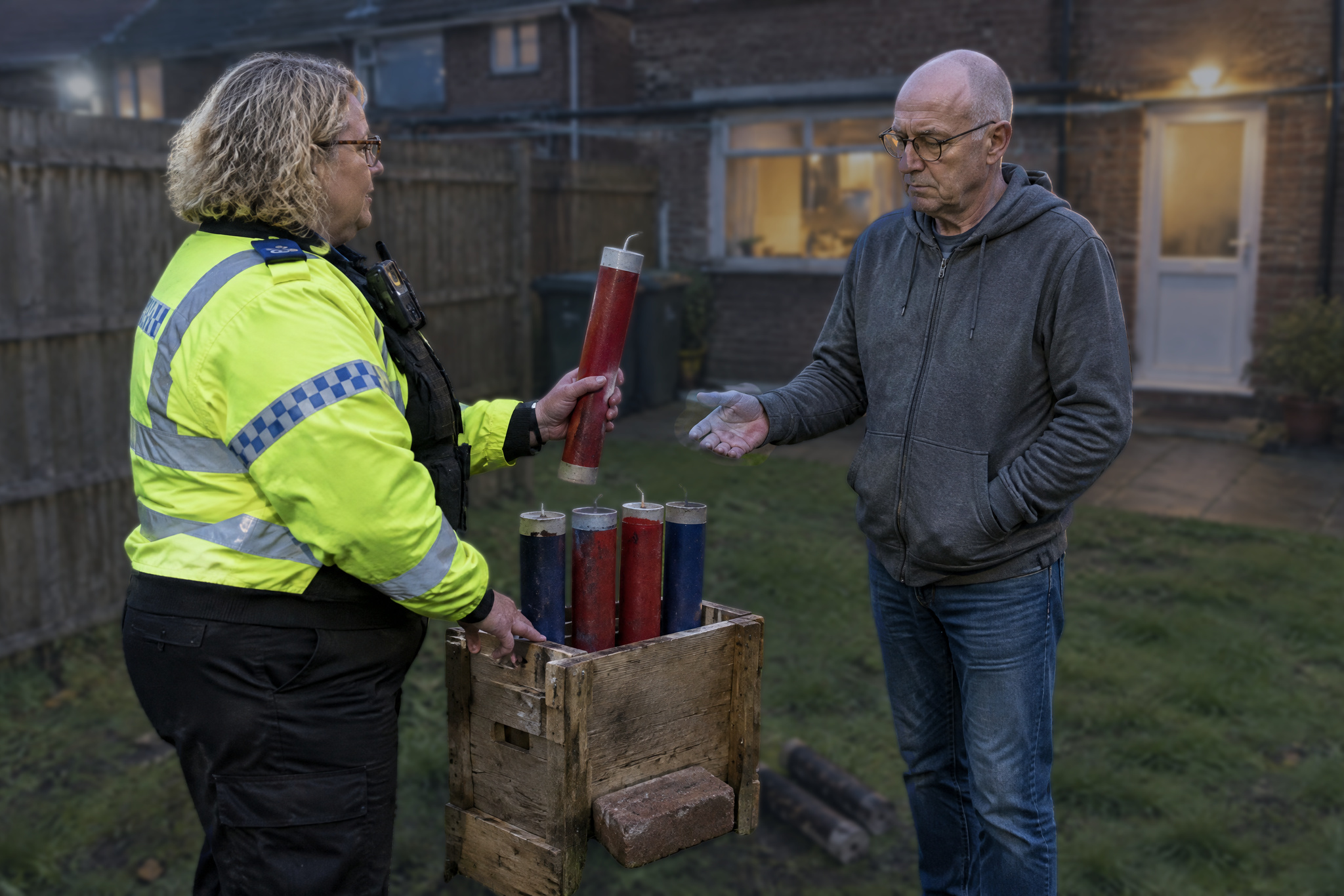
Firework use during Bonfire Night can result in criminal charges, depending on what happened, where the fireworks were used and who was involved. Some offences may be dealt with through a fixed penalty notice, while more serious incidents can lead to prosecution.
In England and Wales, restrictions apply to the hours during which fireworks may be used, their use in public places and their possession or supply. Where fireworks cause injury or property damage, additional criminal offences may apply.
This guide explains the rules for Bonfire Night, the possible penalties and when legal advice may be needed.
The Legal Framework Governing Fireworks
Firework laws in England and Wales are governed by several Acts and regulations. Different provisions apply to possession, supply and use, including during Bonfire Night celebrations.
- The Fireworks Act 2003 provides the legal framework for regulating fireworks.
- The Fireworks Regulations 2004 contain restrictions on possession, supply and the hours during which certain fireworks may be used.
- The Explosives Act 1875 also remains in force. It prohibits throwing or setting off fireworks in streets and other public places.
Not every breach results in prosecution. Depending on the circumstances, police may issue a warning or fixed penalty notice. More serious incidents may lead to criminal charges.
What Time Can Fireworks Be Used on Bonfire Night?
The Fireworks Regulations 2004 generally prohibit the use of adult fireworks between 11 pm and 7 am.
The law provides exceptions for four occasions when fireworks are traditionally used, including Bonfire Night.
On 5 November, fireworks covered by the curfew may be used until midnight. The extension is one hour beyond the usual 11 pm limit, not until 1 am.
The other exceptions allow later use:
- New Year’s Eve: Until 1 am on 1 January.
- Diwali: Until 1 am the following morning.
- Chinese New Year: Until 1 am the following morning.
The curfew does not apply to category F1 fireworks or category F2 sparklers. Certain local authority displays and public celebrations are also subject to specific exceptions.
Using fireworks covered by the restriction after midnight on Bonfire Night can constitute an offence under the Fireworks Regulations 2004.
A conviction may result in a fine, imprisonment for up to six months or both.
What counts as “using” a firework after curfew?
Lighting or setting off a firework covered by the curfew after the permitted time may constitute an offence. The prosecution does not have to prove that the person intended to cause injury or damage.
The restriction applies to relevant fireworks used on private property as well as elsewhere, subject to the statutory exceptions. For example, setting off adult display fireworks in a private garden after midnight on Bonfire Night may breach the regulations, even where no complaint is made.
Is It Illegal to Set Off Fireworks in Public?
The Explosives Act 1875 makes it an offence to throw, cast or fire fireworks in or into a highway, street or other public place. This offence is separate from a breach of the night-time curfew and can apply at any time of day or night.
The provision does not itself impose a custodial sentence. However, more serious conduct may lead to additional charges under other legislation.
What is a public place for this purpose?
Streets, parks, public car parks and shopping areas may fall within the scope of the Explosives Act 1875. A privately owned area may still qualify if members of the public can access it.
Setting off fireworks from a private garden is not automatically an offence. However, the provision may apply where a firework is deliberately fired into a street or another public place. The circumstances of the incident, including where the firework was discharged and directed, will determine whether the offence applies.
What Are the Firework Age Restrictions?
Firework legislation places different restrictions on young people possessing fireworks and businesses supplying them.
The applicable rules depend on the firework category and the circumstances.
Under-18s possessing fireworks in public
The Fireworks Regulations 2004 generally prohibit anyone under 18 from possessing adult fireworks in a public place.
Adult fireworks include categories F2 and F3, which are commonly used for outdoor displays. The legislation also provides specific exceptions. Public places include locations to which members of the public have access, whether payment is required or not.
A person under 18 found carrying adult fireworks in a street or park may therefore face criminal allegations, even if someone else purchased them.
Businesses supplying fireworks to under-18s
The Pyrotechnic Articles (Safety) Regulations 2015 restrict the supply of fireworks according to age and category.
Businesses must not supply:
- Category F1 fireworks to anyone under 16, subject to applicable exceptions.
- Category F2 or F3 fireworks to anyone under 18.
Category F1 covers lower-hazard products, while F2 and F3 fireworks are intended for outdoor use. Category F4 fireworks are intended for people with specialist knowledge and are subject to additional supply restrictions.
Facing Legal Issue?
Speak to one of our General Crime Defence Specialists for confidential advice on your position and next steps.
Strictly Confidential and No Obligation
When Can Fireworks Lead to Serious Criminal Charges?
Some Bonfire Night incidents involve more than a breach of firework regulations.
Where fireworks cause damage, injury or threats of violence, police may investigate additional offences under general criminal law.
Criminal damage
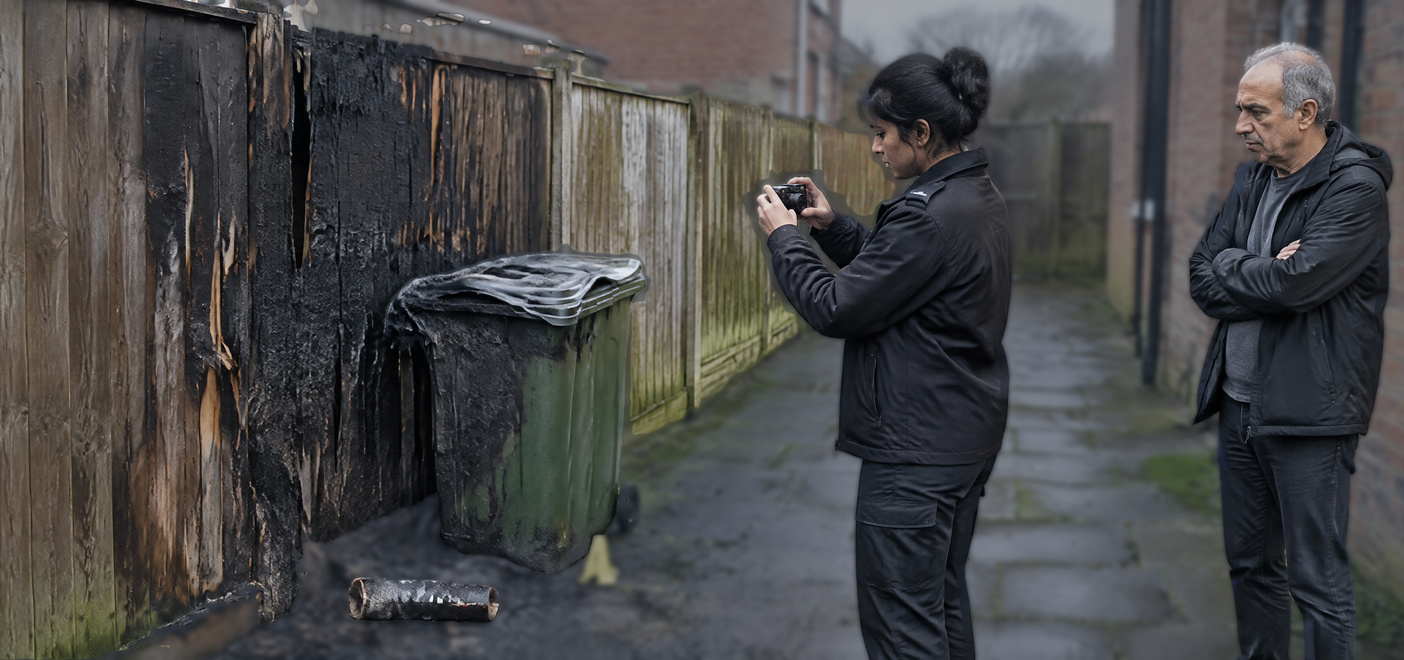
Under the Criminal Damage Act 1971, a person may be charged where they intentionally or recklessly damage property belonging to someone else without lawful excuse. For example, deliberately directing a firework towards a vehicle or building may lead to a criminal damage allegation if damage results.
The prosecution must prove the required intention or recklessness.
Arson
Arson involves criminal damage caused by fire under the Criminal Damage Act 1971.
A firework that causes a fire damaging property may result in an arson investigation where the necessary legal elements are established. Ordinary arson and aggravated criminal damage involving danger to life are distinct offences. Both can carry substantial penalties, including a maximum sentence of life imprisonment on indictment.
Not every accidental fire constitutes arson.
Public order offences
Fireworks used to threaten or intimidate people may lead to allegations under the Public Order Act 1986. For example, offences involving threats of unlawful violence may be considered where fireworks are directed towards a crowd or individuals.
The appropriate charge depends on the behaviour and the legal requirements of the offence. The presence of a crowd or a frightened witness does not automatically establish affray or another public order offence.
Assault and serious injury offences
Where a person is injured by a firework, police may consider assault or more serious offences under the Offences Against the Person Act 1861. The charge will depend on the circumstances, the injury and the required mental element.
The prosecution must establish the relevant offence rather than relying solely on the fact that an injury occurred. Where the conduct is serious, charges under general criminal law may be brought instead of, or alongside, firework-specific offences.
What Are the Penalties for Firework Offences?
Police can issue fixed penalty notices for certain firework offences, including some curfew breaches, instead of pursuing prosecution.
Paying a valid fixed penalty notice within the required period ordinarily resolves the matter without a criminal conviction. More serious offences involving criminal damage, threats or injury may carry higher penalties.
How enforcement decisions are made
Police may issue a warning, offer an available fixed penalty disposal or investigate the matter further.
A decision to prosecute depends on the evidence and the circumstances. Where the Crown Prosecution Service makes the charging decision, it generally applies the Full Code Test, considering whether there is sufficient evidence and whether prosecution is in the public interest.
Local authorities may also use powers under anti-social behaviour legislation to address persistent or harmful conduct in designated areas, subject to the relevant statutory requirements.
How Can a Solicitor Help with Firework Charges?
If you are under investigation or have been charged with a Bonfire Night firework offence, a solicitor can explain the allegation and assess whether the legal requirements have been met.
This may involve reviewing evidence about where the fireworks were used, the time of the incident, the firework category and any alleged damage or injury.
A solicitor can also advise you before a police interview. Independent legal advice is available at the police station, whether you have been arrested or are attending a voluntary interview under caution. If you receive a fixed penalty notice and dispute the allegation, a solicitor can explain the available options and the possible consequences of challenging it. They can advise on firework-related allegations, including offences.
5 Key Takeaways
- Firework laws cover possession, supply and use, with different offences and penalties.
- The Bonfire Night curfew ends at midnight, not 1 am, for fireworks covered by the restriction.
- Setting off fireworks in public places is a separate offence under the Explosives Act 1875.
- Damage, injury or threatening behaviour may lead to more serious criminal charges.
- Some offences can be dealt with by fixed penalty, but prosecution may follow in more serious cases.
Frequently Asked Questions
Not immediately. The Fireworks Regulations 2004 extend the Bonfire Night curfew to midnight on 5 November. Using fireworks covered by the restriction after midnight is a criminal offence. The standard curfew is 11 pm on most other nights.
Yes, depending on their age and the circumstances. The Fireworks Regulations 2004 generally prohibits under-18s from possessing adult fireworks in public places. Police may consider a warning or another disposal instead of prosecution.
A fixed penalty notice allows certain offences to be resolved without prosecution. Paying it within the required period ordinarily avoids a criminal conviction. A criminal charge involves court proceedings and may result in a conviction and sentence.
Yes. If someone is injured by a firework, assault or other offences may be considered. The charge depends on the circumstances, the severity of the injury and the required intention or recklessness.
Category F4 fireworks are subject to strict possession and supply restrictions. They are intended for people with specialist knowledge, and possession is generally prohibited unless a statutory exemption applies.
Call us on 0333 009 6275. We are available to take your call 24 hours a day, 7 days a week.
You can also email us on enquiries@ashmanssolicitors.com or complete our Online Enquiry Form and we’ll be in touch soon.
Get in touch
We’ll respond within 15 minutes during office hours
Search our legal articles
Free expert guidance on criminal law, your rights, and what to expect at every stage.
Searching Legal Help Hub articles
Related insights and updates

Affray vs Violent Disorder vs Riot: Charges Explained
Arrested at a Protest: Charges and What Happens Next

How Darker Nights Affect Crime Patterns in West Yorkshire and London

Halloween Disorder Offences: Criminal Damage, Fireworks and Public Order

Arrested Abroad as a UK Citizen: What Happens and How Can a UK Solicitor Help?

Assault on an Emergency Worker: Charges and Penalties

Bounce Back Loan & Covid Grant Fraud: What Directors Need to Know

Accused of Murder: How to Find a Specialist Murder Defence Solicitor

Accused of Distributing Malware or Ransomware: What Are the Charges and Penalties?

Accused of Money Laundering but I Didn’t Know the Money was Criminal: What Is the Defence?

Attempted Murder Charges: Intent, Defence and Penalties

Bonfire Night Firework Offences: What Carries a Criminal Charge?

Halloween, Mischief Night and Your Child: Fireworks, Eggs and Criminal Damage Explained

How Autism Can Affect Criminal Sentencing in the UK

Can Bite Mark Evidence Be Used in Criminal Trials in the UK?
Can a Getaway Driver Be Charged With Burglary in the UK?

Can Prisoners Attend Their Sentencing Hearing in the UK?
Can Psychological Harm to a Victim Increase a Criminal Sentence?

CPS Complex Casework Unit: How Serious Criminal Cases Are Prosecuted