Strategic Advice
Client-Focussed
Proven Record
Strategic Advice
Client-Focussed
Proven Record
Strategic Advice
Client-Focussed
Proven Record

Offence Category: General Crime

  • New Year Digital Clear-Out: Why Deleting Images or Messages During an Investigation is a Crime

    New Year Digital Clear-Out: Why Deleting Images or Messages During an Investigation is a Crime

    Examiner downloading data after deleting messages during a police investigation
    Strategic Advice
    Client-Focussed
    Proven Record
    Strategic Advice
    Client-Focussed
    Proven Record
    Strategic Advice
    Client-Focussed
    Proven Record

    When Deleting Digital Material May Become a Criminal Offence

    Deleting or concealing evidence can amount to perverting the course of justice, a common law offence in England and Wales. The prosecution must establish that a person carried out an act which had a tendency to interfere with the course of justice and was intended to do so.

    The offence does not require the interference to succeed. Someone may still face prosecution where their actions were intended to frustrate an investigation, even if police had already obtained copies of the deleted material.

    However, not every deletion during an investigation meets this test. The prosecution must establish the necessary act and intention, rather than relying on the timing of deletion alone.

    The course of justice can exist before criminal proceedings begin. It may arise where an incident has occurred from which a police investigation can reasonably be expected, or where an investigation is already underway.

    This means that deleting relevant conversations after learning that a complaint may be made to police can raise concerns, even if officers have not yet contacted you.

    Intent is the central question

    The reason for deleting material is central to whether an offence has been committed.

    Prosecutors must establish that the person intended to interfere with the course of justice. It is not enough simply to show that messages or images were deleted while an investigation was ongoing.

    For example, someone who routinely clears storage space without knowing that their material may be relevant to an investigation is in a different position from someone who deliberately removes messages to prevent police from examining them.

    Timing, knowledge and the surrounding circumstances may all help establish what the person intended.

    Does the device need to have been seized first?

    No. Police do not have to seize a phone, computer or other device before deleting evidence can become a criminal offence.

    The same applies where no formal request for records has been made.

    If an investigation is underway or the course of justice has otherwise begun, deliberately deleting relevant material to prevent it from being examined may amount to perverting the course of justice.

    The absence of police contact does not necessarily protect someone from prosecution. What matters is whether the legal requirements for the offence can be proved.

    Routine Deletion and Deliberate Evidence Destruction

    There is an important difference between clearing unwanted digital material as part of ordinary housekeeping and deliberately destroying evidence.

    At the beginning of a new year, many people delete old photographs, remove unused files or clear message histories to free up storage space.

    These activities are not generally criminal simply because they involve deleting information.

    The legal position becomes more serious where the material may be relevant to an investigation and the deletion is intended to prevent investigators from obtaining or examining it.

    Three factors are particularly important: when the deletion occurred, what the person knew and why the material was removed.

    For example, deleting old photographs during a routine phone clear-out is different from removing a particular conversation after learning that someone involved has reported an incident to police.

    In the second situation, investigators may examine whether the deletion was intended to conceal evidence.

    However, awareness of an investigation does not automatically make every subsequent deletion a criminal offence. The prosecution must still establish an act that tended and was intended to interfere with justice.

    The circumstances may also affect sentencing if the conduct leads to a conviction.

    Solicitor and client discussing deleting messages during a police investigation

    Messages, Images, Cloud Accounts and Backups

    Digital evidence can take many forms. Text messages, WhatsApp conversations, photographs, videos, emails and social media records may all be relevant to a police investigation.

    The same applies to information stored in cloud accounts or device backups. The location of the material does not, by itself, determine whether deleting it may constitute an offence.

    For example, removing messages from a cloud backup to prevent police from recovering them can raise the same legal concerns as deleting them directly from a phone. 

    Closing an account or deliberately removing stored records may also be relevant where those actions are intended to interfere with an investigation.

    However, deleting a file from one location does not necessarily mean it has disappeared completely. Copies may remain on another device, in a backup or with a service provider.

    The availability of another copy may affect the evidence, but it does not automatically rule out the offence where a deliberate attempt to interfere with justice is established.

    Additional care is needed where the device contains material that may itself be unlawful, such as indecent images of children.

    In these circumstances, opening, copying, forwarding or attempting to recover the material independently may create separate legal risks. Specific advice should be obtained before handling it.

    Disappearing Messages and Automatic Deletion

    Many messaging applications include disappearing-message features that automatically remove conversations after a chosen period.

    These settings may have been activated months before any police investigation was contemplated. Where messages disappear under an existing setting, the legal position may differ from someone deliberately selecting and deleting material to conceal evidence.

    Perverting the course of justice requires a positive act. Simply failing to intervene in an automatic process does not, by itself, necessarily establish that offence.

    However, actively changing a deletion setting to remove relevant messages, shortening an existing timer or otherwise manipulating the process to conceal evidence may raise serious concerns.

    The timing of those changes and the person’s intention would be important.

    If you become aware that an investigation may involve conversations stored on your device, preserving potentially relevant material should be the priority.

    Where lawful and safe to do so, pause or disable settings that could cause further deletion. If the process is unclear, or the material may itself be unlawful, seek specific legal advice before making changes.

    Tell your solicitor about any existing automatic deletion settings, including when they were activated and whether they have since been changed.

    What to Do if Material Has Already Been Deleted

    If you have already deleted messages, images or other files and are concerned that they may be relevant to an investigation, obtain legal advice before taking further action.

    Deleting material does not automatically establish that a criminal offence has occurred. The circumstances of the deletion, including what you knew and intended at the time, will need to be considered.

    Avoid making further changes to the device or relevant accounts. Attempting to reconstruct conversations, alter records or create replacement messages could introduce additional evidential concerns.

    You should also avoid discussing the deletion with other people in a way that could affect their evidence or accounts of events.

    If the material may itself be unlawful, do not attempt to retrieve, copy or circulate it independently.

    A criminal defence solicitor can examine the circumstances and advise whether forensic recovery, disclosure or another step is appropriate.

    Material that has been deleted may sometimes remain recoverable through digital forensic examination or existing backups.

    In certain cases, voluntarily correcting the position or disclosing relevant information may be taken into account. However, the implications depend on the circumstances, so the decision should be made with legal advice.

    Communications made confidentially with a solicitor for the purpose of obtaining legal advice will generally be protected by legal professional privilege.

    If you know that a police investigation is underway or reasonably expect one to begin, preserving potentially relevant digital material is the safest general approach.

    This includes messages, photographs, emails, financial records and information stored in cloud accounts.

    Avoid deleting, resetting or wiping devices that may contain relevant evidence. You should also take care not to overwrite, alter or transfer records in a way that could affect their integrity.

    Where automatic deletion settings are active, consider how further loss of material can be prevented safely and lawfully. If you are uncertain about the technical steps, ask your solicitor before changing the device or account settings.

    It is also important not to share potentially relevant material unnecessarily with other people. Forwarding messages or copying files may create additional issues, particularly where the content is confidential, sensitive or potentially unlawful.

    If police have issued a formal request or obtained legal authority to seize or examine a device, your solicitor can explain the scope of that authority and any obligations that apply.

    Preserving evidence does not necessarily mean volunteering every document or device to investigators without first understanding your legal position.

    A solicitor can advise how material should be retained, examined and disclosed where appropriate.

    Where potentially unlawful images are involved, obtain specific advice rather than attempting independent recovery or handling.

    Penalties and Sentencing for Interfering With Evidence

    Perverting the course of justice is a serious common law offence carrying a maximum sentence of life imprisonment.

    However, this is the statutory maximum available for the offence, not the sentence normally imposed whenever digital evidence is deleted.

    The actual sentence depends on the seriousness of the conduct, its effect on the investigation and the circumstances of the case.

    The Sentencing Council has published a specific guideline for perverting the course of justice. Courts consider both culpability and harm when deciding the appropriate sentence.

    Relevant factors may include how deliberate or planned the interference was, whether it continued over time and the seriousness of the investigation or proceedings affected.

    The court may also consider whether evidence was actually lost, whether an investigation was delayed and whether the conduct placed others at risk of wrongful suspicion or prosecution.

    Under the guideline, the offence range extends from a community order to seven years’ custody, although the legal maximum remains life imprisonment.

    Perverting the course of justice is tried in the Crown Court.

    Other offences or legal consequences may arise depending on what happened. For example, failure to comply with a court order to preserve or produce material may raise issues of contempt of court.

    Providing false information, fabricating replacement messages or attempting to influence witnesses may also create separate legal difficulties.

    The applicable charges and likely consequences depend on the evidence and the conduct alleged.

    The Role of a Criminal Defence Solicitor

    A criminal defence solicitor can examine the circumstances surrounding the deletion of digital material and explain whether the available evidence may support an allegation of perverting the course of justice.

    This includes reviewing when the material was deleted, whether an investigation was underway or reasonably anticipated, and what evidence exists about the person’s intention.

    A solicitor can also advise on how to preserve remaining material, respond to requests for devices or records, and deal with information that has already been removed.

    Where forensic recovery may be relevant, they can consider whether specialist assistance is appropriate.

    If you are invited to a police interview, legal advice can help you understand the allegation and the issues likely to be raised.

    Confidential communications made for the purpose of obtaining legal advice are generally protected by legal professional privilege. This allows clients to discuss past events openly, although the protection does not extend to communications made to further a criminal purpose.

    Giving your solicitor an accurate account of what happened, including any deletion of material, will help them assess the available options.

    Speak to a Criminal Defence Solicitor

    If you are concerned about deleting messages, photographs or other digital material during a police investigation, a criminal defence solicitor can explain how the law may apply to your circumstances.

    Our criminal defence team can advise on evidence preservation, police requests and the potential consequences of material that has already been deleted.


    Search our legal articles

    Free expert guidance on criminal law, your rights, and what to expect at every stage.

    Searching Legal Help Hub articles

  • Criminal Law Changes in 2026: Key Developments in England and Wales

    Criminal Law Changes in 2026: Key Developments in England and Wales

    Officer fitting a tag to a man under criminal law changes 2026

    Strategic Advice
    Client-Focussed
    Proven Record
    Strategic Advice
    Client-Focussed
    Proven Record
    Strategic Advice
    Client-Focussed
    Proven Record

    Two major pieces of legislation, the Sentencing Act 2026 and Crime and Policing Act 2026, have introduced reforms that may affect defendants, convicted offenders and their families. 

    Some changes are already in force, while others are being introduced gradually. The date a new rule takes effect matters because it can determine whether it applies to your case.

    This article reviews the main criminal law developments between 1 January and 5 November 2026, including sentencing changes, significant court decisions and reforms that have yet to take effect.

    Key Criminal Law Developments in 2026 So Far

    Two major laws have shaped criminal justice changes in England and Wales during 2026:

    Both Acts represent the most consequential criminal law changes of 2026 and are being brought into force in phases:

    • The Sentencing Council changes how courts deal with certain prison sentences, when some prisoners can be released and what restrictions may be imposed through community sentences. 
    • The Crime and Policing Act covers a wider range of issues, including antisocial behavior, shop theft, stalking, knife sales and criminal exploitation of children. 

    The Sentencing Council has also updated its guidance to reflect new sentencing rules, including changes introduced in March and October.

    For anyone involved in criminal proceedings, it is important to establish which rules apply and when they took effect.

    The Sentencing Act 2026

    The Sentencing Act 2026 covers the threshold for immediate short custodial sentences, the point at which prisoners are released from standard determinate sentences, the requirements available on community orders and suspended sentence orders, and the governance of the Sentencing Council. 

    The key commenced provisions are set out below, each with its effective date.

    Presumption against short custodial sentences (in force 22 March 2026)

    From 22 March 2026, courts must generally suspend prison sentences of 12 months or less where the new presumption applies.

    A suspended sentence means the person does not immediately serve the prison term, provided they comply with the conditions imposed by the court. However, this does not mean everyone facing a short sentence will avoid prison.

    Immediate custody may still be required where the court finds exceptional circumstances or where a legal exemption applies.

    The Act also extended the maximum period for which a suspended sentence can run. 

    Previously, courts could suspend a sentence of up to two years’ imprisonment for up to two years. Courts can now impose a sentence of up to three years’ imprisonment, suspended for up to three years. 

    The presumption does not apply to serious violent offences or serious sexual offences, which carry separate sentencing frameworks. 

    If you are facing a charge in one of those categories, the starting point for sentencing will be governed by a different set of rules and you should seek specific legal advice.

    New early release model (in force 1 October 2026)

    Before 1 October 2026, a prisoner serving a standard determinate sentence was automatically released at the halfway point of their sentence.

    The Sentencing Act 2026 replaces that automatic release model with an earned progression model for prisoners serving sentences of that type.

    Under the new model, release is not automatic at a fixed point. 

    A prisoner’s behaviour in custody determines when they become eligible to be released. The minimum point at which a prisoner can earn release is 33% of the sentence. Poor behaviour can delay release beyond that minimum. 

    The model applies to sentences imposed on or after 1 October 2026, though the precise transitional rules for sentences that straddle the commencement date should be confirmed with a solicitor if relevant to a specific case.

    Rape, serious child sexual abuse and grooming offences are excluded from the new model. The release point for those offences remains unchanged.

    New community order requirements (in force 1 October 2026)

    The Sentencing Act 2026 introduces additional requirements that courts may attach to community orders and suspended sentence orders.

    Three new requirements came into force on 1 October 2026.

    These allow courts, where the relevant legal conditions are met, to restrict an offender from:

    • Driving for a specified period.
    • Attending certain public events.
    • Entering pubs, bars or other specified drinking establishments.

    A further measure involving electronically monitored restriction zones has also been introduced in legislation, but its commencement must be checked separately.

    The new requirements give courts additional ways to address offending behaviour without necessarily imposing immediate imprisonment.

    For example, a person whose offending is linked to particular venues may face restrictions on entering those premises.

    New oversight of the Sentencing Council (Sentencing Act 2026, section 20)

    The Sentencing Act 2026 also changes how the Sentencing Council develops and amends sentencing guidelines.

    The legislation introduces a requirement for approval from the Lord Chancellor and the Lord Chief Justice, or Lady Chief Justice, before certain guideline changes are made.

    This gives the government and senior judiciary a formal role in approving future guidance. The change does not mean existing sentencing guidelines automatically stop applying.

    Courts must continue using the guidance in force at the relevant time.

    The commencement of any particular approval requirement should be confirmed before relying on it in an ongoing case.

    Officer returning belongings being released under criminal law changes 2026

    The Crime and Policing Act 2026

    The Crime and Policing Act 2026 received Royal Assent on 29 April 2026. 

    The Act addresses several distinct areas of criminal law and policing, including antisocial behaviour, shop theft, stalking protection, online knife sales and child criminal exploitation.

    Changes to antisocial behaviour powers

    The Crime and Policing Act 2026 amends the existing framework for responding to antisocial behaviour, giving police and local authorities revised powers in relation to antisocial behaviour orders and related tools. 

    The specific provisions and their commencement dates should be verified against the relevant commencement orders before relying on them in a legal context.

    Shop theft and retail crime provisions

    The Act contains provisions directed at shop theft and retail crime. 

    These provisions change how certain theft offences are categorised or prosecuted, to improve the response to organised retail crime. 

    Defendants or businesses affected by these provisions should confirm which sections are currently in force and how they interact with existing theft legislation.

    Stalking protection orders

    The Act amends the framework for stalking protection orders, which are civil orders available to protect victims of stalking before or alongside criminal proceedings. 

    If you are a victim of stalking, or are subject to or at risk of a stalking protection order, the Act may affect the terms on which such an order can be made or varied. Legal advice specific to your circumstances is recommended.

    Online knife sale checks

    The Crime and Policing Act 2026 introduces requirements relating to age verification and delivery checks for online knife sales, aimed at reducing the availability of knives to those who cannot legally purchase them. 

    The practical effect on a defendant charged with a knife-related offence will depend on which provisions are in force and what conduct is alleged.

    Child criminal exploitation definition

    The Act introduces a statutory definition of child criminal exploitation. 

    This has potential relevance for defendants who raise exploitation as context in a criminal case, as well as for prosecutors and courts considering whether a young person should be treated as a victim rather than an offender. 

    Sentencing and Court Procedure Updates

    The Sentencing Council updated several guidelines during 2026 to reflect changes introduced by new legislation and court decisions.

    Amendments made in March addressed the new presumption against immediate short prison sentences.

    Further changes took effect on 1 October 2026, including updates relating to community sentences, probation requirements and changes to prison release arrangements.

    The Act also replaced the term rehabilitation activity requirement with probation requirement and changed some of the rules governing those activities.

    On 5 October 2026, further sentencing guideline amendments took effect concerning how courts record findings of domestic abuse in relevant cases.

    These updates matter because sentencing guidelines help judges and magistrates decide which penalties are appropriate. However, the applicable rules may depend on the date of conviction, sentencing or the alleged offence.

    Changes to prison release arrangements have also affected guidance on driving disqualification periods where a person receives an immediate custodial sentence.

    Anyone approaching sentencing should ensure that the court is applying the correct legislation and guidelines.

    What These Criminal Law Changes in 2026 Mean for Defendants and Families

    The effect of the 2026 reforms depends on your circumstances. If you are facing sentencing, the new rules concerning short prison sentences may be relevant.

    However, the presumption in favour of suspension does not guarantee that you will avoid immediate custody. The offence, your previous convictions, any existing court orders and the circumstances of the case will all matter.

    If you are already serving a prison sentence, the changes to release arrangements may affect when you become eligible for release. However, the new progression model does not apply to every prisoner.

    Your sentence type, the offence and any applicable transitional arrangements must be checked before a release date can be confirmed.

    For families, changes to release arrangements can create uncertainty about when someone may return home and what supervision will apply afterwards.

    Release on licence also involves continuing obligations. A prisoner who breaches licence conditions may be recalled to custody, even after being released under the new arrangements.

    If your case involves one of the offences affected by the Crime and Policing Act 2026, the relevant provisions must be checked to establish whether they were in force when the alleged conduct occurred.

    The important point is that new legislation does not necessarily apply retrospectively or affect every ongoing case.

    Reforms Still Awaiting Implementation

    Several reforms introduced during 2026 have not yet been fully implemented. Both the Sentencing Act 2026 and the Crime and Policing Act 2026 are being brought into force in stages.

    Some provisions took effect shortly after Royal Assent, while others began operating later in the year. Further measures may require separate commencement orders before they can be used.

    For example, although the Sentencing Act introduces four new community and suspended sentence requirements, only three began operating on 1 October 2026.

    The Crime and Policing Act also contains provisions concerning antisocial behaviour, shop theft, stalking and online knife sales that have different implementation arrangements.

    A provision being included in an Act does not necessarily mean that police, prosecutors or courts can already rely on it. Before relying on a new rule, the date it came into force must be confirmed.

    How a Criminal Defence Solicitor Can Help

    The criminal law changes introduced during 2026 affect different stages of a criminal case, from investigation through to release from custody. 

    A solicitor can review the specific facts of your case against the current law, confirm which provisions were in force on the dates that matter and advise on how those provisions affect your position.

    For defendants approaching sentencing, a solicitor can present the presumption against short sentences accurately to the court and address any argument that exceptional circumstances apply. 

    They can also advise on what the new community order requirements may mean in practice if the court is considering a community or suspended sentence order.

    For families of serving prisoners, a solicitor can explain the earned progression model and how it applies to the specific sentence being served, including whether transitional provisions affect the position.

    For anyone under investigation for conduct that may engage provisions of the Crime and Policing Act 2026, including charges related to antisocial behaviour, retail theft or knife offences, a solicitor can confirm whether the relevant provision is in force and how it affects the investigation or charge.

    Speak to our criminal defence team for advice about your position and next steps.

    You can also email us on enquiries@ashmanssolicitors.com or complete our Online Enquiry Form and we’ll be in touch soon.


    Search our legal articles

    Free expert guidance on criminal law, your rights, and what to expect at every stage.

    Searching Legal Help Hub articles

  • Can You Travel Abroad With a Criminal Conviction From England and Wales?

    Can You Travel Abroad With a Criminal Conviction From England and Wales?

    Traveling abroad: traveller with passport at an airport border control desk

    Strategic Advice
    Client-Focussed
    Proven Record
    Strategic Advice
    Client-Focussed
    Proven Record
    Strategic Advice
    Client-Focussed
    Proven Record

    This article explains how a criminal conviction can affect international travel, what you may need to disclose and what to check before booking a trip.

    Can You Leave the UK if You Have a Criminal Record?

    Having a criminal conviction does not automatically prevent you from travelling abroad. UK law does not impose a general travel ban on everyone with a criminal record.

    Your British passport also does not display your convictions. The electronic chip contains your photograph and personal details, not a copy of your criminal record.

    However, the country you intend to visit may have restrictions on admitting people with certain convictions.

    Some countries are particularly strict about drug offences, violence or serious criminal convictions. Others may allow entry depending on the sentence you received and how much time has passed.

    Why there is no automatic travel ban

    A conviction alone does not usually stop you from leaving the UK. 

    However, restrictions attached to your individual circumstances may prevent travel. These can include bail conditions, licence requirements following release from prison or a court order restricting overseas travel.

    You should check whether any such restrictions still apply before booking.

    Even if you are free to leave the UK, the destination country decides whether you can enter.

    Why a valid visa does not guarantee admission

    Obtaining a visa or electronic travel authorisation is not the final word on traveling abroad. The decision on whether to allow entry is made at the border by an immigration official in the destination country. 

    Even where a person has obtained a valid visa or travel authorisation, the border official retains the power to refuse entry. 

    Assuming that a visa removes all risk is one of the most significant traps in this area.

    Entry Requirements, Visas and Travel Authorisation

    Every country has its own rules about admitting visitors with criminal convictions.

    Some countries ask about criminal history when you apply for a visa or electronic travel authorisation. Others may require additional documents before deciding whether you can enter.

    You may be asked to provide an ACRO Police Certificate or other official criminal record information.

    There is no single rule covering every destination. The offence, sentence, time since conviction and purpose of your visit may all affect the decision.

    The United States

    UK citizens traveling to the United States for up to 90 days normally travel under the Visa Waiver Programme and are required to obtain an Electronic System for Travel Authorisation (ESTA) before departure. 

    However, certain criminal convictions can affect your eligibility.

    Some arrests, even where no conviction followed, may also be relevant depending on the circumstances and the questions asked.

    If you are not eligible to travel under ESTA, you may need to apply for a visa through the US Embassy.

    A conviction that is spent in England and Wales must still be declared when applying for an ESTA or a US visa.

    Canada

    Canada may refuse entry to visitors who are considered criminally inadmissible.

    British citizens travelling to Canada by air normally need an Electronic Travel Authorisation (eTA), unless another entry document or exemption applies.

    The application process may involve questions about criminal convictions and previous offences.

    Whether you can enter depends on Canadian immigration law, including the nature of the offence, its Canadian equivalent, the sentence and how much time has passed.

    In some circumstances, you may qualify for deemed rehabilitation, individual rehabilitation or a temporary resident permit.

    However, a conviction being spent under UK law does not automatically mean you will be allowed into Canada.

    Other countries

    Many other countries also ask about criminal history as part of visa or entry authorisation processes. 

    Requirements must be checked individually for every country on the itinerary, including transit countries, by consulting the official immigration authority or embassy of each destination.

    Solicitor advising a client about Traveling abroad, with a passport

    Must You Disclose a Spent Conviction When Traveling Abroad?

    In England and Wales, the Rehabilitation of Offenders Act 1974 allows certain spent convictions to be treated as if they did not occur for many domestic purposes. 

    That domestic protection does not extend to visa applications, overseas entry requirements or the decisions of foreign immigration authorities. However, those protections do not automatically apply when you travel abroad.

    Foreign countries have their own immigration laws and can require information about convictions that are considered spent in the UK.

    Whether you must disclose a particular conviction depends on the destination and the wording of the application.

    When the Rehabilitation of Offenders Act does not protect you

    The Rehabilitation of Offenders Act allows certain convictions to become spent after a specified period.

    For many domestic purposes, this means you do not have to disclose them. However, a foreign immigration authority is not required to apply the same rules.

    For example, if a foreign visa application asks whether you have ever been convicted of a criminal offence, and you answer no on the basis that the conviction is spent in England and Wales, you may be providing incorrect information to a foreign authority. 

    The foreign authority does not apply the Rehabilitation of Offenders Act. It applies its own law, and its own law may require disclosure of convictions regardless of their status under UK legislation.

    Why application form wording matters

    The precise wording of each question on a visa or travel authorisation application determines what must be disclosed. 

    Some forms ask about convictions within a specified time period. Others ask about convictions of particular offence types. Some ask about arrests as well as convictions. 

    Reading each question carefully and answering it according to what it actually asks is necessary.

    Where the wording is unclear or you are unsure whether your conviction falls within the scope of the question, taking legal advice before submitting the application is safer than guessing.

    Bail, Licence Conditions and Other Travel Restrictions

    Before considering whether a destination country will admit you when traveling abroad, you must establish whether you are legally permitted to leave the UK at all. 

    Several types of restriction can prevent travel, and they can remain in force well after a sentence has been served.

    Bail conditions and passport surrender

    If you are on bail, you may have conditions preventing you from leaving England and Wales or requiring you to surrender your passport. 

    Traveling abroad in breach of a bail condition is a criminal offence. A person who does so can be arrested on return and remanded in custody. 

    If you are on bail, you must review your bail conditions before making any travel plans. Applying to have conditions varied is possible, but it requires a court application and must be done in advance.

    Licence conditions after release

    If you have been released from prison on licence, you remain subject to conditions set by the Probation Service. Traveling abroad without the approval of the supervising probation officer is likely to constitute a serious breach of licence conditions. 

    The consequence of a licence breach can be recall to prison in England and Wales. 

    Completing a custodial sentence does not mean that the licence period has ended. Licence can continue for a significant period, and the conditions attached to it remain enforceable throughout.

    Notification requirements and civil orders

    If you are subject to sexual offence notification requirements, you generally must notify the police before travelling outside the UK.

    These requirements apply to overseas travel regardless of whether the trip is short or extended.

    Notification is normally required at least seven days before departure where you hold the relevant information, although specific rules apply where that is not possible.

    Failing to comply can be a criminal offence. Certain court orders, including Sexual Harm Prevention Orders and Serious Crime Prevention Orders, may also restrict overseas travel.

    You must check the exact terms of any order that applies to you.

    Other outstanding financial or court obligations may also affect your circumstances, although they do not automatically create a travel ban.

    A solicitor can help you establish which restrictions remain in force and what you must do before leaving the UK.

    What to Check Before Booking Your Trip Abroad

    If you have a criminal conviction and are planning an overseas trip, checking the legal requirements before booking can help prevent problems at the airport or border.

    Start by confirming that you are allowed to leave the UK, then check the immigration requirements for each country you intend to visit.

    Checking UK-side restrictions first

    Establish whether any restriction prevents you from leaving the UK. Review bail conditions, licence conditions, any notification requirements and the terms of any civil orders. 

    If you are on licence, speak to your supervising probation officer before making any arrangements. 

    If you are subject to notification requirements, check the qualifying criteria for overseas travel and notify the police in advance if required.

    Do not assume that because time has passed since your conviction or sentence, all restrictions have lapsed.

    Researching destination entry requirements

    Check the official immigration website or embassy guidance for every country on your itinerary.

    This includes transit countries where immigration clearance, a transit visa or other authorisation may be required. Find out whether you need a visa, ESTA, eTA or another form of travel authorisation.

    Check whether the application asks about criminal convictions, arrests or pending proceedings.

    If you need a Police Certificate, confirm the correct document with the relevant authority.

    An ACRO Police Certificate may be accepted for some overseas visa and immigration applications, but requirements differ by country.

    Avoid relying solely on unofficial travel websites, as entry rules can change.

    Getting advice before you apply

    If you are in any doubt about whether a conviction affects your eligibility to travel abroad to a specific destination, what you are required to disclose or how to answer a question on a travel authorisation or visa form, seek legal advice before submitting the application or booking flights. 

    Submitting an application with an incorrect answer creates a more serious problem than seeking advice first.

    Consequences of Breaching Restrictions When Traveling Abroad

    The consequences depend on whether you have breached a restriction imposed in England and Wales or provided incorrect information to a foreign immigration authority.

    These are separate legal issues.

    • Traveling abroad in breach of a bail condition is a criminal offence in England and Wales. A person who does so can be arrested on return to the UK and remanded in custody pending further proceedings. 
    • Breaching a licence condition by traveling abroad without approval from the Probation Service can result in recall to prison. The recall process can be rapid and does not require a further court conviction. 
    • Failing to comply with sexual offences notification requirements before traveling abroad is a criminal offence in England and Wales and carries a potential custodial sentence. 
    • Breaching the terms of a civil order such as a Sexual Harm Prevention Order may also constitute a criminal offence under English and Welsh law.

    Providing false or misleading information on a visa or travel authorisation application is treated seriously by all destination countries. The consequences are determined by the law of that country, not by English or Welsh law.

    They can include refusal of entry at the border, deportation, being banned from future entry to that country and, in some jurisdictions, criminal proceedings in the destination country itself. 

    A ban from future entry can be permanent. 

    Even where a person enters a country without incident, information provided on travel applications may be reviewed at any point. 

    Inconsistencies identified later can affect future visa applications, immigration status and, in some countries, residency or citizenship applications.

    How a Criminal Defence Solicitor Can Help Before You Travel Abroad

    A criminal defence solicitor can help you identify whether any UK-side restriction prevents you from traveling abroad. 

    If you are on bail and wish to travel, a solicitor can advise on whether a variation application is realistic and represent you in that application. 

    If you are on licence, a solicitor can clarify what approval is required and what the consequences of breach would be in your specific circumstances.

    A solicitor can also review sexual offence notification requirements or court orders that may restrict your movements.

    Where you are unsure about disclosing a spent conviction, they can explain the effect of the Rehabilitation of Offenders Act and help you understand the information contained in your criminal record.

    However, overseas immigration decisions are governed by the law of the destination country. You may need separate advice from an immigration professional familiar with that country’s requirements.

    If you are concerned that a criminal conviction could prevent you from travelling, speak to our criminal defence team before making arrangements.

    You can also email us on enquiries@ashmanssolicitors.com or complete our Online Enquiry Form and we’ll be in touch soon.


    Search our legal articles

    Free expert guidance on criminal law, your rights, and what to expect at every stage.

    Searching Legal Help Hub articles

  • Affray vs Violent Disorder vs Riot: Charges Explained

    Affray vs Violent Disorder vs Riot: Charges Explained

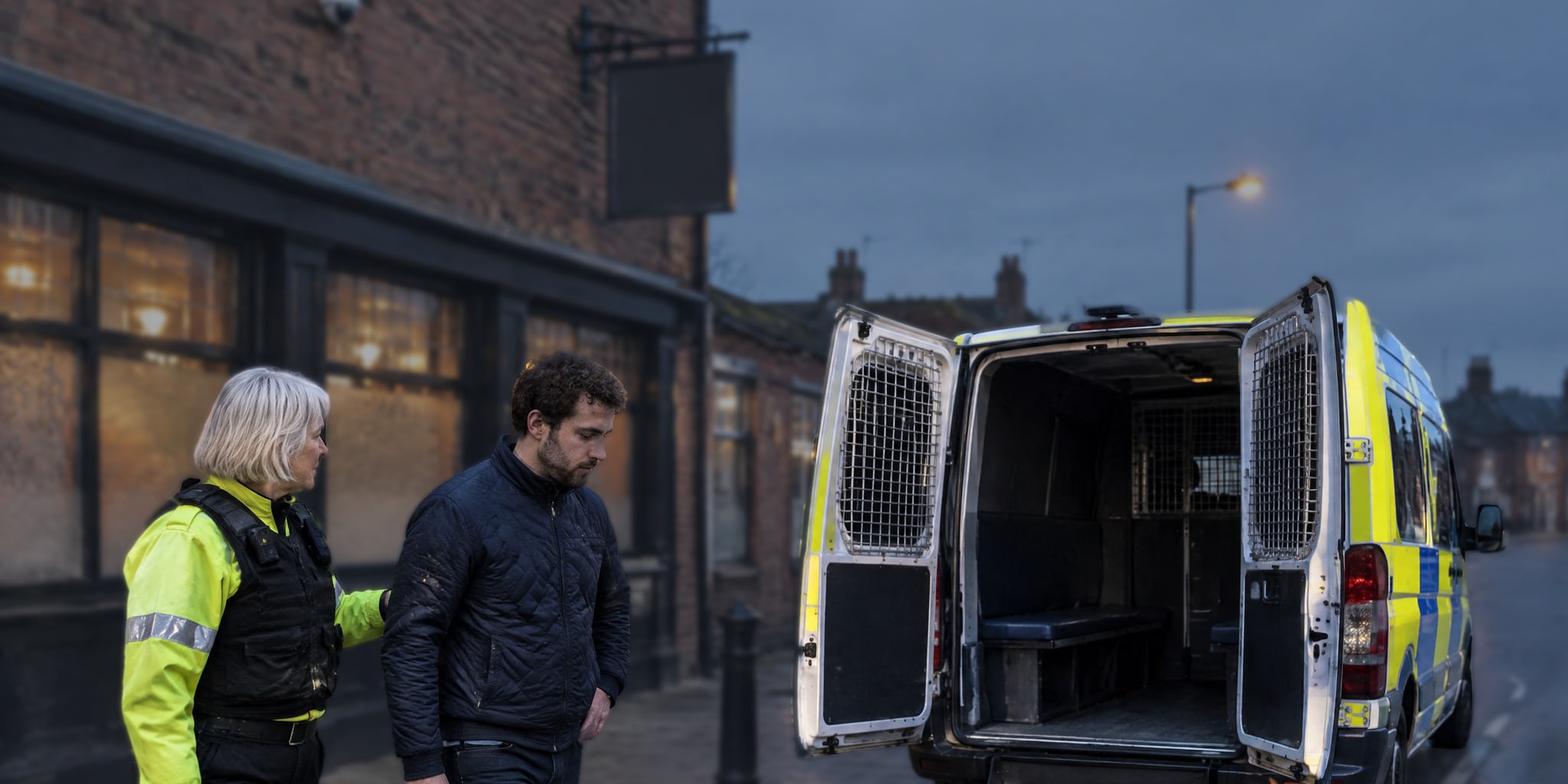
    Officer leading a man to a police van outside a pub after violent disorder

    Strategic Advice
    Client-Focussed
    Proven Record
    Strategic Advice
    Client-Focussed
    Proven Record
    Strategic Advice
    Client-Focussed
    Proven Record

    Affray is the least serious of the three, followed by violent disorder, while riot carries the highest maximum sentence. However, the charge depends on what happened and each person’s involvement, rather than simply the number of people present.

    This article explains the differences between affray, violent disorder and riot, the penalties that may apply, and what evidence may be relevant if you are accused of one of these offences.

    What Is the Difference Between Affray and Violent Disorder?

    The main differences between these offences concern how many people are involved, whether violence or threats are used and whether those involved share a common purpose.

    • Affray can involve a single person using or threatening unlawful violence towards another person. It carries a maximum sentence of three years’ imprisonment.
    • Violent disorder requires at least three people who are present together and use or threaten unlawful violence. It carries a maximum sentence of five years’ imprisonment.
    • Riot involves at least twelve people who are present together and use or threaten unlawful violence for a shared purpose. A person convicted of riot must have personally used unlawful violence or be legally responsible for its use. The maximum sentence is ten years’ imprisonment.

    The prosecution must establish the requirements of the particular offence. Being involved in a large gathering does not automatically mean someone has committed violent disorder or riot.

    What is Affray?

    What conduct is involved?

    Affray occurs where someone uses or threatens unlawful violence towards another person in circumstances serious enough that an ordinary person witnessing the incident would fear for their safety.

    For example, a person aggressively approaching another individual while threatening physical violence may face an affray allegation, depending on their behaviour. Threatening words alone are not enough for affray.

    The conduct must involve violence or a threat of violence that goes beyond words. An actual injury is not required, and there does not need to have been a bystander who witnessed the incident.

    How many people does affray require?

    Affray can be committed by one person acting alone. A group or organised gathering is not required.

    For example, a confrontation between two individuals outside a pub may lead to an affray charge if one person’s conduct meets the requirements of the offence.

    Where several people are involved, the prosecution will consider each person’s actions and the seriousness of the incident.

    Where can affray take place?

    Affray can occur in public or private places. This includes streets, pubs, private venues and residential properties.

    What matters is the conduct involved, not whether the incident took place in a public location.

    How serious is the penalty for affray?

    Affray carries a maximum sentence of three years’ imprisonment in the Crown Court. However, a prison sentence is not automatic.

    The court considers the seriousness of the violence or threats, whether anyone was injured, the circumstances of the incident and the defendant’s involvement.

    Less serious cases may result in a fine or community sentence, while more serious incidents can lead to imprisonment.

    Officer showing CCTV stills to a man during a violent disorder interview

    What is Violent Disorder?

    What conduct is involved in violent disorder?

    Violent disorder involves three or more people who are present together and use or threaten unlawful violence. Their combined behaviour must be serious enough that an ordinary person witnessing it would fear for their safety.

    Physical injury is not necessary. Threatening conduct may be sufficient where the requirements of the offence are met.

    However, the prosecution must establish each defendant’s involvement in the violence or threats.

    How many people does violent disorder require?

    At least three people must be involved in using or threatening unlawful violence while present together. Simply being in a group of three or more people is not enough.

    For example, someone standing nearby while others become involved in a fight does not automatically commit violent disorder.

    The prosecution must establish the person’s individual conduct or other legally relevant participation.

    Does violent disorder require a common purpose?

    Unlike riot, violent disorder does not require everyone involved to share the same objective.

    For example, several individuals may become involved in a confrontation without planning it or acting towards a shared goal.

    They may still face violent disorder charges if their conduct meets the requirements of the offence. The absence of a prior agreement does not prevent prosecution.

    How serious is the penalty for violent disorder?

    Violent disorder carries a maximum sentence of five years’ imprisonment in the Crown Court. This is higher than the maximum penalty for affray because the offence involves several people using or threatening unlawful violence.

    The sentence depends on the nature of the incident, the seriousness of the conduct and the individual’s involvement.

    What is Riot?

    What conduct is involved?

    Riot is the most serious of these three public order offences. It involves twelve or more people present together who use or threaten unlawful violence for a common purpose.

    Their combined behaviour must be serious enough to make an ordinary person fear for their safety. For an individual to be convicted of riot, the prosecution must establish their use of unlawful violence or another legally recognised basis for responsibility.

    For example, a large group acting together to attack people or property may face riot allegations where the required conduct is established.

    How many people does riot require?

    At least twelve people must be involved in the relevant unlawful violence or threats while present together.

    A riot charge cannot be established simply because a large crowd was present. For example, a demonstration involving hundreds of people does not become a riot solely because a smaller number engage in violence.

    The prosecution must establish the required number of participants and the conduct relevant to the offence.

    What does common purpose mean in a riot charge?

    A common purpose means that those involved were acting towards a shared objective. This does not necessarily require advance planning or an explicit agreement.

    For example, a group may begin acting together during an incident, even if they had not arranged their actions beforehand.

    However, being part of the same crowd or attending the same event does not automatically establish a common purpose. The prosecution must show that the shared purpose was connected to the group’s unlawful violence.

    How serious is the penalty for riot?

    Riot carries a maximum sentence of ten years‘ imprisonment. It is tried in the Crown Court because of the seriousness of the offence.

    However, the maximum sentence does not apply automatically to everyone convicted. The court considers the defendant’s conduct, their involvement in the violence, any harm caused and other relevant circumstances.

    Those with a greater role in serious violence may face more severe sentences than people whose involvement was limited.

    Which Offence Is More Serious?

    Riot is the most serious of the three offences, carrying a maximum sentence of ten years’ imprisonment. It requires at least twelve people acting for a common purpose, with the prosecution establishing the relevant unlawful violence and each defendant’s responsibility.

    Violent disorder carries a maximum sentence of five years’ imprisonment. It requires at least three people involved in unlawful violence or threats, but they do not need to share a common purpose.

    Affray carries a maximum sentence of three years’ imprisonment and can involve a single person.

    Although affray has the lowest maximum penalty of these three offences, it remains a serious criminal charge. The actual outcome depends on what happened, the evidence and each person’s involvement.

    An individual involved in a serious incident may face different charges from others present at the same location.

    Can You Be Guilty of Riot Just for Being in a Crowd?

    Being present in a crowd where violence occurs does not automatically make someone guilty of affray, violent disorder or riot. For violent disorder, the prosecution must establish the person’s use or threat of unlawful violence, or another legally recognised basis for responsibility.

    For riot, the prosecution must establish involvement in the unlawful violence connected to the group’s common purpose. For example, someone attending a demonstration who remains peaceful while others become violent is not automatically responsible for their actions.

    However, evidence showing that a person encouraged, assisted or participated in violence may be relevant to the allegation. The distinction between being present and taking part can be important, particularly where several people are involved.

    A solicitor can examine the evidence to determine whether the alleged conduct supports the charge.

    What Evidence Matters in Public Order Cases?

    Evidence that supports a more serious charge

    Police may rely on CCTV footage, body-worn camera recordings, photographs and witness statements when investigating affray, violent disorder or riot. This evidence may help establish how many people were involved, what each person did and whether unlawful violence occurred.

    Messages and social media activity may also be relevant, particularly where investigators believe people coordinated their actions.

    In riot cases, communications or behaviour indicating a shared objective may support the prosecution’s account. The presence of weapons, the seriousness of any violence and the impact on others may also affect the charge and sentence.

    Evidence that may support the defence

    Evidence may also challenge the prosecution’s account. For example, CCTV footage or witness statements may show that someone was present but did not participate in violence.

    Records of a person’s movements may help establish where they were standing or whether they left before the incident occurred.

    The number of people involved may also be disputed. If the evidence does not establish the required number of participants, the more serious charge may not be supported.

    Where identity is disputed, footage and witness accounts may help determine whether the correct person has been accused.

    A solicitor can review the available material and advise on its relevance to the defence.

    How Can a Criminal Defence Solicitor Help?

    If you are accused of affray, violent disorder or riot, a criminal defence solicitor can explain the charge and review the evidence against you. Cases involving groups can be particularly difficult where several people were present and investigators rely on footage or conflicting witness accounts.

    A solicitor can examine whether the prosecution has established your individual involvement, whether the number of participants supports the charge and whether the alleged conduct meets the relevant requirements.

    They can also advise on possible defences, sentencing considerations and what to expect if the case proceeds to court.

    If you have been arrested or are under investigation for a public order offence, speak to our Criminal defence solicitor about your circumstances and next steps.

    You can also email us on enquiries@ashmanssolicitors.com or complete our Online Enquiry Form and we’ll be in touch soon.


    Search our legal articles

    Free expert guidance on criminal law, your rights, and what to expect at every stage.

    Searching Legal Help Hub articles

  • Arrested at a Protest: Charges and What Happens Next

    Arrested at a Protest: Charges and What Happens Next

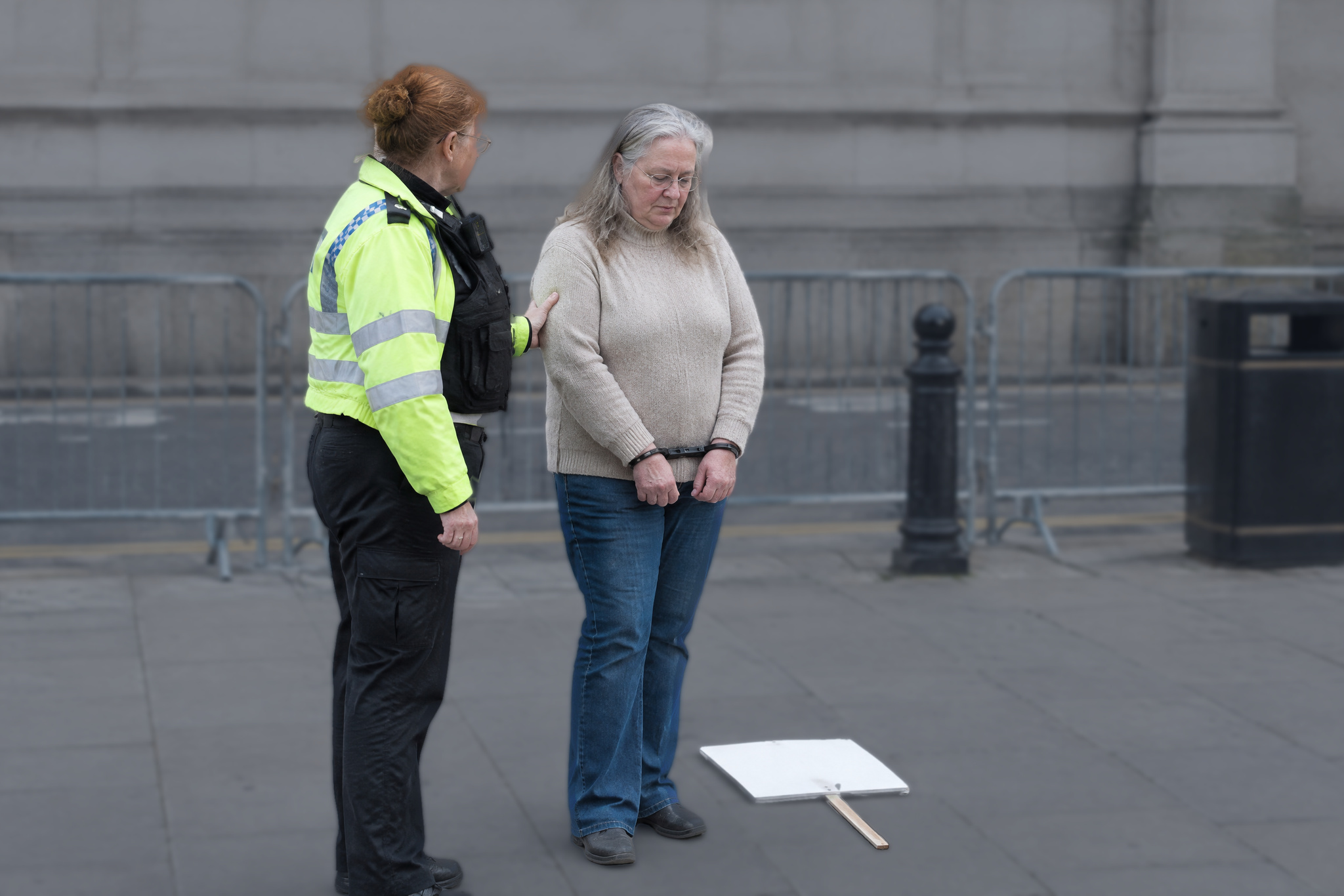
    Police officer holding handcuffed woman Arrested at a protest

    Strategic Advice
    Client-Focussed
    Proven Record
    Strategic Advice
    Client-Focussed
    Proven Record
    Strategic Advice
    Client-Focussed
    Proven Record

    Depending on the circumstances, police may impose conditions on a protest, arrest individuals suspected of an offence or investigate conduct that takes place during a demonstration. However, attending a protest where others behave unlawfully does not automatically make you responsible for their actions.

    This article explains the offences that may arise during protests, when police can make arrests, what happens in custody and what to expect if criminal charges follow.

    The Public Order Act 1986 is one of the main laws governing offences involving violence, threatening behaviour and disorder during public demonstrations in England and Wales. It covers offences ranging from riot and violent disorder to threatening or abusive behaviour that causes, or is likely to cause, harassment, alarm or distress. 

    Police also have powers to manage protests where there are concerns about serious disorder, property damage, disruption or intimidation. For example, officers may impose conditions affecting the route, location or duration of a demonstration where the legal requirements are met.

    Other laws cover particular protest activities, including conduct that seriously obstructs transport infrastructure or involves certain forms of deliberate obstruction. The law also addresses some forms of threatening communication and conduct intended to stir up hatred.

    However, the existence of these offences does not mean that peaceful protest is unlawful. Police action must be justified by the circumstances and the relevant legal requirements.

    What Is a Public Order Offence?

    A public order offence involves behaviour that threatens public safety, involves unlawful violence or causes, or is likely to cause, fear, alarm or distress in circumstances covered by law.

    The seriousness of the offence depends on what happened and the person’s alleged involvement.

    For example, someone threatening another individual at a demonstration may face a different charge from a group involved in serious violence.

    Physical injury is not always necessary for a public order offence. Threatening words, gestures or conduct may be sufficient, depending on the allegation.

    The possible penalties also vary. Less serious offences may result in a fine, while riot and other serious public order offences can lead to imprisonment.

    Custody officer bagging belongings for a woman arrested at a protest

    What Criminal Charges Can Follow a Protest Arrest?

    Public order offences vary in seriousness. The appropriate charge depends on the conduct involved, the number of people participating and the evidence.

    Riot: the most serious public order offence

    Riot involves twelve or more people present together using or threatening unlawful violence for a common purpose.

    The behaviour must be serious enough that an ordinary person witnessing it would fear for their safety. To convict an individual of riot, the prosecution must prove that they personally used unlawful violence. Simply being part of a crowd where violence occurs is not sufficient. For example, a group acting together to attack people or damage property during widespread disorder may face riot allegations.

    Riot is one of the most serious public order offences and carries a maximum sentence of ten years’ imprisonment.

    Violent disorder: three or more persons

    Violent disorder involves three or more people present together using or threatening unlawful violence. Unlike riot, the individuals do not have to share a common purpose. For example, several people becoming involved in a violent confrontation during a demonstration may face allegations of violent disorder.

    The prosecution must establish the individual’s involvement in the threatening or violent conduct. Merely standing near the incident does not establish guilt. Violent disorder carries a maximum sentence of five years’ imprisonment.

    Affray: personal use or threat of violence

    Affray can involve one person or several people. It applies where someone uses or threatens unlawful violence towards another person in circumstances serious enough to make an ordinary observer fear for their safety. For example, a person making threatening physical gestures towards another individual during a confrontation may be investigated for affray.

    Words alone are not sufficient for this offence. There must be conduct amounting to the use or threat of violence.

    Affray carries a maximum sentence of three years’ imprisonment.

    Threatening behaviour or provoking violence

    Threatening or abusive behaviour can also lead to prosecution where someone intends to make another person believe that immediate violence will be used against them, or intends to provoke immediate violence.

    This may involve threats made directly to another person during a demonstration. For example, an individual making specific threats towards someone at a protest may face a public order charge even if no physical confrontation follows.

    The circumstances and the intention behind the behaviour are important.

    Intentional harassment, alarm or distress

    An offence may arise where someone deliberately uses threatening, abusive or insulting language or behaviour to cause another person harassment, alarm or distress, and that effect occurs. For example, repeatedly directing abusive comments at a particular person during a protest may become a criminal matter where the requirements of the offence are met.

    The prosecution must establish both the required intention and the effect on the person involved.

    Harassment, alarm or distress

    Less serious public order offences can involve threatening or abusive words, behaviour or disorderly conduct likely to cause harassment, alarm or distress. For example, aggressive behaviour towards members of the public may be investigated even where no one is physically injured.

    The prosecution does not have to establish an intention to cause distress for this particular offence. The maximum penalty is a fine, and imprisonment is not available for this offence alone.

    Can You Be Charged Without Physically Hurting Anyone?

    Public order offences do not always require physical injury. Threatening words, aggressive gestures or unlawful threats of violence may constitute an offence, depending on what happened. For example, someone who threatens another person during a protest may face charges even if no physical contact occurs.

    For more serious offences such as riot, violent disorder and affray, the law considers whether the conduct would cause an ordinary person to fear for their safety. Other public order offences focus on threatening or abusive behaviour and its actual or likely effect on others. However, the absence of physical injury does not automatically make conduct criminal either.

    The prosecution must establish the requirements of the specific charge, and lawful expression of views remains protected.

    Can a Public Order Offence Happen on Private Property or Online?

    Private property

    Public order offences are not necessarily limited to streets, parks or other public locations.

    Riot, violent disorder and affray can occur on private property. For example, a violent confrontation at a private event or in a car park may lead to public order charges if the relevant requirements are met. Some offences involving threatening or abusive behaviour can also occur on private premises.

    However, certain restrictions apply where the conduct takes place inside a private dwelling. The circumstances and type of offence determine whether criminal liability arises.

    Online conduct

    Online activity connected to protests can also lead to criminal allegations. For example, publishing material that unlawfully stirs up racial or religious hatred may result in prosecution.

    Threatening communications or other harmful online conduct may also fall under separate criminal laws, depending on the content and circumstances. However, expressing political opinions, supporting a demonstration or disagreeing with others online does not automatically constitute a criminal offence.

    The nature of the communication and the legal requirements of the alleged offence are important.

    When Can Police Restrict a Protest?

    Peaceful protest is protected in England and Wales through the rights to freedom of expression and peaceful assembly.

    People can generally participate in demonstrations and express their views without committing a criminal offence. However, these rights are not unlimited. Police may impose restrictions where legally justified by concerns such as serious disorder, damage to property, intimidation or serious disruption.

    The law also allows consideration of the combined disruption caused by repeated protests in certain circumstances. Some protest activities are separately restricted, including particular forms of deliberate obstruction and conduct involving serious disruption.

    Where lawful conditions are imposed and communicated, knowingly failing to comply may result in criminal charges. In exceptional circumstances, police may also seek restrictions preventing certain marches from taking place.

    However, participation in a peaceful demonstration does not automatically become unlawful because police attend or because other protesters commit offences. Each person’s conduct must be assessed individually.

    What Happens After a Protest Arrest?

    The arrest and detention process

    Police may arrest someone where they have reasonable grounds to suspect involvement in a criminal offence and believe arrest is necessary. For example, an arrest may follow allegations of violence, criminal damage or failure to comply with lawful protest conditions.

    An officer should explain why the person is being arrested. Following arrest, the individual will usually be taken to a police station, where a custody officer assesses whether continued detention is justified.

    Being arrested does not mean charges will necessarily follow.

    For most offences, police can normally detain someone for up to 24 hours without charge. Longer detention may be authorised for certain serious offences.

    Searches and samples

    Police may search someone following arrest and examine property they were carrying. Depending on the circumstances, officers may also take fingerprints, photographs or DNA samples.

    More intrusive searches are subject to additional safeguards. The rules governing the retention of personal information and samples vary, including where the person is released without charge.

    The police interview

    Police may interview someone about their alleged involvement in an incident during the demonstration.

    Questions may concern their actions, where they were standing, their communications with others or whether they knew about conditions imposed on the protest. The interview is normally recorded, and answers may later be used as evidence. A person does not have to answer every question. However, remaining silent may have consequences in certain circumstances.

    A solicitor can advise on how to approach questioning based on the allegation and the available evidence.

    Outcomes from the police station

    Following an investigation or interview, several outcomes are possible.

    The person may be released without charge, with no further action taken. Alternatively, they may be released while enquiries continue, receive an appropriate out-of-court disposal or be formally charged.

    A formal caution may be offered for some offences, but it requires an admission and can have consequences for a person’s criminal record. If charges are brought, the case will proceed to court.

    What Are Your Rights After a Protest Arrest?

    If someone is charged with an offence following a protest, the case will usually begin in the magistrates’ court. Less serious public order offences may be dealt with there, while more serious allegations can proceed to the Crown Court. The court will consider the charge, the available evidence and any questions about bail or continued detention.

    Where bail is granted, conditions may restrict contact with certain people or attendance at particular locations. If the defendant pleads not guilty, the case may proceed to trial.

    The prosecution must prove the allegation, and the defence has the opportunity to challenge the evidence and present its case.

    Not every protest-related charge results in a conviction. The outcome depends on the evidence and whether the prosecution can establish the offence.

    How Can a Solicitor Help After a Protest Arrest?

    If you have been arrested or accused of an offence during a protest, a criminal defence solicitor can explain the allegation and assess the evidence.

    A solicitor can also consider whether your conduct meets the requirements of the offence alleged. For example, they may examine whether you were personally involved in disorder, whether police conditions were properly communicated or whether the evidence identifies you correctly.

    If the case proceeds to court, a solicitor can advise on the available defences, help prepare your case and represent you during proceedings. Where online activity or conduct on private property is involved, the legal position may require separate consideration.

    Speak to our Criminal defence solicitors for advice about your circumstances and the next steps.

    You can also email us on enquiries@ashmanssolicitors.com or complete our Online Enquiry Form and we’ll be in touch soon.


    Search our legal articles

    Free expert guidance on criminal law, your rights, and what to expect at every stage.

    Searching Legal Help Hub articles

  • How Darker Nights Affect Crime Patterns in West Yorkshire and London

    How Darker Nights Affect Crime Patterns in West Yorkshire and London

    Police officer examining a damaged back door during darker nights

    Strategic Advice
    Client-Focussed
    Proven Record
    Strategic Advice
    Client-Focussed
    Proven Record
    Strategic Advice
    Client-Focussed
    Proven Record

    In West Yorkshire and London, residents may experience different risks depending on their neighbourhood, daily routines and local crime patterns. Darkness alone does not cause crime, and seasonal changes do not necessarily mean that overall offending increases.

    This guide examines the available evidence on darker nights and crime, explains the differences between West Yorkshire and London, and offers practical advice for residents, commuters and businesses.

    What Do Darker Nights Mean for Everyday Routines?

    Why the clock change matters for daily life

    In the UK, clocks go back one hour on the last Sunday in October and move forward again on the last Sunday in March.

    During British Summer Time (BST), evenings remain lighter for longer. When the clocks return to Greenwich Mean Time (GMT), sunset occurs an hour earlier by the clock.

    This change affects everyday routines across England and Wales. During November and December, many people leave work or school after sunset, while residential streets and public spaces are used in darker conditions.

    In London and West Yorkshire, daylight hours are shortest during December, making evening lighting and visibility more relevant to daily travel and home security.

    How darker nights affect perceived and actual risk

    Reduced daylight can affect visibility around homes, parked vehicles, footpaths and public transport routes. For example, an unlit home may appear unoccupied earlier in the evening, while poorly lit streets can make it harder to observe activity nearby.

    These conditions may influence opportunities for certain offences. However, they do not establish that a particular area is unsafe or that crime will necessarily increase.

    Local circumstances, including footfall, property security and policing activity, remain important.

    Does Crime Increase During Darker Nights?

    What criminology research tells us about seasonal crime

    Research into crime patterns in England and Wales shows that some offences vary by season.

    However, the trends differ between offence types. Certain property offences have been associated with darker conditions, while some forms of violence are more common during warmer months.

    Local population patterns, housing, transport and policing priorities can all influence recorded crime.

    What the evidence does not support

    It would be inaccurate to suggest that all crime increases during autumn and winter. Some offences show seasonal variation, while others do not follow a consistent pattern. Darker evenings may affect opportunities for particular crimes, but they do not establish an increase in every category.

    Woman phoning police beside a car with a smashed window during darker nights

    Personal Safety During Darker Nights

    Residential burglary during winter months

    Reduced daylight may create opportunities for burglary where homes appear unoccupied during the late afternoon or early evening.

    Properties with limited external lighting, unlocked access points or visible valuables may be more vulnerable. However, burglary can occur at any time of year and does not depend solely on darkness. Residents can reduce some risks by reviewing locks, lighting and access to garages, sheds and side entrances.

    These precautions are relevant throughout the year but may be particularly useful during winter.

    Vehicle crime and darker conditions

    Vehicle crime does not consistently increase during winter. However, poor visibility and unattended vehicles can create opportunities for theft or interference.

    Leaving bags, electronic devices or other valuables inside a vehicle may attract attention regardless of the season. Drivers should check that doors and windows are secured and avoid leaving property on display. Where possible, parking in a well-lit area with regular pedestrian activity may provide additional security.

    Street robbery, theft and antisocial behaviour

    Lighting, pedestrian activity and the surrounding environment may affect opportunities for street robbery and theft. A busy, well-lit location may present different circumstances from an isolated footpath or poorly lit car park.

    Research does not establish a consistent winter increase across all categories of street crime or antisocial behaviour.

    For this reason, local crime data and the circumstances of individual areas are more useful than broad assumptions about darker evenings.

    Personal safety for pedestrians and commuters

    Pedestrians and commuters may wish to review their usual routes as evenings become darker. Using well-lit paths, familiar transport stops and areas with regular public activity can help improve visibility. Reflective clothing or accessories may also improve road safety for people walking or cycling.

    If you feel unsafe, moving towards a staffed business, public transport facility or other occupied location may be appropriate.

    How to Stay Safe During Darker Nights

    Securing your home as the evenings shorten

    Home security measures can help reduce opportunities for burglary. Timer switches or smart lighting can make a property appear occupied while residents are away. External lighting may also improve visibility around entrances, garages and side gates. Residents should check that doors and windows are securely locked, including those in sheds and outbuildings.

    Other useful precautions include maintaining alarms, securing access to gardens and keeping valuables out of sight.

    West Yorkshire Police’s Easy Street campaign recommends checking the security of doors, windows and locks. Appropriate lock standards depend on the type of door and fitting, so homeowners should seek advice where necessary.

    Protecting your vehicle during darker nights

    Parking in well-lit areas where possible may reduce some opportunities for vehicle theft.

    Remove valuables, including bags, electronic equipment and documents, before leaving the vehicle. Check that windows are closed and all doors are locked, including the boot. Additional security measures, such as a steering wheel lock or suitable protection for keyless entry systems, may be worth considering.

    These precautions are useful throughout the year, including during darker evenings.

    Steps for businesses

    Businesses should review lighting, CCTV coverage and security procedures before winter.

    Cameras should cover relevant entrances and other vulnerable areas, while alarms and access controls should be tested regularly. Staff should understand closing procedures, incident reporting arrangements and who to contact if a security concern arises. Where businesses operate later into the evening, lone-working arrangements and access to premises may also need reviewing.

    Security measures should reflect the location, operating hours and nature of the business.

    Neighbourhood and community awareness

    Local community schemes can help residents receive information about crime prevention and incidents in their area. Neighbourhood Watch groups and police community alerts may provide practical advice and local updates. Suspicious activity can be reported through the police non-emergency number, 101, or online reporting services.

    Call 999 where a crime is in progress or there is an immediate danger.

    Residents should avoid confronting suspected offenders or attempting to investigate incidents themselves. West Yorkshire Police and the Metropolitan Police also publish crime prevention advice that can be shared through local community groups.

    If you witness a crime

    • Call 999 if a crime is taking place or someone is in immediate danger.
    • For non-emergency incidents, use 101 or the relevant police force’s online reporting service.
    • Avoid intervening where doing so may place you or others at risk.
    • If it is safe, make a note of what you witnessed, including the time, location, descriptions of people involved and any vehicle details.

    West Yorkshire Police and the Metropolitan Police both provide online reporting options.

    If you are a victim

    • Report the incident to police as soon as reasonably possible.
    • If your home or vehicle has been damaged or entered unlawfully, preserve relevant evidence, including photographs, messages and CCTV footage.
    • Avoid disturbing a burglary scene unnecessarily before receiving police guidance.
    • A crime reference number may be useful when contacting an insurer.
    • Victims of crime in England and Wales have rights under the Code of Practice for Victims of Crime.

    Depending on the circumstances, these include receiving information about the investigation, accessing support services and being offered the opportunity to make a Victim Personal Statement.

    How Can a Criminal Defence Solicitor Help

    A criminal defence solicitor can advise at any stage of a police investigation or prosecution. If you are asked to attend an interview, they can explain your rights, review available evidence and advise on the questions being asked. Where charges follow, a solicitor can assess the prosecution case, consider relevant defences and represent you during court proceedings. This may involve allegations of burglary, vehicle crime, handling stolen goods or other offences.

    Expert legal advice is available at the police station. Legal aid for court representation is subject to the relevant eligibility requirements.

    A solicitor can explain the options and any associated costs.

    Speak to a Criminal Defence Solicitor

    If you have been arrested, contacted by police or accused of a criminal offence, Ashmans Solicitors can advise on the allegation and the steps available to you.

    Our criminal defence solicitors can explain your rights, review the circumstances and provide advice appropriate to your case.

    Send an Online Enquiry or Book a Consultation to discuss your situation.

    You can also email us on enquiries@ashmanssolicitors.com or complete our Online Enquiry Form and we’ll be in touch soon.


    Search our legal articles

    Free expert guidance on criminal law, your rights, and what to expect at every stage.

    Searching Legal Help Hub articles

  • Bonfire Night Firework Offences: What Carries a Criminal Charge?

    Bonfire Night Firework Offences: What Carries a Criminal Charge?

    Police officer questioning a man about fireworks on Bonfire Night

    Strategic Advice
    Client-Focussed
    Proven Record
    Strategic Advice
    Client-Focussed
    Proven Record
    Strategic Advice
    Client-Focussed
    Proven Record

    Firework use during Bonfire Night can result in criminal charges, depending on what happened, where the fireworks were used and who was involved. Some offences may be dealt with through a fixed penalty notice, while more serious incidents can lead to prosecution.

    In England and Wales, restrictions apply to the hours during which fireworks may be used, their use in public places and their possession or supply. Where fireworks cause injury or property damage, additional criminal offences may apply.

    This guide explains the rules for Bonfire Night, the possible penalties and when legal advice may be needed.

    Firework laws in England and Wales are governed by several Acts and regulations. Different provisions apply to possession, supply and use, including during Bonfire Night celebrations.

    • The Fireworks Act 2003 provides the legal framework for regulating fireworks. 
    • The Fireworks Regulations 2004 contain restrictions on possession, supply and the hours during which certain fireworks may be used. 
    • The Explosives Act 1875 also remains in force. It prohibits throwing or setting off fireworks in streets and other public places.

    Not every breach results in prosecution. Depending on the circumstances, police may issue a warning or fixed penalty notice. More serious incidents may lead to criminal charges.

    Officer photographing a burnt fence after Bonfire night firework damage

    What Time Can Fireworks Be Used on Bonfire Night?

    The Fireworks Regulations 2004 generally prohibit the use of adult fireworks between 11 pm and 7 am.

    The law provides exceptions for four occasions when fireworks are traditionally used, including Bonfire Night.

    On 5 November, fireworks covered by the curfew may be used until midnight. The extension is one hour beyond the usual 11 pm limit, not until 1 am.

    The other exceptions allow later use:

    • New Year’s Eve: Until 1 am on 1 January.
    • Diwali: Until 1 am the following morning.
    • Chinese New Year: Until 1 am the following morning.

    The curfew does not apply to category F1 fireworks or category F2 sparklers. Certain local authority displays and public celebrations are also subject to specific exceptions.

    Using fireworks covered by the restriction after midnight on Bonfire Night can constitute an offence under the Fireworks Regulations 2004.

    A conviction may result in a fine, imprisonment for up to six months or both.

    What counts as “using” a firework after curfew?

    Lighting or setting off a firework covered by the curfew after the permitted time may constitute an offence. The prosecution does not have to prove that the person intended to cause injury or damage.

    The restriction applies to relevant fireworks used on private property as well as elsewhere, subject to the statutory exceptions. For example, setting off adult display fireworks in a private garden after midnight on Bonfire Night may breach the regulations, even where no complaint is made.

    Is It Illegal to Set Off Fireworks in Public?

    The Explosives Act 1875 makes it an offence to throw, cast or fire fireworks in or into a highway, street or other public place. This offence is separate from a breach of the night-time curfew and can apply at any time of day or night.

    The provision does not itself impose a custodial sentence. However, more serious conduct may lead to additional charges under other legislation.

    What is a public place for this purpose?

    Streets, parks, public car parks and shopping areas may fall within the scope of the Explosives Act 1875. A privately owned area may still qualify if members of the public can access it.

    Setting off fireworks from a private garden is not automatically an offence. However, the provision may apply where a firework is deliberately fired into a street or another public place. The circumstances of the incident, including where the firework was discharged and directed, will determine whether the offence applies.

    What Are the Firework Age Restrictions?

    Firework legislation places different restrictions on young people possessing fireworks and businesses supplying them.

    The applicable rules depend on the firework category and the circumstances.

    Under-18s possessing fireworks in public

    The Fireworks Regulations 2004 generally prohibit anyone under 18 from possessing adult fireworks in a public place.

    Adult fireworks include categories F2 and F3, which are commonly used for outdoor displays. The legislation also provides specific exceptions. Public places include locations to which members of the public have access, whether payment is required or not.

    A person under 18 found carrying adult fireworks in a street or park may therefore face criminal allegations, even if someone else purchased them.

    Businesses supplying fireworks to under-18s

    The Pyrotechnic Articles (Safety) Regulations 2015 restrict the supply of fireworks according to age and category.

    Businesses must not supply:

    • Category F1 fireworks to anyone under 16, subject to applicable exceptions.
    • Category F2 or F3 fireworks to anyone under 18.

    Category F1 covers lower-hazard products, while F2 and F3 fireworks are intended for outdoor use. Category F4 fireworks are intended for people with specialist knowledge and are subject to additional supply restrictions.

    When Can Fireworks Lead to Serious Criminal Charges?

    Some Bonfire Night incidents involve more than a breach of firework regulations.

    Where fireworks cause damage, injury or threats of violence, police may investigate additional offences under general criminal law.

    Criminal damage

    Under the Criminal Damage Act 1971, a person may be charged where they intentionally or recklessly damage property belonging to someone else without lawful excuse. For example, deliberately directing a firework towards a vehicle or building may lead to a criminal damage allegation if damage results.

    The prosecution must prove the required intention or recklessness.

    Arson

    Arson involves criminal damage caused by fire under the Criminal Damage Act 1971.

    A firework that causes a fire damaging property may result in an arson investigation where the necessary legal elements are established. Ordinary arson and aggravated criminal damage involving danger to life are distinct offences. Both can carry substantial penalties, including a maximum sentence of life imprisonment on indictment.

    Not every accidental fire constitutes arson.

    Public order offences

    Fireworks used to threaten or intimidate people may lead to allegations under the Public Order Act 1986. For example, offences involving threats of unlawful violence may be considered where fireworks are directed towards a crowd or individuals.

    The appropriate charge depends on the behaviour and the legal requirements of the offence. The presence of a crowd or a frightened witness does not automatically establish affray or another public order offence.

    Assault and serious injury offences

    Where a person is injured by a firework, police may consider assault or more serious offences under the Offences Against the Person Act 1861. The charge will depend on the circumstances, the injury and the required mental element.

    The prosecution must establish the relevant offence rather than relying solely on the fact that an injury occurred. Where the conduct is serious, charges under general criminal law may be brought instead of, or alongside, firework-specific offences.

    What Are the Penalties for Firework Offences?

    Police can issue fixed penalty notices for certain firework offences, including some curfew breaches, instead of pursuing prosecution.

    Paying a valid fixed penalty notice within the required period ordinarily resolves the matter without a criminal conviction. More serious offences involving criminal damage, threats or injury may carry higher penalties.

    How enforcement decisions are made

    Police may issue a warning, offer an available fixed penalty disposal or investigate the matter further.

    A decision to prosecute depends on the evidence and the circumstances. Where the Crown Prosecution Service makes the charging decision, it generally applies the Full Code Test, considering whether there is sufficient evidence and whether prosecution is in the public interest.

    Local authorities may also use powers under anti-social behaviour legislation to address persistent or harmful conduct in designated areas, subject to the relevant statutory requirements.

    How Can a Solicitor Help with Firework Charges?

    If you are under investigation or have been charged with a Bonfire Night firework offence, a solicitor can explain the allegation and assess whether the legal requirements have been met.

    This may involve reviewing evidence about where the fireworks were used, the time of the incident, the firework category and any alleged damage or injury.

    A solicitor can also advise you before a police interview. Independent legal advice is available at the police station, whether you have been arrested or are attending a voluntary interview under caution. If you receive a fixed penalty notice and dispute the allegation, a solicitor can explain the available options and the possible consequences of challenging it. They can advise on firework-related allegations, including offences.

    You can also email us on enquiries@ashmanssolicitors.com or complete our Online Enquiry Form and we’ll be in touch soon.


    Search our legal articles

    Free expert guidance on criminal law, your rights, and what to expect at every stage.

    Searching Legal Help Hub articles

  • Halloween Disorder Offences: Criminal Damage, Fireworks and Public Order

    Halloween Disorder Offences: Criminal Damage, Fireworks and Public Order

    Police officer and woman inspecting an egged car on Halloween offences

    Strategic Advice
    Client-Focussed
    Proven Record
    Strategic Advice
    Client-Focussed
    Proven Record
    Strategic Advice
    Client-Focussed
    Proven Record

    What Are Halloween Disorder Offences?

    “Halloween disorder offences” is not a formal legal category. The term describes criminal offences that may arise during Halloween celebrations, ranging from minor damage to property to more serious incidents involving threats or violence.

    Three main areas of law are relevant:

    • The Criminal Damage Act 1971, which covers intentional or reckless damage to property.
    • The Fireworks Regulations 2004 and Explosives Act 1875, which regulate certain aspects of firework possession and use.
    • The Public Order Act 1986, which covers threatening, abusive and violent behaviour.

    Reports of vandalism and antisocial behaviour often attract attention around Halloween and Bonfire Night. However, not every prank or neighbourhood disturbance constitutes a criminal offence. The circumstances and the legal requirements of the alleged offence determine whether charges may follow.

    What Are the Most Common Halloween Offences?

    Halloween-related incidents can involve several forms of behaviour, particularly when celebrations take place in residential streets or public spaces.

    Examples include egging houses or vehicles, damaging outdoor decorations, scratching cars, breaking windows and spraying graffiti. Setting fires or using fireworks irresponsibly may also lead to criminal allegations.

    Some incidents involve groups of people. An argument between residents and those celebrating Halloween may develop into threatening behaviour or, in more serious circumstances, violence.

    Alcohol consumption can sometimes contribute to these situations, although drinking does not itself establish responsibility for an offence.

    Whether someone is charged depends on what they allegedly did, their intention or awareness where relevant, and the evidence available to police.

    Custody officer showing bagged fireworks after Halloween offences

    Criminal damage during Halloween

    Criminal damage occurs when someone intentionally or recklessly destroys or damages property belonging to another person without lawful excuse.

    The Criminal Damage Act 1971 covers ordinary criminal damage, more serious damage involving danger to life and arson where property is damaged by fire. It also creates offences relating to threats to damage property and possession of items intended for that purpose.

    During Halloween, conduct such as egging a car, smashing a window, spraying graffiti or damaging decorations may amount to criminal damage.

    The damage does not always need to be permanent. For example, substances that require specialist cleaning or cause damage to paintwork may satisfy the legal definition.

    However, the prosecution must still establish the required intention or recklessness and the absence of a lawful excuse.

    Firework misuse during Halloween

    The Fireworks Regulations 2004 generally prohibit the use of category F2, F3 and F4 fireworks between 11 pm and 7 am.

    Certain occasions, including Bonfire Night, New Year’s Eve, Diwali and Chinese New Year, have extended hours. Halloween is not one of those exceptions.

    Using fireworks covered by the curfew after 11 pm on Halloween can therefore result in a criminal charge, even if no one is injured.

    The regulations also restrict people under 18 from possessing adult fireworks, including categories F2 and F3, in public places.

    Separately, section 80 of the Explosives Act 1875 prohibits throwing or setting off fireworks in streets and other public places.

    For example, setting off fireworks in a residential road or throwing one towards a building may lead to an offence under the fireworks legislation. Where people are threatened or property is damaged, additional charges may also be considered.

    Public order offences during Halloween

    The Public Order Act 1986 covers several offences involving threatening, abusive or violent conduct.

    These range from harassment, alarm or distress offences to more serious offences such as affray, violent disorder and riot.

    Section 5 may apply where someone uses threatening or abusive words or behaviour, or behaves in a disorderly manner, within the sight or hearing of another person likely to experience harassment, alarm or distress. Physical contact is not required.

    For example, a group making threats towards a householder may attract police attention. Whether the conduct amounts to an offence depends on the words or behaviour involved and the surrounding circumstances.

    More serious charges may arise where people use or threaten unlawful violence. Violent disorder requires at least three people present together who each use or threaten unlawful violence, with their combined conduct meeting the statutory test.

    Simply being part of a group does not automatically make someone guilty.

    When Does a Halloween Prank Become a Crime?

    When a prank becomes criminal damage

    A Halloween prank does not have to cause permanent damage to result in a criminal charge.

    Under the Criminal Damage Act 1971, recklessness can be sufficient where someone damages property belonging to another person without lawful excuse.

    For example, someone throwing eggs at a vehicle may not intend to damage its paintwork. However, if they recognised the risk of damage and continued regardless, the prosecution may be able to establish recklessness.

    The cost and extent of damage may affect how the case is dealt with, but low-value damage can still result in prosecution.

    When firework use becomes a criminal offence

    Firework misuse can constitute an offence even where no injury or damage occurs.

    Examples include using restricted fireworks after the 11 pm curfew, possessing adult fireworks in public while under 18, or throwing fireworks in a street.

    These offences are governed by specific statutory requirements and exceptions.

    Halloween celebrations do not provide an exemption from those rules. More serious charges may arise where fireworks are used to threaten people or damage property.

    When group behaviour triggers public order charges

    Group behaviour can become a more serious matter where several people participate in threats or violence.

    Under section 2 of the Public Order Act 1986, violent disorder requires three or more people present together who use or threaten unlawful violence.

    Their combined conduct must be serious enough that a person of reasonable firmness would fear for their personal safety.

    A crowd throwing objects or threatening someone outside their home may therefore give rise to an investigation.

    However, the prosecution must establish the required conduct against each defendant. Mere presence in a crowd, even where others behave violently, is not enough to establish liability as a principal offender.

    The possible penalties depend on the offence, the seriousness of the conduct and the circumstances of the case.

    For ordinary criminal damage valued at £5,000 or less, the maximum sentence is generally three months’ imprisonment, a level 4 fine or both. These cases are normally dealt with in the Magistrates’ Court.

    Where the damage exceeds £5,000, ordinary criminal damage can be tried in the Crown Court, where the maximum sentence is ten years’ imprisonment.

    Arson and aggravated criminal damage carry a maximum of life imprisonment on indictment. These are maximum penalties rather than sentences imposed automatically.

    Firework offences may result in fixed-penalty notices, fines or prosecution, depending on the conduct involved.

    Public order penalties also vary. A section 5 offence carries a maximum level 3 fine, while section 4 offences and affray can result in imprisonment. Violent disorder and riot carry higher maximum sentences.

    A conviction may also affect employment or professional registration, depending on the offence and any applicable disclosure requirements.

    When sentencing someone convicted of a Halloween-related offence, courts consider the seriousness of the conduct and the relevant sentencing guidelines.

    Factors that may increase the seriousness of an offence include deliberately targeting vulnerable people, causing substantial damage, using fireworks to threaten others or having relevant previous convictions.

    The person’s role in any group activity may also be important.

    Mitigating factors can include a lack of previous convictions, genuine remorse and personal circumstances relevant to the offence.

    An early guilty plea may reduce the sentence in accordance with the applicable guidelines.

    Halloween itself is not a legal defence. The fact that an incident occurred during celebrations does not excuse criminal conduct.

    Where the accused is under 18, the youth justice system generally applies. It places greater emphasis on rehabilitation, although outcomes such as youth cautions, referral orders and youth rehabilitation orders can still have consequences.

    How Can a Solicitor Help with Halloween Charges?

    If you are arrested or invited to a police interview about a Halloween-related incident, you can obtain independent legal advice at the police station.

    A solicitor can explain the allegation, review the information disclosed by police and advise you on how to respond during questioning.

    What you say in an interview may later become evidence. Although you have the right to remain silent, failing to mention something you later rely on in court may have consequences in certain circumstances.

    When dealing with a general crime allegation, a solicitor may examine CCTV, witness statements and other evidence to determine whether the prosecution can establish the offence.

    For criminal damage, relevant questions may include whether the accused caused the damage, whether the conduct was intentional or reckless, and whether a lawful excuse applies.

    For public order offences, the solicitor can assess whether the alleged behaviour satisfies the legal requirements of the particular charge.

    If you have been arrested, interviewed or charged following a Halloween incident, speak to our criminal defence team for advice about your circumstances and the next steps.

    What Should You Do If Accused of a Halloween Crime?

    If police contact you about a Halloween-related allegation, ask for legal advice before attending an interview or providing an account of the incident.

    You have the right to a legal advice at the police station, whether you have been arrested or are attending a voluntary interview under caution.

    Avoid discussing the allegation on social media. Messages, photographs and online posts may become relevant evidence during an investigation.

    Preserve anything that may support your account, including photographs, messages, location information and witness contact details. Do not delete or alter potentially relevant material.

    You may also find it helpful to make a private, accurate note of what you remember, including the time, location and people involved. Avoid filling gaps in your recollection with guesses.

    You can also email us on enquiries@ashmanssolicitors.com or complete our Online Enquiry Form and we’ll be in touch soon.


    Search our legal articles

    Free expert guidance on criminal law, your rights, and what to expect at every stage.

    Searching Legal Help Hub articles